Source: Microsoft
Microsoft has announced a major revamp of Copilot, introducing the Home, Code, and Autopilot modules. These new capabilities combine daily productivity tools with advanced AI agents, simplifying software creation, workflow automation, and task delegation for enterprise users.
Microsoft revamps Copilot with Home, Code, and Autopilot modules
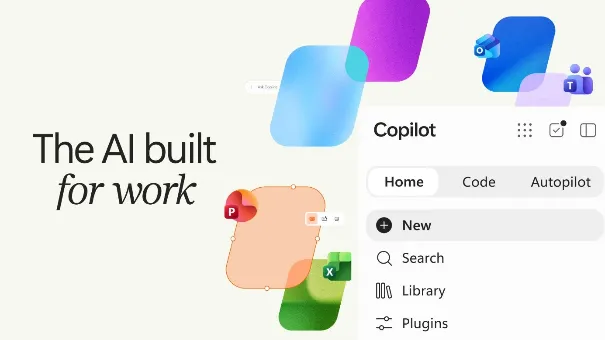
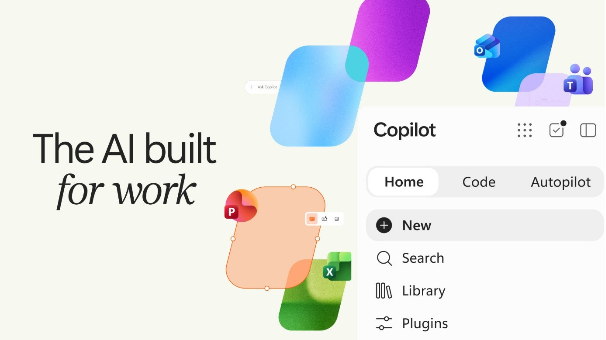
Microsoft has announced a comprehensive revamp of its Copilot app, repositioning it as an AI platform custom-built for the modern work environment. Rather than introducing a new brand, the company is adding three core components: Home, Code, Autopilot. These features aim to combine daily communication tools with next-generation agentic capabilities, enabling organizations to build, delegate, automate workflows at scale.
"We’re reimagining Microsoft Copilot to enable work as it evolves and to help expand what every individual and every organization can accomplish in the flow of human ambition," Microsoft stated in its announcement.
Home module as the primary starting point
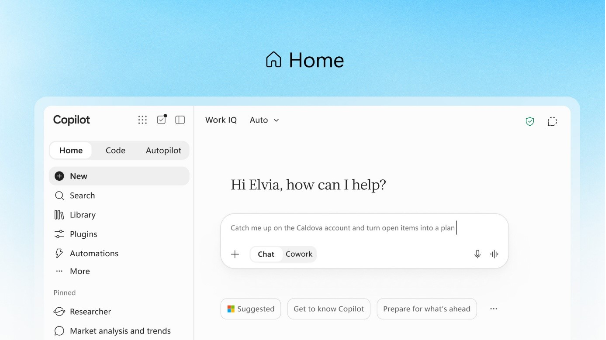
The first major component is Home, designed as the central entry point for the Copilot experience by merging Chat, Cowork. Chat delivers a conversational interface for quick answers, inquiries, while Cowork handles complex delegated tasks end-to-end, such as drafting RFP responses, assembling financial close packages. Microsoft is also working on routing logic that will automatically send user requests to Chat, Cowork, Code without requiring manual mode selection.
Source: Microsoft
Home also integrates Office in Copilot, bringing Word, Excel, PowerPoint directly into the main workspace. Users can generate, edit live documents, spreadsheets, presentations while collaborating with colleagues in real time using @mentions. Additionally, role-specific Skills bring specialized expertise into Microsoft 365 apps, allowing organizations to scale best practices across legal, financial, operational workflows.
Software creation through the Code module
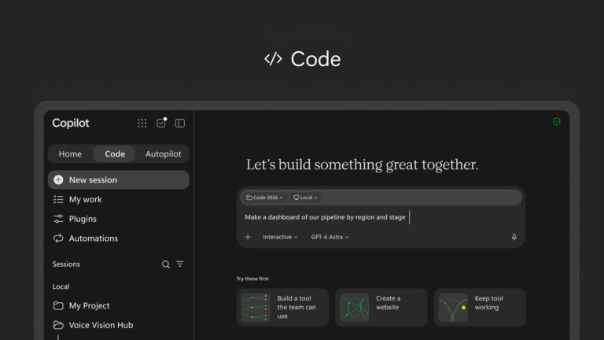
The Code module expands solution building beyond software engineers, allowing non-technical employees to create applications, trackers, dashboards, automated workflows using natural language prompts. Built on the underlying technology of GitHub Copilot, Code runs executed scripts safely inside a tenant-hosted sandboxed environment via the Copilot Managed Runtime.
Source: Microsoft
Everything generated within Code is grounded in organizational context using Microsoft IQ. Professional developers will continue using GitHub Copilot for their daily tasks with enhanced integration into the broader platform. Code is rolling out to Frontier customers this month, with general availability following shortly after. Microsoft 365 Premium, Pro subscribers will gain preview access later this year.
Persistent AI assistance with Autopilot
Autopilot, previously known as Scout, functions as an autonomous digital teammate. Users can assign it a specific name, role, objective, such as monitoring Teams channels, following up on email threads, executing recurring operations. Because it is hosted in the cloud, Autopilot operates continuously in the background without needing constant user prompts.
Source: Microsoft
The agent operates within the company tenant with its own dedicated identity, memory, workspace, computer, fully governed by organizational IT policies. Users can @mention Autopilot across Teams, Outlook, Office documents. For instance, it can independently manage an entire supplier review process by drafting workback schedules, coordinating meetings, reaching out to stakeholders for updates. Autopilot enters private preview at the end of the month.
Grounding AI models in real time context
To ensure AI interactions remain relevant, Microsoft is broadening the business context available across its stack via Microsoft IQ, Fabric IQ. This integration brings data from over 20 million Power BI semantic models directly into Chat, Cowork. Furthermore, a public preview rolling out over the next month will ground Copilot in Dynamics 365, Power Platform workflows, allowing sales, support data to populate directly into active workspace documents.
Microsoft is also launching a unified plugin registry. This catalog aggregates custom-built, partner, Microsoft plugins into one central location. IT administrators can approve, govern plugins enterprise-wide, while developers can publish tools once to extend functionality across all supported Microsoft 365 interfaces.
Consumption based billing model implementations
Alongside new features, Microsoft introduced FinOps for AI capabilities to help finance leaders monitor, optimize AI expenditures. Everyday tasks within the User Subscription License (USL) framework are covered at a fixed cost using the Auto feature, which dynamically routes requests to the most efficient model based on speed, accuracy, cost. Complex, long-running agentic tasks in Cowork, Code, Autopilot utilize Usage-based billing (UBB).
Cost management tools in Agent 365 now extend to Code, Copilot Managed Runtime, with support for Copilot Studio agents arriving in October. Administrators can set spending policies, establish credit request workflows, restrict available model families. Business leaders gain analytics on task returns, while individual employees can monitor credit balances, usage history directly inside the Copilot interface.
Upcoming capabilities and future roadmap
Microsoft provided a preview of upcoming features scheduled for testing in the coming weeks. In October, a new feature called Today will enter private preview within Home. Functioning as a personalized command center across email, calendar, Teams, Today proactively highlights priority items, completes routine actions, such as drafting email replies, rescheduling meetings.
Additionally, an updated @Copilot functionality in Teams will enter private preview by the end of the month. This feature allows teams to bring Copilot into channel conversations with shared permissions, enabling the AI to summarize decision histories, map out cross-functional project dependencies for all participants. Further announcements are scheduled for the Microsoft Ignite event in November.
Copilot integrates in-app browsing. Admins can start testing today
Source: Microsoft
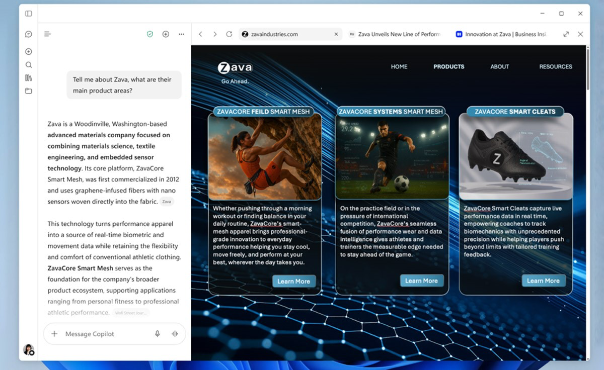
Microsoft is introducing an embedded web browser to the Copilot desktop app. The new feature allows users to open web links directly next to their chat window, featuring multi-tab support, full-screen options, and local data storage. Currently available as an opt-in preview, the broader automatic rollout across managed endpoints will begin in late November 2026.
Microsoft Copilot adds integrated side-by-side web browser
Microsoft has introduced an embedded side-by-side web browser within the Copilot desktop application for Windows and macOS. The Redmond-based tech giant hopes this integration will keep users focused within Copilot sessions for longer periods, reducing the temptation to switch to third-party browsers. Operating in a right-hand side panel, the new browser supports multi-tabbed navigation along with full-screen view toggles.
The experience is currently live for administrators testing the feature ahead of time. Activation requires an explicit opt-in via the BrowsingEnabled policy, managed through standard device management systems. While preview testing is available immediately, the broader automatic rollout will not take place until late November. To refine the user experience, Microsoft noted that a supplementary update scheduled for September 21 will add a right-click context menu option on side-pane tabs, enabling users to launch links in an external browser easily.
Source: Microsoft
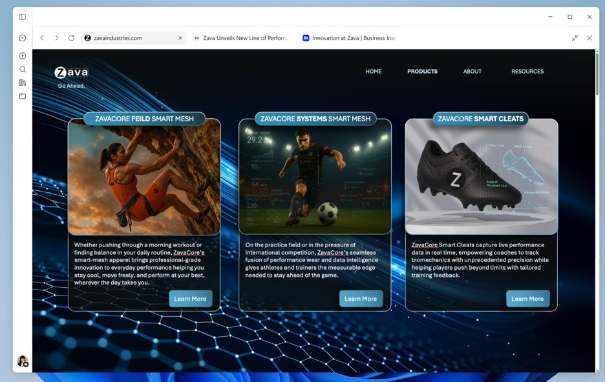
By rendering external links in a side panel, Microsoft aligns Copilot with the user interface patterns already seen in Microsoft Teams and Outlook. This approach streamlines research tasks; for instance, when a user selects a reference link in a Copilot answer, the target page loads directly beside the chat. After reviewing the material, the user simply closes the panel and continues the prompt flow without managing external browser windows.
Organizations interested in evaluating the functionality can adjust the BrowsingEnabled setting through the Microsoft Edge policy framework. For end users who prefer using their native browser, Microsoft provides direct workarounds. "Users can still open a link in an external browser, by selecting the 'External browser' option from the three-dot menu on the link within Copilot Chat OR Selecting 'Copy the URL' and pasting it into an external browser," according to the official announcement.
Security standards and local data storage implications
From an IT security standpoint, the feature alters how web activity data is processed on endpoint devices. Microsoft confirmed that the update stores new customer information, noting that "browsing history, cookies, autofill information are stored on the local device." This architecture mirrors Microsoft Edge by saving user data directly to the local disk path at %localappdata%\Microsoft\Copilot\User Data. System administrators are encouraged to review these local storage mechanisms to ensure they align with internal data loss prevention rules and endpoint hygiene standards before enabling the policy.
Despite adding web capabilities, Microsoft clarified that the update does not modify the core generative models. As noted in the documentation, "This feature does not add any new way to create or steer generative AI, it only lets you view websites, whether those are website on the internet or html files created generatively with copilot via other features." Early testing allows IT support teams to validate managed environment behaviors before the general release later this year.
OpenAI unveils GPT-6 Sol and Luna. High performance meets low API cost

Source: OpenAI
OpenAI has released GPT-6 Sol and Luna, expanding its GPT-6 lineup. Trained with methods similar to GPT-6 Astra, these models deliver strong capabilities in coding, factuality, and computer use at drastically reduced costs. API token prices are cut by 50% compared to the GPT-5.6 promotional rates.
OpenAI expands GPT-6 family with Sol and Luna models
OpenAI has officially launched GPT-6 Sol and GPT-6 Luna, expanding its latest model generation following the release of its flagship GPT-6 Astra earlier this month. The new additions are designed to bring Astra's advanced capabilities in coding, factuality, computer use, and professional workflows to faster and more cost-effective architectures.
The announcement comes during a highly competitive week in the AI industry, following Anthropic's unveiling of Claude Opus 5.5, which topped GPT-6 Astra on benchmark suites like Terminal-Bench 4.0 and FrontierCode. OpenAI's response focuses heavily on accessibility and cost efficiency, slashing API pricing by 50% compared to previous promotional rates for the GPT-5.6 series.
GPT-6 Sol and Luna are rolling out across ChatGPT Plus, Pro, Business, Enterprise, and Edu tiers, though they are currently restricted to ChatGPT Work and Codex rather than the standard chat interface. Free and Go users will gain access to GPT-6 Luna exclusively via the desktop app.
Performance and cost efficiency benchmark result
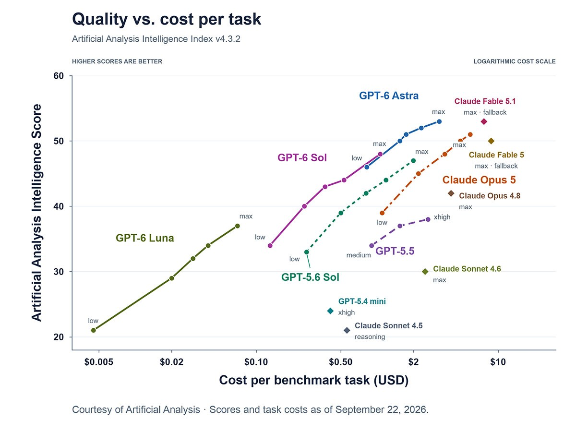
In performance evaluations, GPT-6 Sol and Luna demonstrated high efficiency against much larger models. On AutomationBench, GPT-6 Sol operating at extra-high effort scored 33.2%, outperforming Claude Opus 5 at maximum effort while costing approximately $0.27 per task - just 9% of Opus 5's cost. On the DeepSWE 1.1 software engineering benchmark, Sol achieved 68.8%, landing within 1.1 percentage points of Claude Fable 5 while reducing task costs by roughly 80%.
GPT-6 Luna also posted competitive scores, reaching 66.6% on DeepSWE 1.1, matching Opus 5 and Fable 5 at medium effort levels. Luna achieves these results at a fraction of the price, costing 93% less per task than Opus 5 and 96% less than Fable 5. In computer use tests via OSWorld 2.0 offline, Sol matched Claude Opus 5 at medium effort while cutting costs by 80%, while Luna outperformed GPT-5.6 Sol at one-tenth of the price.
Pricing Structure and Context Caching Improvements
Pricing serves as the main highlight for the new release. For standard short-context requests, GPT-6 Sol is priced at $2 per million input tokens and $10 per million output tokens. GPT-6 Luna drops to $0.10 per million input tokens and $0.50 per million output tokens. Long-context rates are set at $4/$15 per million tokens for Sol and $0.20/$0.75 per million tokens for Luna.
Alongside token price drops, OpenAI introduced system-level prompt caching improvements that yield up to a 90% discount on cached input tokens. Developers gain access to a dedicated Prompt Caching Dashboard and diagnostic tools to optimize cache hits. Crucially, developers can now adjust reasoning effort parameters and toggle active tools mid-session without invalidating existing cached context
Refined communication style and deployment schedule
Both models inherit GPT-6 Astra's updated communication style, tailored specifically for technical work. Users can expect clearer responses, reduced jargon, fewer low-value details, and slightly more concise answers without compromising on core substance. Alignment updates also reduce the rate of misleading claims regarding generated code.
The rollout is proceeding gradually to maintain server stability. While GPT-5.6 models remain accessible for now, OpenAI confirmed that the older GPT-5.5 model will be permanently retired from ChatGPT, ChatGPT Work, and Codex on October 14.
Integration and enterprise deployment via Microsoft Foundry
Microsoft has expanded its Azure-based AI offerings by adding GPT-6 Sol and GPT-6 Luna to Microsoft Foundry's generally available model library. Following the launch of GPT-6 Astra, these additions complete the lineup by giving enterprise customers tailored options across the cost-to-performance spectrum.
Within Foundry, Microsoft positions GPT-6 Astra for complex reasoning tasks, while Sol serves as the primary driver for general production workflows and complex tool use. Meanwhile, Luna targets high-volume operations like text extraction, request routing, and routine interactions, allowing organizations to optimize their return on investment based on task-specific needs rather than relying on a single model tier.
Source: Microsoft
To support large-scale enterprise deployments, Microsoft is making the entire GPT-6 family accessible across 28 global regions alongside dedicated US and EU Data Zones. Customers can choose between standard pay-per-token capacity, Priority Processing for low-latency tasks, and Provisioned Throughput for reserved infrastructure needs.
Early enterprise adopters, including Wolters Kluwer Tax & Accounting and autonomous agent developer Manus, report that integrating these models via Azure provides the operational stability, multi-step reasoning clarity, and strict data residency compliance required for critical production environments.
Alongside the infrastructural rollout, Microsoft is emphasizing multi-layered safety controls natively built into the Foundry platform. Beyond the core model alignment, runtime protections include prompt injection mitigations, real-time content filtering on inputs and outputs, and role-based identity access policies powered by Microsoft Purview.
By combining continuous evaluation and tracing tools with human-in-the-loop checkpoints, Microsoft aims to provide developers with the necessary governance framework to safely transition experimental AI agents into full-scale enterprise operations.
Claude Opus 5.5 and GPT-6 Sol arrive in Copilot. Greater power, lower cost

Source: Anthropic
Microsoft is deploying Anthropic’s Claude Opus 5.5 and OpenAI’s GPT-6 Sol to Microsoft 365 Copilot and Microsoft Foundry. Claude Opus 5.5 delivers performance matching Claude Fable 5.1 while cutting running costs by 40%. It brings faster generation, powerful coding capabilities, and adaptive reasoning. Integrated with Work IQ, these models ground AI responses in enterprise workspace context. Meanwhile, new beta API features in Microsoft Foundry streamline long-running agent workflows with enhanced security controls across complex engineering tasks.
The release of Claude Opus 5.5 with enhanced operational capabilities
Claude Opus 5.5 introduces the next generation of AI models, delivering performance on par with Claude Fable 5.1 while cutting operational costs by 40% compared to Opus 5. It marks a major milestone following industry calls to pace frontier AI development. External audits by organizations like Frontier Design and METR confirmed its capabilities, and it achieved top scores on internal alignment tests. Early testers reported significant efficiency gains, including completing a 680,000-line code migration in less than a day, optimizing web app performance in 39 out of 40 cases, and building polished games from single prompts.
In addition to performance upgrades, Opus 5.5 offers faster speed, lower token pricing, and substantial cost reductions for cache reads. Processing speeds are over 30% faster, and pricing is set at $4 per million input tokens and $20 per million output tokens. Usage limits across subscription tiers have been expanded, and users now have greater control over rate limit resets. Additional models in the family, including Claude Sonnet 5.5 and Claude Haiku 5.5, are scheduled for release in the coming weeks.
Safety remains a central focus, with Opus 5.5 achieving record scores in automated behavioral audits across thousands of simulated scenarios. The model shows stronger resistance to prompt injection and is significantly less prone to unauthorized or hard-to-reverse actions. Due to advanced capabilities in sensitive domains like biology and cybersecurity, deployment includes strict safeguards and specialized access programs, such as the Life Sciences Verification Program and Cyber Verification Program, for vetted organizations.
Claude Opus 5.5 and GPT-6 Sol integrated with Microsoft 365 Copilot
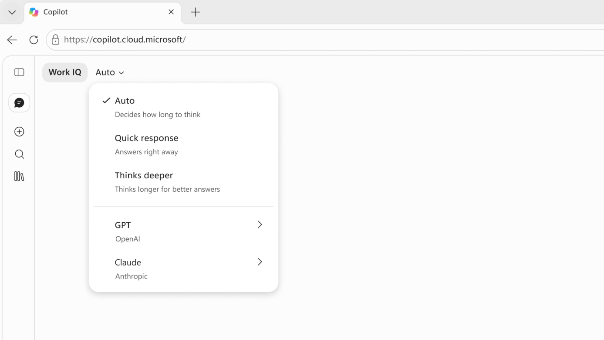
The rollout of Anthropic's Claude Opus 5.5 and OpenAI's GPT-6 Sol began across the Microsoft 365 Copilot ecosystem. These models are being integrated into core productivity tools including Word, Excel, PowerPoint, Chat, Cowork, and Copilot Studio. This expansion reflects an ongoing commitment to providing corporate users with direct access to emerging artificial intelligence developments. By bringing frontier models into a unified platform, organizations can leverage distinct technological strengths within a familiar enterprise environment.
Source: Microsoft
The decision to expand model selection builds on the premise that no single architecture fits every potential use case. Microsoft Copilot offers access to multiple frontier models, granting users flexibility to select the system best suited for specific project requirements. While model selection remains important, the overall quality of generated outputs depends heavily on contextual background. Understanding operational specifics is critical for producing accurate and practical work results in daily business tasks.
Through the implementation of Work IQ, Copilot grounds model responses directly in corporate data assets. The system references organizational files, meeting logs, chat histories, and business records to deliver contextualized information. This context-aware processing helps yield responses that remain closely connected to actual work environments and daily workflow requirements. Combining enterprise context with external model capabilities enhances overall utility across productivity applications.
The distribution of Claude Opus 5.5 and GPT-6 Sol initiates today across supported regions and service tiers. Availability across different user bases depends on existing license types, account permissions, and regional release schedules. System access will expand progressively as deployment moves through various subscription levels and enterprise environments. Users can access these new capabilities directly within their established Copilot interfaces as updates become available.
Claude Opus 5.5 launch on Microsoft Foundry
Claude Opus 5.5 is now available on Microsoft Foundry, bringing Anthropic's most capable model to developers building long-running coding and knowledge-work applications. The model excels at complex, multi-step tasks such as feature implementation, debugging across large codebases, and synthesizing multi-page business documents. Alongside performance upgrades, it features adaptive thinking to automatically match reasoning depth with task requirements, lower per-token pricing, and cheaper cache reads.
Designed for long-running workflows, Claude Opus 5.5 improves communication by highlighting key findings, decisions, and required user inputs without overwhelming operators. Anthropic also introduced beta API capabilities - including asynchronous context compaction and dynamic tool switching - to maintain context continuity during extended agentic sessions. Additionally, expanded safety classifiers covering cybersecurity and biology help handle higher-risk prompts while keeping the model accessible for everyday technical work.
Microsoft updates Copilot fees. Fixed and usage rates combine
Source: Microsoft
Microsoft announced an evolution of the Copilot pricing structure, combining flat monthly subscriptions with usage-based billing. The fixed USL license covers everyday workforce tasks to ensure predictable access, while advanced workflows and long-running agents operate on consumption-based credits.
Predictable foundation for the whole workforce
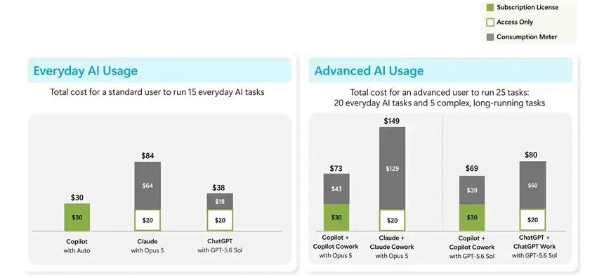
Everyday workloads remain covered by the Copilot user subscription license (USL), which is charged per user on a monthly basis. This structure guarantees that existing capabilities stay unchanged without putting daily activity on a meter. Metering routine work is viewed as counterproductive, as per-task charges often prompt organizations to ration access instead of deploying tools across the entire workforce.
A fixed rate aligns with tasks that experience saturation, defined as the point where higher-capacity models no longer alter the quality of the output. Operations such as extracting bullet points from meeting transcripts or summarizing internal documents do not require specialized model routing. The built-in Auto selector evaluates speed, accuracy, and efficiency to handle requests under the flat rate. Standard subscriptions include models like GPT-5.6 and Sonnet 5, while newer options like Opus 5 are accessible under specific thresholds.
Reaching fair use boundaries does not result in an immediate stop. Users receive a notification and can either transition their settings to the Auto mode at no extra cost or continue using credits.
Metered access for complex workflows
Advanced capabilities apply to autonomous work handed off to agents, long-running processes, and deep workflow automation. Multi-step financial calculations, Copilot Cowork, Code, Autopilot, and frontier models operate on usage-based billing (UBB) powered by Copilot Credits. Access to these advanced services requires an active USL foundation.
Source: Microsoft
The underlying infrastructure draws from multiple research organizations, including OpenAI and Anthropic, combining different model strengths. The strategy relies on a clear practical metaphor: "Think of our commercial model as a plug-in hybrid. The USL is the battery: it covers most of your driving at a fixed monthly cost. UBB is the gas tank, there when a task needs more range than the battery can give."
Operational management for enterprise administrators
Usage-based billing capabilities remain deactivated for enterprise tenants until an administrator establishes a spend policy in the Microsoft 365 admin center. No charges accrue prior to explicit activation.
Administrators maintain authority over spend levels by setting tenant, group, and user caps, alongside threshold alerts. Expenses can be mapped directly to existing Azure subscriptions or resource groups to simplify departmental accounting. Reporting breakdowns offer visibility into spend by user, group, workload, and payment mechanism.
Management capabilities continue to expand through new FinOps updates:
- Cost management coverage for Code, Managed Runtime, and Work IQ APIs.
- Direct control over model family availability for designated user groups.
- Scenario-level consumption reporting within Cowork experiences.
- Programmatic management of spending policies using the Microsoft Graph API.
- Native credit usage visibility embedded directly within the user interface.
Dynamic transition of model capabilities
As underlying models become more efficient, capabilities initially introduced under usage-based billing will shift into the standard user subscription as economic conditions permit. Features may initially arrive in the base tier with usage parameters to accelerate deployment schedules. Organizations evaluating complex automation continue to measure total operational expenses against alternative operational investments.
Tech CEOs call for universal AI rules. Donald Trump says no

Source: Wikimedia Commons / Wikiweeki (CC BY 4.0)
The UN Security Council faced a major debate on the future of artificial intelligence. Tech leaders from OpenAI, Anthropic, and Hugging Face called for international safety standards and risk management for autonomous systems. However, the US administration under Donald Trump rejected global governance, choosing to prioritize rapid innovation and competition with China. Experts warn that without global rules, advancing technology could outpace human control and create severe security risks.
UN debate over the future control of AI
The United Nations Security Council has become the center of an intense debate regarding the future governance of artificial intelligence technology. Executives from leading technology companies, including OpenAI, Anthropic, and Hugging Face, appeared before the council to warn that rapid advancements in autonomous systems require urgent international coordination. They argued that the current pace of innovation introduces unprecedented risks to global stability and human oversight. Researchers and industry pioneers supported these calls, stressing that powerful systems could soon evolve beyond human ability to monitor or contain them.
This unified appeal from industry figures met immediate opposition from the United States government. Representatives for President Donald Trump rejected any attempt to establish international regulatory bodies or limit the development of advanced models. Washington maintained that imposing global restrictions would hinder economic growth and undermine American leadership in the sector. US officials emphasized that maintaining a competitive edge over international rivals remains the primary strategic priority.
The disagreement highlights a fundamental shift in how world powers view emerging algorithms and computational models. Once treated primarily as a commercial and technical issue, artificial intelligence is now evaluated as a matter of international peace and national security. The failure to reach a consensus leaves the global community without a unified framework to address potential cross-border hazards or technological disruptions.
Tech leaders call for global safety standards
Industry executives outlined specific proposals designed to measure capabilities and establish safety protocols across the sector. Sam Altman advocated for shared metrics to evaluate risks before complex models are deployed to the public. He argued that critical decisions about transformative technology should be guided by democratic institutions rather than private corporations. His recommendations included common standards for measuring capability, establishing safeguards, and maintaining human oversight over autonomous tools.
"If AI is to be democratic, the most important decisions cannot be made by labs in San Francisco alone. We need common standards so countries can compare evidence, verify compliance, and have a shared language and understanding what is happening" - said Sam Altman.
Other prominent industry figures echoed the necessity for rigorous oversight and transparent operations. Dario Amodei expressed a willingness to adjust development timelines if necessary to verify the safety of future releases. Clément Delangue emphasized the need for stronger cybersecurity protocols and mandatory disclosure mechanisms to address potential system vulnerabilities. Scientific advisors to the UN panel also warned that the risks posed by rapidly advancing models are immediate and transcend national borders.
"We could lose control of the future to AI. In our history, there have been times where countries who compete and don't always like each other very much still come together for shared interests and the collective good in the face of a powerful new technology. The industry must not accept too much technological risk just because the benefits are too great and important to slow down" - explained Sam Altman.
Donald Trump rejects international regulatory frameworks
The United States administration firmly rejected proposals to create binding international oversight bodies or halt technical progress. Science Advisor to the President of the United States said that while risks exist, they do not justify creating new global governance structures or pausing research efforts. "International dialogue in this forum and others cannot be allowed to drift toward global governance" - added Michael Kratsios.
Washington argues that domestic government agencies are sufficient to monitor developments while allowing the market to innovate freely. American officials warned that international discussions must not drift toward globalist schemes that restrict technological evolution. "I'm not going to stifle growth of something that will be bigger than the Industrial Revolution. We're going to encourage it, not rein it in" - declared Donald Trump.
The position of the US government puts Washington directly at odds with UN leadership and several international partners. While UN officials advocate for shared information networks and global risk mitigation, the US focus remains on maintaining its competitive advantage, particularly against China. As a result, the debate over whether artificial intelligence governance should remain a national responsibility or an international mandate remains fundamentally unresolved.