Source: Microsoft
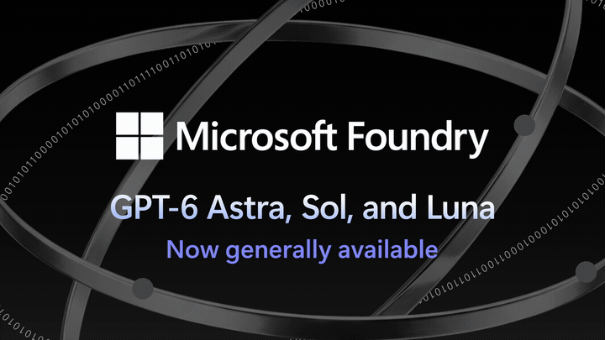
Microsoft has expanded its Azure OpenAI lineup in Microsoft Foundry by making GPT-6 Sol and GPT-6 Luna generally available alongside GPT-6 Astra. This release marks a shift toward task-specific model routing for enterprise AI agents, moving away from single-model implementations. By combining advanced reasoning with faster, smaller models, Microsoft addresses two major enterprise hurdles: operational latency and escalating compute costs. For organizations running agentic workflows, the update enables precise matching of tasks to the right balance of intelligence and cost.
Multi-model architectures replace single-model deployments
Running every enterprise task through a top-tier reasoning model creates unnecessary operational overhead. The expansion of the GPT-6 tier allows architecture teams to segment workflows based on complexity. GPT-6 Astra targets high-judgment tasks like advanced reasoning, software engineering, and direct computer interaction.
GPT-6 Sol offers a cost-effective alternative for multi-step reasoning, coding, and tool-augmented workflows. Meanwhile, GPT-6 Luna provides high-throughput processing for extraction, request routing, and routine interactions. This tiering allows data platform leaders to reserve expensive model calls for critical decisions while offloading repetitive preparatory work to faster engines.
Granular deployment models match enterprise scale and compliance
Deploying generative models into production requires predictable performance and strict compliance governance. Microsoft Foundry now offers three distinct deployment tiers across 28 global regions as well as US and EU Data Zones. Standard deployment provides pay-per-token flexibility, while Priority Processing offers low-latency, pay-as-you-go capacity.
For predictable high-volume production, Provisioned Throughput guarantees reserved capacity and stable latency. Furthermore, safety features are built directly into the operational stack - applying guardrails across prompts, outputs, tool execution, and identity access using Microsoft Purview policies.
Cost per task becomes the new metric for agent ROI
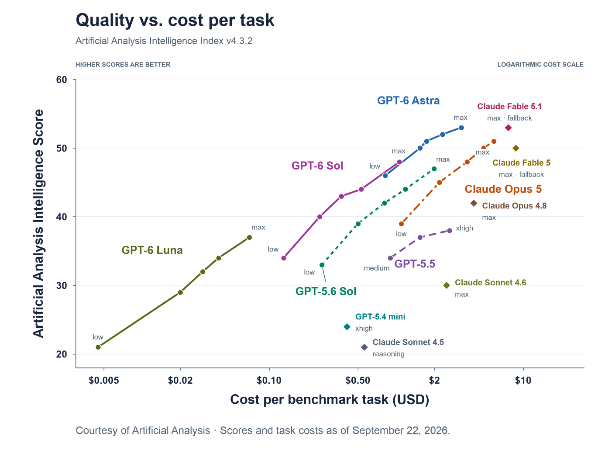
For enterprise AI deployments, evaluating models solely on cost per token hides the true price of complex agentic tasks. Larger models often use fewer, higher-value tokens to reach a resolution, whereas smaller models excel at high-volume data preparation.
Source: Microsoft
Implementing a tiered model structure in Microsoft Foundry lowers the total cost per task while improving response times across customer-facing and internal workflows. Organizations migrating from legacy setups can immediately optimize operational budgets without sacrificing reliability or governance.
Learn more on Microsoft Azure Blog
Microsoft Foundry introduces native voice agents to accelerate enterprise conversational AI
Source: Microsoft
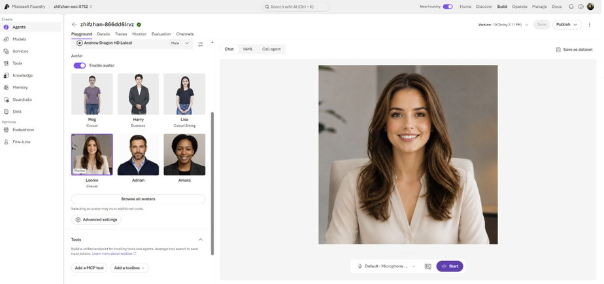
Microsoft has expanded its Foundry Agent Service by introducing native real-time voice capabilities in public preview, allowing enterprise engineering teams to build, deploy, and govern conversational voice agents alongside their existing text-based AI workloads. By embedding speech natively into the runtime rather than stitching together external speech-to-text and text-to-speech services, the platform addresses a long-standing architectural pain point in enterprise voice automation: reducing latency and operational friction across the entire lifecycle.
Bridging the gap between prototype and production voice systems
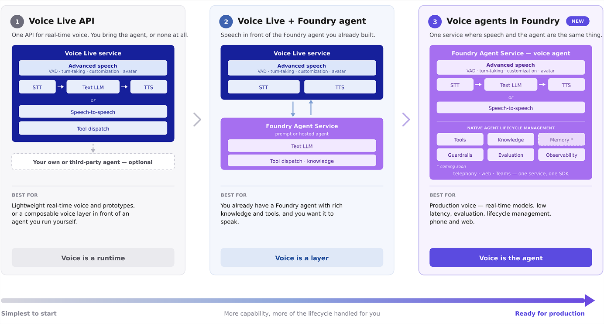
Building reliable voice interfaces for complex enterprise workflows has historically required orchestrating fragmented pipelines across speech recognition, natural language reasoning, and audio synthesis. Microsoft Foundry eliminates this integration tax by providing unified APIs, SDKs, and developer tooling for voice agents, allowing teams to leverage familiar capabilities like Azure Realtime, OpenAI's GPT Realtime, or custom proprietary models.
Crucially for global organizations, native support extends across more than 80 languages and 140 locales, while built-in handling for natural turn-taking and user interruptions allows agents to execute seamless, human-like conversations.
Extending unified governance, enterprise context, and developer workflows
A core architectural advantage for enterprise adopters is reuse: voice agents natively inherit the governance policies, enterprise data connections, and tool definitions already configured within the Foundry environment. Developers can build and test voice applications directly inside Visual Studio Code or manage deployments through the Azure Developer CLI (AZD AI) workflow without writing custom test harnesses.
Source: Microsoft
To support diverse interaction models, these agents can be deployed across web applications, Microsoft Teams, Teams Phone, and telephony providers like Twilio, with optional integration for custom speech models, brand-specific voices, and visual avatars.
Bringing standard observability and rubric-based evaluation to spoken AI
Operating voice platforms in production demands specialized telemetry to catch speech-recognition errors, latency bottlenecks, or tool execution delays before they impact customers. Foundry addresses this by providing voice-native observability, extending standard tracing, transcript analysis, and monitoring to audio interactions.
Furthermore, automated rubric evaluators allow platform teams to score conversations continuously against business-specific rules - such as compliance verifications or policy boundaries - using LLM-driven criteria. This enables data leaders to establish repeatable quality controls and optimize operational costs without relying on manual call audits.
By unifying real-time speech components with enterprise-grade lifecycle management, Microsoft provides a standardized framework for organizations moving conversational AI from isolated experiments into mission-critical contact centers and operational workflows.
Learn more on Microsoft Foundry Blog
FabCon Poland 2026: Key Microsoft Fabric innovations from Barcelona coming to Warsaw
Source: Onex Group
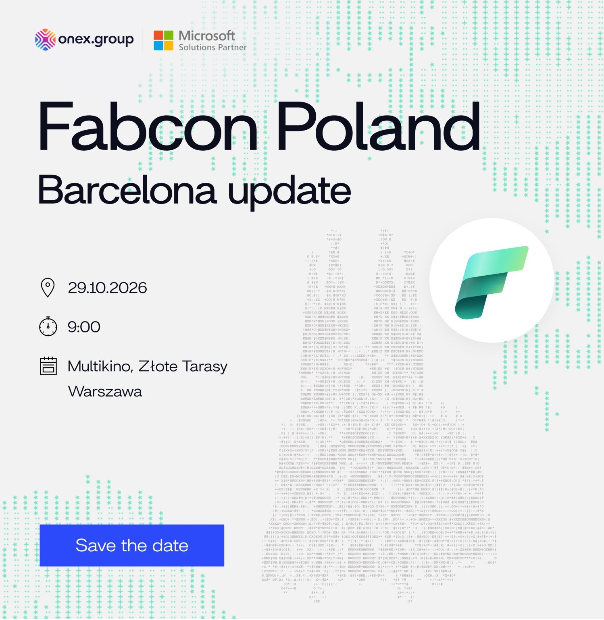
The Polish Data & AI community is gearing up for one of the autumn’s most anticipated local events. On October 29, 2026, Multikino in Złote Tarasy, Warsaw, will host FabCon Poland 2026: Barcelona Update, an all-day conference completely focused on unpacking the ground-breaking announcements from the Microsoft Fabric Community Conference (FabCon Europe).
From Barcelona to Warsaw: direct knowledge transfer
Running from 09:00 to 17:00, the event promises to bridge international product developments directly to the domestic ecosystem, offering attendees a comprehensive look at the future of enterprise data platforms.
The initiative directly connects Polish professionals to the flagship European gathering happening in Barcelona from September 28 to October 1, 2026. As one of the world's premiere venues for Data & AI specialists, FabCon Europe brings together Microsoft product teams and global community leaders to unveil upcoming capabilities, strategic roadmaps, and next-generation tools across the entire data spectrum.
Onex Group brings global expertise to the local market
To ensure local professionals do not miss a beat, the experts from Onex Group will be present on-site in Barcelona throughout the conference. Their primary mission is to capture the most significant product debuts, architectural shifts, and technical updates as they happen live. By synthesizing these key updates directly from the source, the team aims to deliver a curated, high-value transfer of knowledge specifically tailored to the priorities of the Polish Data & AI community.
Rather than sifting through endless session recordings or high-level press releases, conference participants in Warsaw will receive a condensed yet thorough breakdown of the platform's trajectory. This direct-from-Barcelona perspective ensures that Polish organizations can assess new technologies quickly and understand how upcoming capabilities align with their ongoing digital transformation strategies.
Deep dive into Microsoft Fabric, Power BI, and data governance
The agenda for FabCon Poland: Barcelona Update will center on translating technical reveals into practical business and engineering value. Sessions will cover core advancements across Microsoft Fabric, Power BI, modern data engineering practices, and enterprise data governance. Presenters will explain not only what features are being introduced, but how these updates operate in real-world scenarios and what impact they will have on existing data architecture and analytics pipelines.
While the granular schedule and speaker lineup will be revealed in the coming weeks, the organizer encourages all Data & AI specialists to reserve October 29 in their calendars. Whether you are an architect, analytics lead, or database administrator, FabCon Poland offers an essential opportunity to gain actionable insights, network with peers, and prepare your data strategy for the road ahead.
Learn more on the event page
Microsoft Fabric unlocks high-performance SAP ingestion with new ABAP Add-On
Source: Microsoft
Data teams running enterprise SAP environments can now bypass traditional connector bottlenecks and extract data directly into OneLake at scale. With the preview release of the Copy job for SAP via ABAP Add-On, Microsoft introduces a native, high-throughput ingestion mechanism for SAP S/4HANA, BW/4HANA, and modern ECC systems. By pairing an on-premises data gateway with a dedicated ABAP Add-On installed on the SAP application server, organizations gain flexible incremental loading, direct staging to OneLake, and significantly improved pipeline performance.
Direct OneLake staging bypasses traditional SAP extraction bottlenecks
Extracting large volume data from core SAP systems into modern analytics platforms has historically required complex middleware or expensive third-party tools. The new ABAP Add-On shifts the heavy lifting directly to the SAP application server using ABAP SQL. During pipeline execution, the on-premises gateway triggers the process via RFC, but the actual data payload stream is written straight from SAP to OneLake staging over secure outbound HTTPS.
This architecture removes intermediate memory pressure on the gateway host, allowing enterprise data teams to copy transparent tables, pool/cluster tables, standard views, and CDS views without traditional middleware overhead.
Watermark-based incremental ingestion streamlines continuous data pipelines
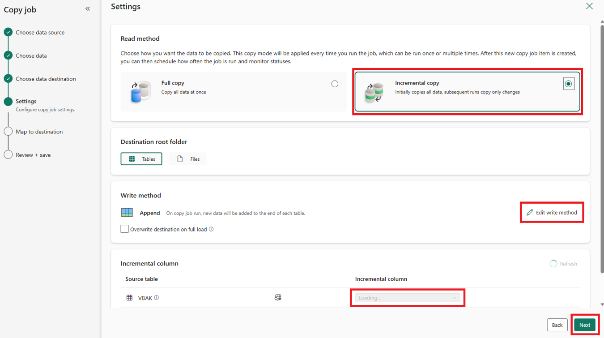
To keep Lakehouses up to date without overwhelming SAP application servers, the Copy job supports full and watermark-based incremental loading. Data engineers can leverage native SAP long/short timestamp domains or standard "DATS" date fields as incremental watermarks.
When combined with Fabric's automatic data mapping and merge update capabilities at the destination, teams can easily handle ongoing changed-data capture (CDC) scenarios. While net-new installations require SAP systems running NetWeaver 7.50 or higher (such as SAP S/4HANA or SAP ECC 6.0 EhP 8), the capability establishes a reliable foundation for enterprise-wide operational analytics.
Accelerated time-to-value for enterprise SAP data integration
For enterprise architects and heads of data managing large-scale SAP estates, this update significantly lowers the barrier to building unified analytical ecosystems in Microsoft Fabric.
By removing reliance on slow row-by-row legacy extractions and eliminating intermediate staging servers, enterprise organizations can drastically reduce compute costs, simplify pipeline architectures, and accelerate time-to-insight for SAP data.Large corporate organizations evaluating SAP modernization now have a scalable, first-party path to integrate operational core systems directly with OneLake.
Learn more on Microsoft Learn