

Source: Microsoft
The Microsoft Fabric team has introduced two REST API operations in Public Preview that expose the platform's lineage graph programmatically. By unlocking access to upstream dependencies and downstream impact across workspaces, enterprise platform teams can now move beyond manual visual inspections in the portal. This update enables data leaders to embed dependency analysis directly into automated CI/CD pipelines, internal data catalogs, and AI agent workflows.
Programmatic graph traversal replaces manual portal inspection
Understanding where data originates and what breaks when a schema changes has historically required manual click-throughs in the Fabric portal visual view. The new Item Relations API converts this visual metadata into a programmable surface, exposing two endpoints for upstream data sources and downstream consumer impact.
Requests return a structured payload containing items, cross-workspace identifiers, and typed dependency edges - such as Shortcut, PushData, Orchestration, or Datasource - giving platform engineering teams a deterministic map of their entire data estate.
Lineage provides critical architectural context for enterprise AI agents
While the operational benefits for CI/CD safeguards and automated data catalogs are immediate, the strategic shift lies in enterprise AI readiness. Autonomous agents and Copilot instances require context to deliver accurate answers and execute safe actions.
By exposing dependency pathways via API, organizations can allow AI agents to evaluate the blast radius of a proposed change or trace a metric back to its root source before returning an answer. This grounds AI reasoning in actual operational infrastructure rather than probabilistic guesswork.
De-risking platform operations for enterprise data teams
For mid-market and enterprise organizations managing complex, multi-workspace Fabric environments, manual governance does not scale. Exposing lineage as an API allows platform teams to enforce automated deployment gates, prevent accidental downstream breaking changes, and lower overall operational risk.
Organizations evaluating or scaling Fabric can now treat lineage as a foundational building block for automated governance, ensuring that both human engineers and AI agents act with full visibility into platform dependencies.
Learn more on Fabric Updates Blog
Microsoft Fabric streamlines web-based SQL development for enterprise scale
Source: Microsoft
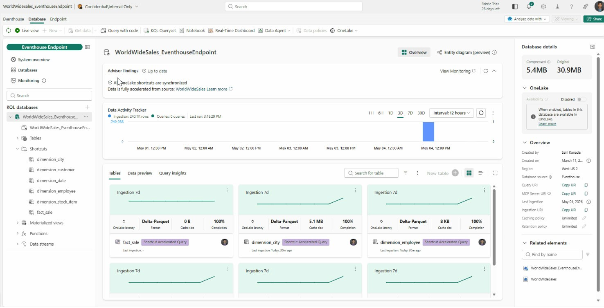
Microsoft has upgraded the web-based SQL Query Editor in Microsoft Fabric, introducing performance optimizations for massive schemas, flexible query management, and native cross-engine integration. By eliminating browser friction, expanding .sql file support, and connecting SQL directly to Spark, KQL, semantic models, and automated triggers, Fabric simplifies how data teams explore, build, and operationalize enterprise data.
Removing browser friction in large-scale data warehouses
As enterprise data warehouses grow to thousands of tables, traditional web-based query tools often suffer from lagging autocomplete, unresponsive schema browsers, and truncated result sets. The newly updated Object Explorer, IntelliSense engine, and data grid are now Generally Available and specifically engineered to remain fast in metadata-heavy environments.
Developers working with complex corporate schemas can navigate thousands of database objects without delay, pin high-frequency tables, and inspect wide result sets or large LOB data types directly in the browser without exporting data to desktop tools.
Standardizing SQL workflows and collaborative development
Moving SQL logic between local developer environments, ad-hoc exploratory sessions, and shared team repositories often introduces version control friction. The SQL Query Editor now offers native .sql file import and export alongside bulk query management, allowing teams to integrate web development directly into existing source control workflows.
Additionally, granular autosave controls prevent experimental code from overwriting established queries, while preview capabilities enable developers to share SQL code together with its executed results or direct environment links for faster peer reviews.
Bridging data warehouse logic to downstream analytics and operations
Enterprise data initiatives frequently stall when moving validated SQL code into production workflows. Instead of requiring developers to manually replicate work across disparate tools, the editor provides direct pathways into OneLake analytics, semantic modeling, and automated alerting.
Teams can launch KQL Eventhouses or Spark Notebooks directly against warehouse data, generate Direct Lake semantic models for Power BI reporting without extra navigation, or use Fabric Activator (Preview) to turn monitoring queries into automated, event-driven business workflows.
For enterprise data leaders and platform managers, these updates significantly lower the operational overhead of web-based data engineering. By unifying exploration, development, and cross-engine integration inside a single performant environment, Fabric enables technical teams to deliver validated data assets and automated workflows faster while maintaining consistency across the entire analytics estate.
Learn more on Fabric Updates Blog
Microsoft extends Power BI Q&A retirement to February 2027 and unlocks Copilot for smaller capacities
Source: Microsoft
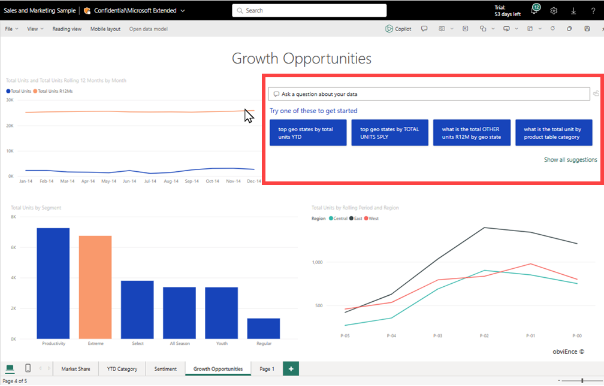
Microsoft is giving enterprise data leaders more breathing room by extending the retirement timeline for Power BI Q&A to February 2027. More importantly for cost-conscious IT departments, Microsoft has decoupled Copilot from high-tier capacity requirements, making it available on smaller Fabric entry points down to F2. This update changes how mid-market and enterprise organisations plan their natural-language analytics transition while addressing key gaps in embedded and sovereign cloud environments.
Fabric Copilot access lowers the barrier for enterprise adoption
The original plan to retire legacy Q&A forced many organisations to confront a steep cost curve, as Copilot originally required P1 or F64 capacities. By enabling Copilot and Fabric Copilot Capacity (FCC) on smaller SKUs down to F2, Microsoft removes a major financial barrier for teams relying on Power BI Pro and Pay-As-You-Go models. Data platform managers can now centralize Copilot usage across Pro and PPU workspaces without immediately committing to large-scale Fabric investments. This lowers the initial cost of ownership while allowing teams to test AI-driven analytics on production workloads.
Embedded analytics and sovereign clouds face migration hurdles
The update reveals significant limitations for specific deployment patterns that architectural teams must account for. Microsoft confirmed there are no plans for a direct Copilot replacement for embedded PaaS scenarios, leaving ISVs and internal app developers without an in-place upgrade path. Instead, teams must evaluate SaaS migration paths, narrative visuals, or the Fabric IQ MCP Server. Furthermore, sovereign cloud deployments still lack Copilot capabilities due to restricted GPU availability, leaving highly regulated enterprise environments without a immediate replacement for legacy Q&A tools.
Strategic impact on platform governance and migration planning
For CDOs, Data Architects, and BI Managers, this extension turns a immediate migration requirement into a structured platform modernization effort. While the February 2027 deadline provides extra time, organizations using embedded analytics or sovereign deployments must act early to assess technical dependencies and re-architect solutions. The availability of Copilot on lower Fabric capacities provides an effective route to retire legacy natural-language visuals, optimize capacity spending, and standardize enterprise AI capabilities across the organization.
Learn more on Power BI Updates Blog
OneLake Catalog introduces sub-item table search to accelerate enterprise data discovery
Source: Microsoft
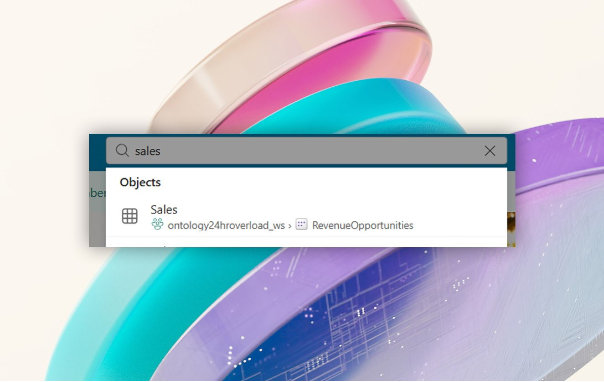
Finding specific datasets in complex enterprise data environments often feels like searching for a needle in a haystack. Microsoft Fabric is addressing this friction by introducing granular table-level discovery directly within the OneLake Catalog starting late September. This shift expands discovery capabilities beyond top-level Fabric items down to individual tables in lakehouses, semantic models, and mirrored databases, allowing data teams to locate assets by name, description, or exact column match without pre-existing knowledge of the host workspace.
Direct object discovery breaks down metadata silos
Historically, data discovery in Microsoft Fabric required users to locate and navigate into top-level parent items first. The new table search capability changes this dynamic by indexing sub-item entities, surfacing matching tables as standalone search results. For enterprise teams working across hundreds of workspaces, this dramatically speeds up development cycles when developers only know a target column name or functional table description.
Furthermore, Fabric extends this functionality programmatically via the OneLake Catalog Search API and Fabric MCP servers, enabling integration into custom internal developer portals and AI agentic workflows like GitHub Copilot.
Governance remains intact through control-plane permission trimming
A common concern with expanded search index scope is governance leakage. Fabric handles this by tying table visibility directly to existing workspace control-plane permissions. Users only discover tables inside items where they hold at least Read control-plane permission; Read All or Read Data permissions are not required to see metadata.
Data-plane security (such as OneLake security) continues to restrict actual data access when a user attempts to query the table. To prevent unintentional leakage of sensitive schema structures, tables protected by semantic model Object-Level Security (OLS) are strictly excluded from search results.
Early tenant controls let administrators prepare before rollout
Because table discovery is enabled by default, IT leaders and platform administrators should proactively evaluate their organizational readiness. A dedicated tenant setting, "Users can find objects in search", is already available in the Fabric admin portal, allowing platform teams to disable object-level discovery prior to the late September rollout if required.
Leaving the setting active allows organizations to maximize metadata transparency while retaining top-level access controls, but disabling it will limit search strictly to top-level items without altering underlying data access permissions.
By bridging the gap between top-level item governance and granular data discovery, Microsoft Fabric provides enterprise data architects and engineering leaders with a scalable foundation for decentralized data operations.
Learn more on Fabric Updates Blog