
In this article, we will examine the most important concepts related to ChatGPT, explaining its basic elements and practical applications in organizations.
The main points you will find in the article:
- Understand the differences between elements of the OpenAI ecosystem,
- Learning about the version of OpenAI available on the Microsoft Azure platform,
- Clarifying the difference between "engine" and "model" in OpenAI.
Evolution of Generative Artificial Intelligence.
Reports of ChatGPT and other related technologies have recently circulated the Internet. After years of using keyword-based search engines (e.g., Google) and chatbots running on predefined FAQ databases, the time has come for technology that offers a more human-like experience. To understand this, let's start by deciphering key terms.
Decoding concepts
Generative AI models are a subset of deep learning models that can create new content based on the description contained in the input data. They are based on techniques such as neural networks that allow them to learn from huge data sets and generate complex, multidimensional results.
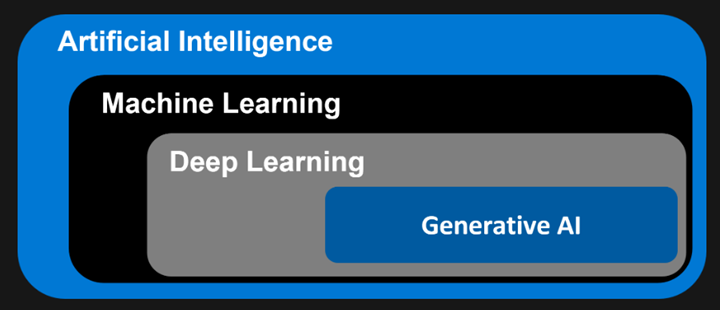
OpenAI is an artificial intelligence research lab that develops generative models capable of creating language, code and images. OpenAI's most popular models are:
- GPT: (Generative Pre-trained Transformer) a family of language models designed to generate natural text.
- DALL-E: a neural network that generates images from textual descriptions.
- Codex: a model that learns to generate code from natural language descriptions.
- MuseNet: a model that generates music in a variety of styles and genres.
ChatGPT - Applications and Performance
ChatGPT is an application/chatbot based on the GPT language model developed by OpenAI. ChatGPT simulates human-like conversations and can be customized to perform a variety of tasks, such as customer service, personal assistants or educational applications. It uses natural language processing (NLP) techniques to understand and answer users' questions in a conversational manner, making it a versatile tool for both business and individual users.
Generative Pre-trained Transformer (GPT) is a type of language model being developed by OpenAI. It is designed to generate text that resembles human speech by predicting the most likely words in a given sequence. GPT is trained on huge collections of text to understand language structures and patterns. This allows it to generate consistent and contextually relevant content for applications such as language translation, text summarization and chatbot systems.
The most advanced version at present is GPT-3.5, one of the largest language models, which demonstrates exceptional capabilities in performing natural language processing tasks.
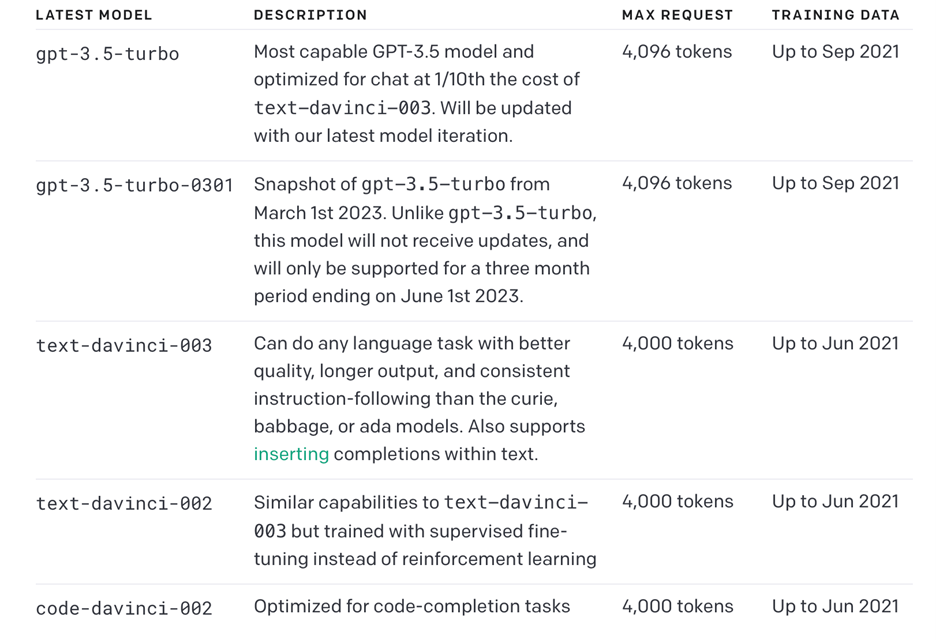
OpenAI and Azure - Combining the Possibilities
Azure OpenAI Service is the result of a partnership between Microsoft and OpenAI that began in 2019 and is now entering its third phase. Microsoft and OpenAI are collaborating in three key areas:
- Leverage Azure infrastructure, including security, compliance and regional availability, to build enterprise-class applications.
- Implementing the capabilities of OpenAI AI models in Microsoft products, not just those available in Azure.
- Power all OpenAI workloads using Azure.
Azure OpenAI Service combines the enterprise capabilities of Azure with the generative model capabilities of OpenAI. Azure users can take advantage of four key components of this service:
- AI models pre-trained,
- Customization (fine-tuning) capabilities of AI models using proprietary data,
- Built-in tools to detect and mitigate harmful use cases,
- Enterprise-grade security with role-based access control (RBAC) and private networks.
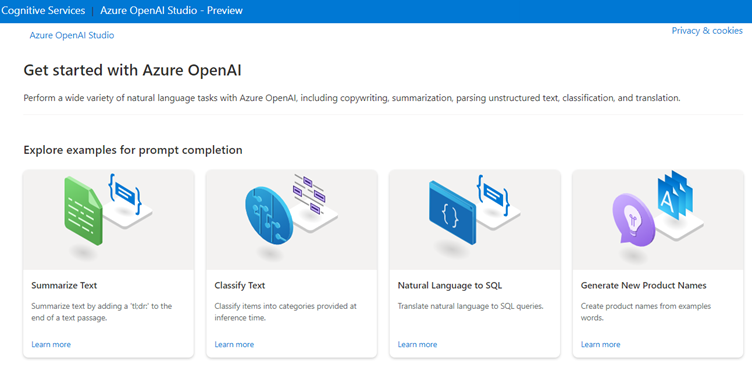
More information here:
Applications and Integrations
Azure OpenAI Service supports popular AI tasks, which can be divided into three groups:
- GPT-3: generate and edit text and search, classify and compare content using embeddings.
- Codex: generating, editing and explaining code.
- DALL-E: generating and editing images.
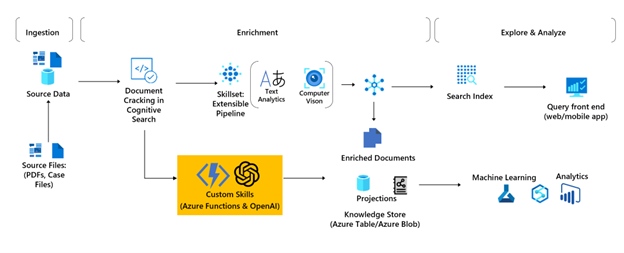
By integrating Azure OpenAI Service with other Azure services, such as Azure Cognitive Search, intelligent solutions such as automatic text summaries can be created.
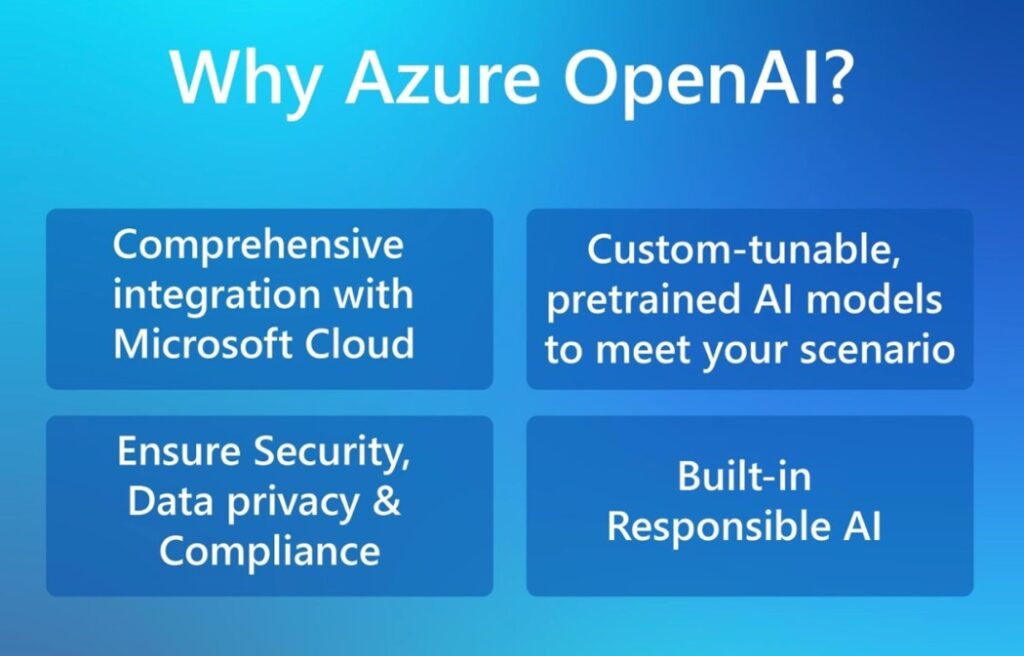
Once the resource is created in Azure, users can use the service through the REST API, the SDK for Python or the browser-based interface in Azure OpenAI Studio.
Key findings
- ChatGPT is an application that combines multiple models into a single solution developed by OpenAI.
- The partnership between Microsoft and OpenAI enables the development of such solutions at various levels, offering scalable infrastructure, enterprise-grade security, regulatory compliance and accountable AI mechanisms.
- GPT-3 is the latest language model available in Azure OpenAI Service. Choosing the right engine affects quality, performance and price. GPT-3.5 will soon be added to the Azure service.
The use of Azure OpenAI allows for building cutting-edge AI solutions, integration with existing systems, and access to responsible data processing tools, making it an ideal platform for enterprises looking to deploy artificial intelligence at the highest level.