Source: Microsoft
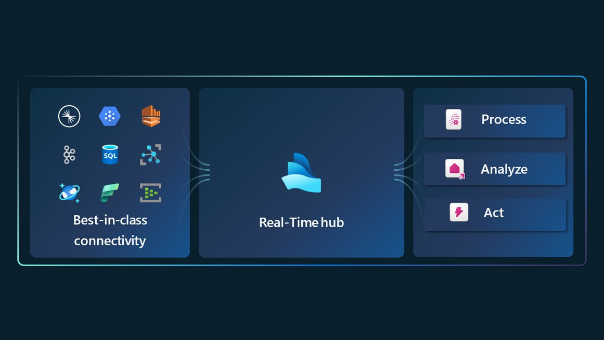
Microsoft Fabric capacity administrators can now access near real-time operational telemetry through the preview release of Capacity Operation Events in Real-Time Hub. Building on high-level capacity health metrics, this granular event stream exposes exact job executions, active workspaces, and specific artifacts driving resource usage. Organizations can now move beyond basic utilization tracking to pinpoint performance bottlenecks, address throttling instantly, and automate governance across their data estates.
Granular signals replace capacity guesswork
Monitoring platform health often leaves administrators asking why a spike occurred rather than just when. Capacity Operation Events solve this by broadcasting operation-level details, including exact duration, capacity unit (CU) consumption, and smoothing window attribution. Instead of relying purely on delayed historical reports, platform teams gain direct visibility into which specific data refreshes or queries generate system stress as it happens.
Automated governance and proactive cost control
Exposing these operational events in Real-Time Hub unlocks seamless integration with Fabric Real-Time Intelligence and Microsoft Activator. Engineering teams can build no-code automated triggers to detect throttled workloads instantly, issue targeted alerts when high-cost jobs cross thresholds, or stream log data directly into Eventhouse for long-term audit retention. This transforms capacity management from a reactive troubleshooting task into an automated, proactive operational workflow.
Strategic value for enterprise data leaders
For enterprise architecture teams and data platform managers operating at scale, granular telemetry provides the missing link for accurate chargeback models, performance optimization, and risk mitigation. Knowing precise resource consumption at the workspace and artifact level ensures higher platform uptime, prevents costly over-provisioning, and gives technical leadership tight control over Fabric operational costs.
Learn more on Fabric Updates Blog
Microsoft Fabric brings governed data to AI agents with Copilot Studio GA
Source: Microsoft
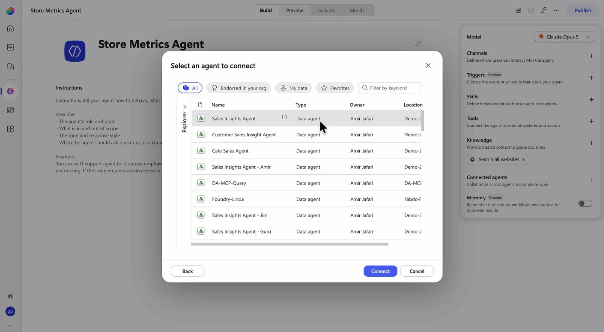
Enterprise data leaders can now expose governed Microsoft Fabric data directly to Copilot Studio agents via a native tool integration. By moving away from isolated connectivity toward a tool-based architecture, organizations can build multi-agent workflows that reason across real-time enterprise data, SharePoint policies, and line-of-business systems without bypassing underlying security models.
Tool-based integration replaces isolated data agents
The general availability of Fabric Data Agents within Copilot Studio shifts the integration model from connected, standalone agents to a unified tool architecture. By selecting the Fabric IQ Data MCP tool, orchestrators can dynamically invoke enterprise data assets alongside other operational connectors. Built on the redesigned Copilot Studio runtime, the underlying reasoning engine evaluates incoming queries to decide when to call Fabric, ensuring data is processed in context rather than in isolation.
Security models and enterprise governance remain intact
A critical priority for platform managers is avoiding security bypasses when extending data to generative AI interfaces. Fabric Data Agents continue to execute natively within the Fabric environment, enforcing existing user permissions on underlying sources regardless of where the interaction occurs.
Furthermore, broader publishing capabilities allow organizations to deploy these data-grounded agents directly into Microsoft Teams and Microsoft 365 Copilot, providing business users with secure insights inside their daily workflows.
Strategic impact for data platforms and architecture
For enterprise architecture teams, this release solves the challenge of logic duplication across departmental AI initiatives. Rather than creating custom pipelines or duplicated indexes to feed separate assistants, Fabric serves as the single governed truth layer reusable across multiple Copilot Studio implementations.
Data engineering leaders can define semantic logic once in Fabric, while IT and business teams build action-oriented workflows on top, reducing data drift, simplifying access control management, and accelerating time-to-value for enterprise AI deployments.
Learn more on Fabric Updates Blog
Microsoft Fabric boosts AI accuracy with agentic DAX generation in data agents
Source: Microsoft
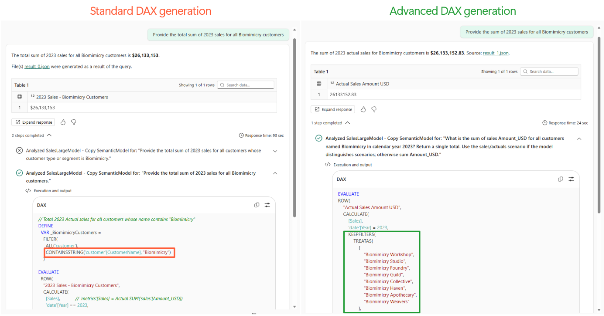
Microsoft Fabric has upgraded its data agents runtime to Preview, replacing traditional single-pass query creation with an agentic architecture for Power BI semantic models. By introducing multi-step planning, intermediate result inspection, and automated value indexing, the platform significantly reduces incorrect DAX generation and filter mismatches. For enterprise data teams, this transforms conversational analytics from a brittle AI experiment into a dependable self-service tool across Fabric, Power BI, and Microsoft 365 Copilot.
From static translation to iterative query planning
Traditional natural-language-to-DAX translation operates in a single attempt, often failing when complex business questions require multi-stage logic. The new Preview runtime introduces a specialized sub-agent that autonomously drafts an execution plan, inspects semantic metadata, evaluates intermediate outputs, and refines the DAX query before returning a final response.
This iterative reasoning loop directly mitigates the risk of hallucinated measures or broken joins, drastically improving query reliability for non-technical stakeholders asking multi-step questions.
Grounding natural language with instance value indexing
A primary point of failure in conversational BI occurs when business terminology does not match exact database entries - such as a user asking for "Biomimicry" sales while the model stores "Biomimicry Workshop" and "Biomimicry Studio". Advanced DAX generation addresses this by dynamically searching an index of actual values within the semantic model's columns before writing the filter logic. By replacing broad text searches with exact categorical matches, the engine delivers highly precise results while shielding users from needing strict knowledge of underlying field conventions.
Unifying semantic intelligence across the enterprise ecosystem
Because this agentic engine shares a query foundation across Fabric data agents, Fabric Skills, Power BI, and Microsoft 365 Copilot, data leaders can establish a single source of truth across all conversational endpoints. However, operationalizing this feature effectively requires disciplined model governance: teams must maintain clear business naming, curate focused AI data schemas, and define explicit AI instructions for metric calculations.
Organizations that standardize their semantic layer now will see immediate gains in AI adoption, lower support overhead for BI teams, and more trustworthy automated reporting across their enterprise footprint.
Learn more on Fabric Updates Blog
Modernized Power BI sample reports raise the bar for enterprise reporting standards
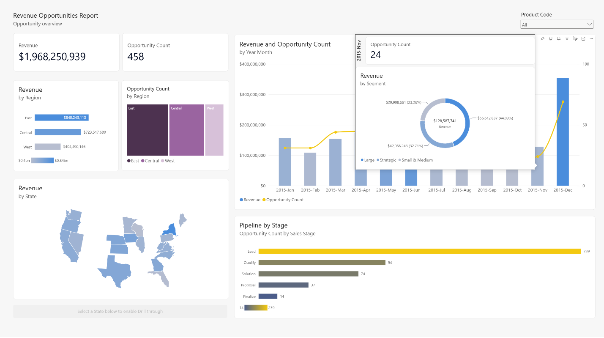
Source: Microsoft
The refreshed Power BI sample reports provide an upgraded blueprint for enterprise reporting, combining modernized visual defaults with stronger, highly optimized semantic models. By updating these classic templates to leverage current platform capabilities - such as button slicers, new card visuals, and mobile-optimized layouts - organizations gain immediate, practical reference architectures to accelerate report modernization across their data estate.
Stronger semantic models simplify data modeling and maintenance
The updated samples replace legacy modeling approaches with production-ready design practices. Key improvements include standardized display formats, explicit display names, hidden technical keys, and pre-configured sort-by attributes to eliminate authoring friction. The semantic models also integrate calculation groups to handle reusable pattern logic like inactive relationships and period-over-period comparisons without measure sprawl. For enterprise data teams, these models serve as clear examples for establishing consistent modeling governance, ensuring that self-service authors work on top of clean, well-curated data layers.
Built-in visual capabilities reduce maintenance overhead
Report pages across the updated samples now take advantage of native visual enhancements to streamline design and boost usability. Highlights include:
- New card visuals and button slicers: Consolidated multi-metric cards and native button controls reduce the number of visual elements per page, drastically lowering visual clutter and rendering overhead.
- Modern spatial and AI analytics: Bing Maps and Q&A visuals have been replaced with Azure Maps, Shape Maps, Key Influencers, and Decomposition Trees to support deeper diagnostic analytics.
- Contextual interactivity: Custom report page tooltips, field parameters, and the new date picker allow users to explore multi-dimensional data without navigating away from the core canvas.
- Mobile-optimized layouts: Every sample includes a tailored portrait layout designed for phone and tablet consumption, complete with independent visual sizing and simplified hierarchy.
Driving efficiency and consistency across corporate reporting
For BI managers, data architects, and platform leads, these updated samples offer a practical standard for modernizing legacy reporting estates. Transitioning older reports to these streamlined patterns reduces canvas object counts, leading to faster page rendering and lower memory consumption on Fabric capacity. Furthermore, establishing these updated samples as the internal reference standard speeds up report development cycles, improves mobile accessibility for decision-makers, and simplifies overall platform governance.
Learn more on Power BI Updates Blog
Microsoft Fabric expands to GCC High, opening highly regulated environments to enterprise AI

Source: Microsoft
Microsoft has expanded Microsoft Fabric to the Microsoft 365 Government Community Cloud High (GCC High) environment. This public preview brings Fabric's unified data and AI platform to public sector entities and highly regulated organizations handling sensitive government data. Public preview begins September 2, 2026, with general availability targeted for October 1, 2026. This launch allows security-conscious enterprises to modernize their data architecture and deploy agentic AI without compromising strict compliance standards.
Unifying isolated data estates in high-security environments
Regulated organizations frequently struggle with fragmented data spread across multi-cloud environments, legacy on-premises systems, and isolated operational tools. Managing separate pipelines for data movement, analytics, and reporting introduces security risks, inflates operational overhead, and creates data duplication.
By making Microsoft OneLake available within GCC High, organizations can leverage zero-copy and zero-ETL integration to unify their data estate. Data teams can connect disparate sources without physically moving or duplicating sensitive records. This architectural shift significantly cuts down manual data integration efforts, streamlines governance, and provides a single access layer for both analytical workloads and AI systems.
Grounding enterprise AI in business context via Fabric IQ
Access to raw data is rarely sufficient for building reliable AI agents. To deliver operational value, AI models require deep institutional context, including business logic, organizational policies, and relational metrics.
Fabric IQ serves as the contextual layer within the platform, linking operational data in OneLake with business intelligence semantic models. For enterprise data architects, this capability ensures that custom AI applications, Microsoft 365 Copilot, and Microsoft Copilot Studio agents operate on standardized, trusted definitions rather than raw schemas. Grounding AI in shared organizational logic reduces inaccurate outputs and enables automated workflows across mission-critical processes.
A cost-effective path to adoption using existing capacity
For organizations operating under tight IT budgets, adopting a modern data stack often presents commercial hurdles. Microsoft addresses this by allowing GCC High customers to run Fabric workloads using their current Power BI Premium capacities.
Both Power BI and Fabric capabilities draw from the same shared pool, enabling teams to pilot advanced data engineering, real-time intelligence, and data science features alongside existing reporting assets. Organizations without Power BI Premium can purchase dedicated Fabric capacity directly. This approach minimizes setup barriers, simplifies cost management, and allows platform managers to scale compute dynamically as usage expands.
Learn more on The Microsoft Cloud Blog