
Welcome to a series of articles on migrating SQL Server to Azure SQL. Over the next three posts, we will discuss the following topics:
Series overview
First article:
- Why migrate SQL Server to Azure SQL?
- Migration strategy
- Azure SQL Family
- Migration pathways
Second article:
- The process of migrating to Azure SQL
- Migration steps: Discover, Assess, Migrate, Cutover, Optimize
Third article:
- How to optimize costs? (Azure Hybrid Benefit, Reserved Instance)
- Tools and services to support the migration process
Introduction
As more and more operations move to the cloud, migrating critical data and applications to cloud platforms is becoming a priority for organizations. For many companies, this means considering migrating SQL Server databases to Azure SQL, a cloud-based relational database management system from Microsoft. SQL Server has been a mature and reliable product for years, but Azure SQL offers benefits that make it an attractive choice for companies looking to modernize their IT infrastructure.
Why migrate to Azure SQL?
Migrating to Azure SQL offers many benefits, including increased scalability, flexibility and cost savings. Azure SQL is a fully managed cloud service, allowing companies to reduce IT infrastructure costs by eliminating the need to purchase and maintain local hardware. The pay-as-you-go billing model allows you to pay only for the resources you use, which can significantly reduce costs in the long run.
Additionally, migrating SQL Server databases to Azure SQL opens up opportunities to take advantage of built-in features such as high availability, disaster recovery mechanisms, automatic updates and backups, significantly reducing the maintenance burden.
If you are considering modernizing your data warehouse, the Azure ecosystem offers a wide range of options to support your transformation into a modern data platform. Using tools from the Azure data stack, organizations can create a comprehensive solution that combines big data, data warehousing, real-time analytics and Machine Learning. This enables them to gain a unified view of data, resulting in better business decisions and competitive advantage.
Migration strategy
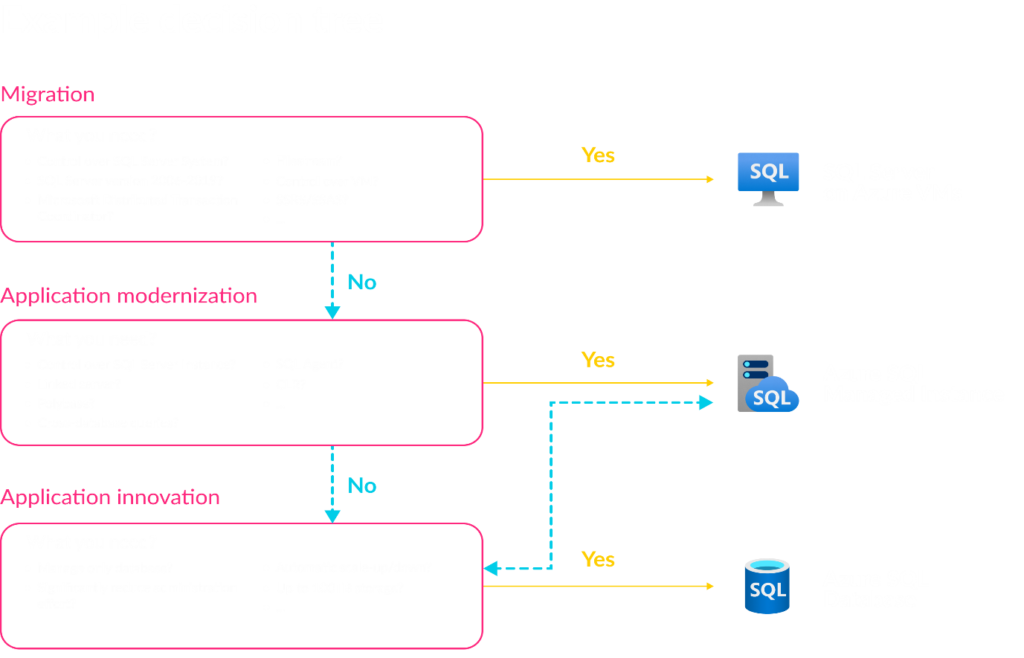
Migrating SQL Server to Azure SQL can follow different strategies depending on business requirements.
Rehosting - one of the most popular methods involves moving a local SQL Server database to an Azure SQL environment without changing its schema, application code or architecture. It is an option suitable for companies that want to quickly move their workloads to the cloud, minimizing implementation costs and operational changes.
Modernization - includes a combination of approaches such as rehost, refactor, rearchitect and rebuild:
- Refactoring - minor changes to existing application and database code to optimize the cloud environment.
- Rearchitecting - more extensive changes to the application architecture to take advantage of cloud-native services.
- Rebuilding - building an application or database from scratch, which is time-consuming and expensive, but can result in greater savings and improved performance in the long term.
Every company should carefully evaluate its migration strategy and choose the approach best suited to its needs, goals and resources. Rehosting may be the simplest and cheapest option, but upgrading can bring greater benefits in terms of performance, scalability and cost optimization.

Azure SQL Family
Three deployment options are available when migrating to Azure SQL:
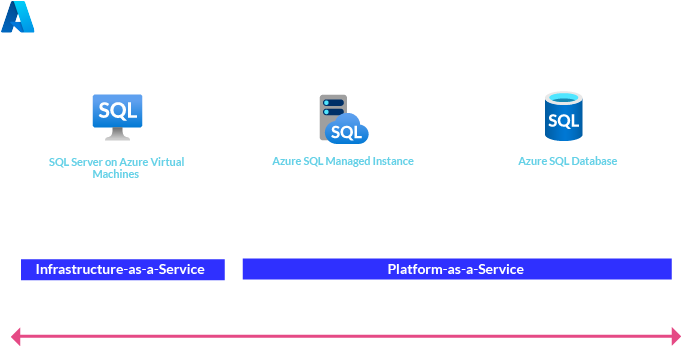
- Azure SQL VM - an option for those who need more control over their SQL Server instance and operating system (OS). It offers full administrative access to virtual machines (VMs). It is ideal for organizations with SQL Server experience that want a lift-and-shift approach.
- Azure SQL Managed Instance - a fully managed Platform as a Service (PaaS) offering SQL Server compatibility close to 100%. It supports SQL Server Agent and SQL Server Integration Services, among others, and no OS or VM management is required. It's ideal for companies that want to move their databases to the cloud while focusing on managing the SQL Server instance.
- Azure SQL Database - a fully managed database service offering intelligent optimization and scalability. Designed for developers building cloud-native applications and organizations modernizing existing applications. It offers options for deploying single databases or elastic pools with features such as automatic tuning, backups and security monitoring.
Migration paths to Azure SQL
Migrating SQL Server databases to Azure SQL provides a number of benefits. There are several possible migration paths that can be tailored to your specific needs:
- SQL Server to Azure SQL VM - a lift-and-shift approach to migrating an existing SQL Server instance to a virtual machine in Azure for full administrative control.
- SQL Server to Azure SQL Managed Instance - migrating an existing SQL Server instance to a fully managed PaaS option, ensuring close to 100% compatibility.
- SQL Server to Azure SQL Database - migrating to a fully managed database service.
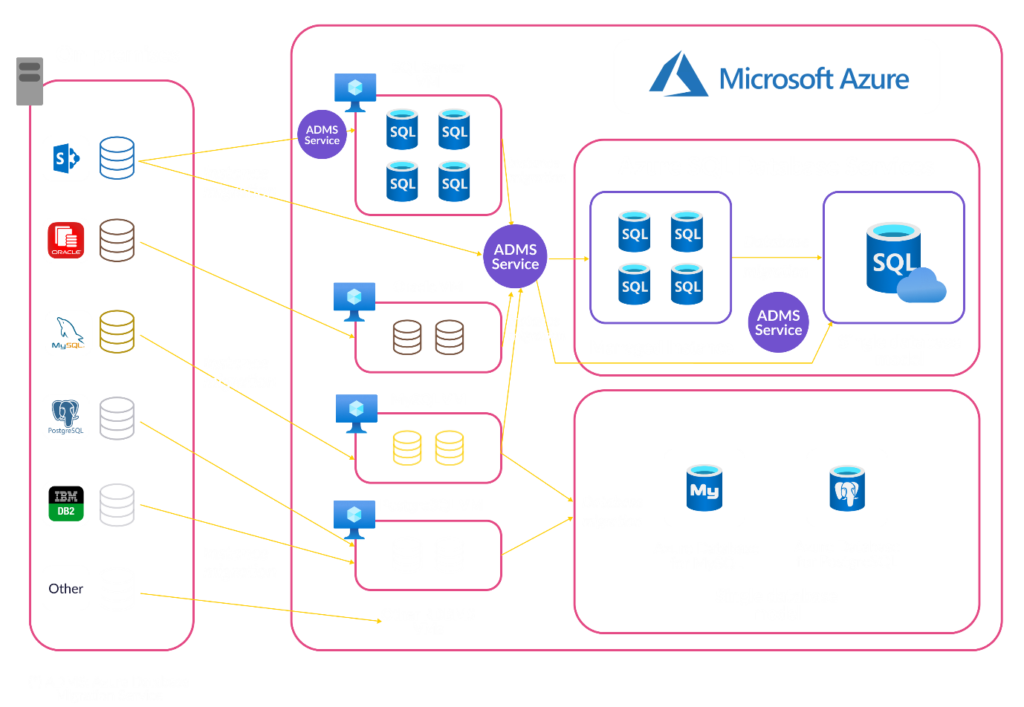
It is also worth mentioning other possible paths that can be considered when deciding to unify the database ecosystem:
- Migrating from other RDBMS to Azure SQL VM - a lift-and-shift approach to migrating databases such as Oracle, MySQL, PostgreSQL or DB2 to a VM in Azure.
- Migration from MySQL/PostgreSQL to Azure SQL Database for MySQL/PostgreSQL - moving from Azure VM to a managed database service.
- Migrating from other RDBMS to Azure SQL Managed Instance/Database - migrating and unifying a database in the Azure SQL ecosystem.
Summary
Migrating SQL Server to Azure SQL is a strategic decision backed by a strong business case. Azure SQL offers increased scalability, flexibility and cost savings, making it an attractive option for companies modernizing their IT infrastructure. Although the migration process may present some challenges, the benefits of Azure SQL are clear and can help companies remain competitive and flexible in a rapidly changing business environment.
Key findings
- Rethink your migration strategy.
- Think ahead about the benefits of moving to Azure.
- Leverage the capabilities of the Azure ecosystem - not just the data stack.
- Modernize and unify the data ecosystem.