

OpenAI brings fast visual AI agents to Microsoft Foundry with GPT-6.1 Terra
Source: Microsoft
OpenAI has launched GPT-6.1 Terra in general availability on Microsoft Foundry, targeting high-volume enterprise workloads that bridge complex visual analysis and computer-use automation. Operating at a fraction of the cost of flagship reasoning models like GPT-6 Astra, Terra enables organizations to deploy cost-effective, real-time AI agents across administrative, technical, and operational workflows without sacrificing enterprise governance or regional data residency requirements.
Next-generation visual reasoning accelerates screen-based automation
The primary architectural shift in GPT-6.1 Terra lies in its ability to combine enhanced multimodal visual comprehension with fast, accurate computer interactions. Designed for day-to-day operational tasks, the model excels at parsing technical drawings, architectural floor plans, product catalogs, and application interfaces. Rather than relying on simple optical character recognition (OCR) or basic UI parsing, Terra combines raw visual interpretation directly with browser and desktop navigation capabilities.
From an execution standpoint, Terra delivers dramatic performance gains over previous iterations. It completes screen-based and analytical tasks over three times faster than both GPT-6 Astra and GPT-6.1 Sol. On benchmark evaluations measuring complex professional workflows - such as generating 3D models from architectural blueprints or analyzing film frames - Terra scores 15 percentage points higher than GPT-5.6 Terra while consuming roughly one-third of the compute cost. For platform teams building agentic workflows, Terra introduces a 1M token context window, interim messaging updates for long-running processes, and direct developer controls over reasoning effort and verbosity.
Scalable economics and native Azure governance for high-volume enterprise operations
For Chief Data Officers and enterprise architects managing operational budgets, Terra resets the cost-to-capability ratio for production AI. standard API pricing for GPT-6.1 Terra is 50% lower than both GPT-5.6 Terra and GPT-6.1 Sol, and up to 90% cheaper per token than GPT-6 Astra. When compared to third-party frontier models like Claude Opus 5.5 at maximum reasoning effort, Terra delivers up to a 9x reduction in overall cost per task due to superior token efficiency. This structural cost drop makes it commercially viable to scale automated back-office operations - such as high-volume invoice processing, supply chain catalog management, and cross-application data entry - that were previously cost-prohibitive.
Integrating Terra through Microsoft Foundry ensures enterprise-grade operational stability. Available via standard global and regional Data Zone deployments across the US, EU, and APAC, the model uses existing Responses APIs without requiring custom SDKs or schema changes. Security teams benefit from built-in compliance boundaries: Terra meets the Critical threshold in cybersecurity under OpenAI's Preparedness Framework and incorporates robust prompt-injection defenses to protect enterprise systems from malicious task redirection.
Furthermore, pairing Terra’s visual handling with the newly available Decisions API with GPT-6 Luna allows architectures to route fast, deterministic classification logic away from generative pipelines, optimizing overall platform latency.
By lowering token costs by half while tripling execution speed, GPT-6.1 Terra allows enterprise data leaders to shift agentic automation out of experimental sandboxes and into core production environments. Organizations can now streamline complex visual operations and back-office workflows with predictable costs, enterprise compliance, and native Azure governance.
Learn more on Microsoft Foundry Blog
Microsoft Copilot harness brings enterprise agent orchestration to Microsoft Fabric ecosystems

Source: Microsoft
Microsoft has introduced the public preview of the Microsoft Copilot harness in Foundry Agent Service, giving enterprise data and platform teams a fully managed execution system to run complex, multi-step AI agents. Originating from GitHub engineering and built on a high-performance Rust runtime, the harness offloads the heavy lifting of agent loops, state management, and sandboxing. This allows mid-market and enterprise organisations to deploy reliable, autonomous AI agents across their data platforms without the burden of building custom orchestration infrastructure.
Managed execution replaces custom agent pipelines
Building enterprise AI agents usually forces engineering teams to construct custom execution machinery to handle context windows, file sandboxing, tool routing, and state persistence. The Copilot harness eliminates this infrastructure tax by providing a managed, declarative framework for agent definitions.
Enterprise architects can package domain knowledge and procedures into reusable skills while connecting Model Context Protocol (MCP) tools with explicit authentication and approval controls. Because the harness supports over 20 frontier models along with bring-your-own-key options, platform teams can switch underlying models or route tasks dynamically without rewriting application logic or orchestration layers.
Built-in resilience protects long-running enterprise workflows
Alongside the harness preview, Microsoft announced the general availability of long-running resilience for hosted agents. Complex data engineering tasks, operational audits, and multi-step research workflows often run for hours or days, leaving them vulnerable to transient failures and system interruptions.
Foundry Agent Service now provides an automated recovery foundation that detects disruptions and restarts workloads from intermediate checkpoints. When paired with idempotent design practices, this resilience ensures that long-running agents complete multi-step workflows across data lakes and enterprise systems without duplicating actions or dropping critical state.
Operational efficiency and faster time-to-value for data platforms
For Chief Data Officers, Enterprise Architects, and Platform Managers leading digital transformations in the UK market, this update significantly lowers the barrier to deploying autonomous operational agents. Rather than allocating scarce data engineering resources to maintain low-level model orchestration, security sandboxes, and recovery logic, teams can focus directly on business domain logic, governance, and output quality.
The shared harness approach ensures continuous performance, security, and cost-efficiency improvements built by GitHub and Microsoft flow directly into corporate AI implementations, accelerating time-to-market while reducing long-term technical debt.
Learn more on Microsoft Foundry Blog
Fabric adds workspace-level private connectivity for custom Eventstream endpoints
Source: Microsoft
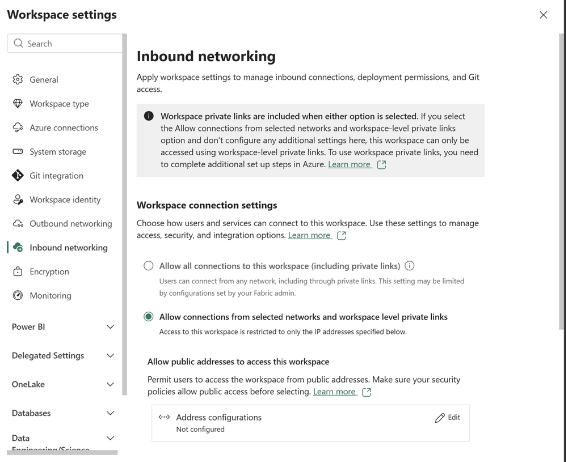
Microsoft Fabric has introduced workspace-level Private Link support for custom endpoint sources in Eventstream (Preview). Enterprise data teams operating in highly restricted network environments can now stream real-time operational data from in-house applications directly into Fabric without opening inbound paths to the public internet. By allowing private network isolation at the individual workspace level rather than requiring a blanket tenant-wide policy, Fabric resolves a major architectural roadblock for organisations balancing strict network compliance with modern real-time analytics.
Bridging restricted operational networks and real-time analytics
Many enterprise architectures segregate critical operational systems within isolated virtual networks that lack public internet routes. Previously, ingesting real-time events from custom or in-house applications into Eventstream required either granting a public network exception or building custom relay infrastructure to bridge the gap.
With workspace-level Private Link support for custom endpoints, custom applications using standard AMQP, Kafka clients, or Azure Event Hubs SDKs can now transmit data directly over the Microsoft backbone network. This allows restricted workloads to achieve parity with managed connector sources while maintaining existing corporate network perimeters.
Granular network governance without operational compromise
Unlike tenant-level Private Link settings, which enforce network isolation across an entire organization, workspace-level private links allow security teams to target specific high-risk workloads. Individual Fabric workspaces can be mapped to distinct Azure Virtual Networks via Azure private endpoints, locking down sensitive workspaces while leaving non-regulated development or analytics environments accessible.
A single workspace can accept private endpoints from multiple virtual networks, and a single virtual network can route traffic to multiple workspaces using workspace-specific FQDNs. This granular control prevents cross-departmental friction by allowing security-conscious teams to enforce strict isolation without disrupting broader enterprise user access.
Strategic value for enterprise data architectures
For enterprise tech leadership, this capability removes the compliance friction often associated with adopting SaaS-based real-time analytics platforms. Security teams no longer need to sign off on high-risk firewall exceptions or approve complex custom middleware solely to ingest operational telemetry.
Instead, sensitive event streams can flow securely directly into downstream stores like Lakehouses or Eventhouses (in preprocessing mode) for immediate analysis and long-term retention. Organizations operating on Fabric capacity (F SKUs) can now modernize their real-time telemetry pipelines while preserving robust, zero-trust network boundaries.
Learn more on Fabric Updates Blog
Microsoft Fabric sharpens enterprise governance with granular workspace controls
Delegating data workspace management to business units often forces a tough choice between agility and control. Granting workspace admin rights has historically meant handing over the keys to critical security settings, including customer-managed key encryption and network paths. Microsoft Fabric addresses this friction with the Public Preview of the "Allow workspace settings editing" policy, enabling platform leaders to delegate daily workspace administration while locking down high-risk security configurations.
Granular delegation without security risks
Historically, the workspace admin role operated as an all-or-nothing permission model. Giving business teams autonomy to manage their own analytics environments required granting them authority over sensitive infrastructure settings.
The new policy framework allows Fabric administrators to define precise conditions using Microsoft Entra security group membership, specific workspaces, and setting types. Organizations can reserve controls like customer-managed key (CMK) encryption for specialized security teams while leaving business users free to manage daily workspace operations. An allow rule adds no new privileges on its own; users must still hold the workspace admin role to execute permitted changes.
Tailoring network controls across environments
Beyond encryption, the policy addresses outbound networking configuration. Central platform teams frequently become bottlenecks when every network adjustment requires central intervention.
With this policy, administrators can establish distinct operational models for different environments. Development sandboxes can be configured to allow local admins to adjust outbound networking for rapid experimentation. Conversely, production workspaces can restrict those same network edits to approved central platform groups. Fabric evaluates these rules across both the portal and APIs, automatically auditing enforcement decisions via the OneLake catalog's Policies center.
Striking the balance between agility and risk management
For enterprise data leaders, this update removes a major blocker to self-service analytics at scale. Chief Data Officers and Data Platform Managers can now expand workspace ownership across business units without risking compliance or exposing critical infrastructure to accidental misconfiguration.
By separating daily operational management from core security controls, platform teams eliminate administrative bottlenecks while maintaining strict governance standards across the tenant. Organizations looking to implement this capability should carefully map out their security groups and workspace categories before activating tenant-scoped policy sets, as advanced modes enforce strict allow-lists that block unlisted administrative edits by default.
Learn more on Fabric Updates Blog
Rust-native compute comes to Microsoft OneLake with Sail and LakeSail

Source: Lakesail
Enterprise data teams can now run high-performance Apache Spark workloads directly against Microsoft OneLake without a JVM runtime or data duplication. By introducing native integration between Microsoft OneLake and Sail - an open-source, Rust-based distributed compute engine - organisations can execute PySpark and SQL pipelines significantly faster while cutting compute costs and eliminating process boundaries for embedded Python AI transformations.
Accelerating OneLake processing through a Rust-native engine
Microsoft OneLake provides a unified storage foundation across Microsoft Fabric, but traditional Apache Spark workloads still carry JVM overhead and memory limits. Sail addresses this by delivering a drop-in replacement for Spark built entirely in Rust. Utilizing Apache Arrow for end-to-end columnar execution and Apache DataFusion with vectorized SIMD kernels, Sail plugs into OneLake via standard Iceberg REST and Delta metadata endpoints.
Because it supports the Spark Connect protocol, existing PySpark and SQL pipelines run without code modifications or additional connectors. Benchmark results over 100 GB of Parquet data demonstrate execution times dropping from 534 seconds on Spark to under 53 seconds on Sail, while reducing peak memory usage from 72 GB to 26 GB and eliminating shuffle spills.
Eliminating AI bottlenecks with embedded Python execution
Beyond raw processing speed, Sail solves a major architecture hurdle for modern data engineering: integrating Python-based AI steps directly into core ETL. Standard Apache Spark executes Python UDFs in separate worker processes, incurring heavy serialization overhead across process boundaries. Sail embeds the Python interpreter directly inside the engine, allowing Arrow-native UDFs to share memory buffers directly with query execution.
This architecture enables data teams to run heavy AI tasks - such as generating text embeddings using open-source language models or scoring features - in-process over full Arrow batches without leaving the pipeline or spinning up separate microservices.
Securing serverless and agentic compute via LakeSail Cloud Sessions
For enterprise deployment, LakeSail Cloud introduces Sessions to deliver managed, on-demand Sail compute directly within an enterprise cloud environment. Spark Connect clients connect via secure, token-authenticated proxies without exposing public cluster endpoints.
This allows scheduled ETL pipelines or external AI agents - integrated via Sail's MCP server - to request short-lived, isolated compute against production OneLake tables. The session automatically terminates after configured idle periods, preventing idle capacity costs while enforcing strict authentication boundaries.
Learn more on Fabric Updates Blog
Microsoft Fabric transforms data engineering with autonomous Project Osmos agent
Source: Microsoft
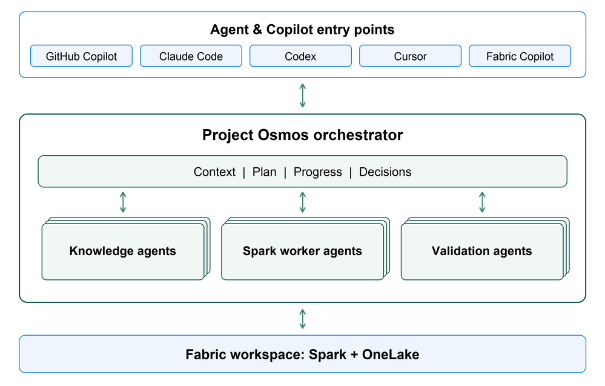
Microsoft has introduced Project Osmos, bringing purpose-built autonomous data engineering capabilities directly into Microsoft Fabric. Following its acquisition of Osmos in January 2026, Microsoft is moving beyond basic AI code generation to tackle complex, long-running, and team-based data tasks. Operating natively within your Fabric workspace, this agentic framework automates cross-system data reconciliation, schema validation, and iterative Spark execution while keeping human judgment and enterprise governance at the center of the lifecycle.
Moving beyond code generation to context-aware execution
Standard AI coding assistants excel at turning natural language into PySpark snippets, but they lack awareness of broader enterprise contexts, historical schema drift, and data quality rules. Project Osmos addresses this gap by executing work directly within your Fabric lakehouse through the Fabric Livy API. Instead of simply generating code, the agent analyzes datasets, evaluates implementation paths in isolated sandboxes, and validates output accuracy against established business logic.
For complex scenarios like consolidating conflicting entity IDs or ledger entries across SAP, Guidewire, and Oracle systems, the agent autonomously investigates data relationships, establishes join logic, and tests outputs against raw data. If execution fails or unresolvable business ambiguities arise, the system pauses to ask the user for guidance, preventing silent data corruption or silent logic errors from reaching production.
Persistent, team-wide orchestration for enterprise scale
Data engineering is rarely a single-person task or a single chat session. Project Osmos structures work into persistent, asynchronous tasks hosted in Microsoft Fabric that run independently on Fabric capacity units (CUs). Engineers can initiate a project using tools like GitHub Copilot CLI, Claude Code, or Codex via the Skills for Fabric plugin, disconnect their terminal, and let the agent manage long-running workloads.
Because the task retains state, schema context, and execution history, multiple team members (including data architects, engineers, and domain experts) can inspect progress, refine parameters, and collaborate on the same evolving workload. Future data drops can simply reference the existing task, allowing Project Osmos to decide whether to reuse or adapt the existing pipeline without re-explaining the project history.
Governance, cost control, and strategic platform impact
Granting AI autonomy to execute code and modify lakehouse assets requires tight control. Project Osmos addresses safety by operating strictly within existing Microsoft Fabric and OneLake access control boundaries. Organizations configure explicit guardrails before execution, defining target lakehouses, write patterns (such as staging tables versus in-place updates), schema modification permissions, and reasoning effort levels to balance compute performance against costs.
For enterprise data leaders, this update represents a shift from manual pipeline creation and maintenance toward goal-driven orchestration. By delegating data investigation, optimization, incremental load conversions, and legacy migrations to an autonomous agent, data teams can drastically reduce operational overhead while maintaining strict oversight of data accuracy and governance.
Learn more on Fabric Updates Blog
Enterprise gateway control arrives with new Admin APIs in October release
Source: Microsoft
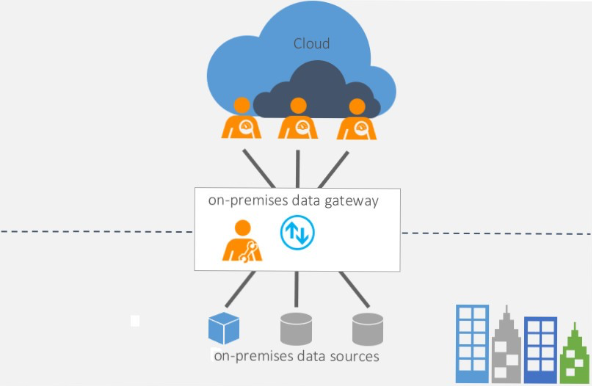
Microsoft has introduced centralized management capabilities for the on-premises data gateway, addressing a long-standing governance gap for enterprise Fabric deployments. The October 2026 update (version 3000.338) unlocks new REST APIs that give platform administrators tenant-wide visibility over data connections, moving beyond legacy user-level permission boundaries. Alongside these governance tools, the update delivers targeted diagnostic improvements for service startup failures, preserves Power Query configurations during testing, and aligns runtime parity with the October Power BI Desktop release.
Centralized governance for enterprise data connections
Managing hybrid data architecture at scale previously required navigating fragmented connection permissions across individual users and environments. The introduction of Admin Connections REST APIs (now in Public Preview) allows Fabric administrators and service principals to programmatically inspect, delete, or reassign roles across all cloud, virtual network, and on-premises gateway connections.
Because every action is logged in audit trails, enterprise platform teams can now automate compliance scanning, orphan connection cleanup, and access management across the entire tenant without relying on manual reporting or elevated end-user rights.
Improved reliability and service diagnostics
Beyond administrative controls, version 3000.338 addresses operational friction in hybrid infrastructure maintenance. gateway service failures now generate deeper diagnostics at startup, giving IT teams clear root-cause visibility to accelerate recovery during outages.
Furthermore, running connection tests no longer resets custom Power Query configurations, preventing accidental configuration drift during validation routines. Aligning execution logic with the October 2026 Power BI Desktop release also ensures consistent query performance between local authoring tools and cloud semantic model refreshes.
Why this update matters for enterprise architecture
For CDOs, platform managers, and enterprise architects operating in hybrid environments, this release shifts the on-premises gateway from an isolated utility into a fully manageable tenant asset. Tenant-wide programmatic visibility drastically reduces compliance risk and operational overhead when managing hundreds of hybrid data pipelines.
To protect production availability, organizations should validate version 3000.338 in staging environments across DirectQuery workloads and custom connectors, utilizing phased cluster upgrades to eliminate unexpected refresh downtime.
Learn more on Fabric Updates Blog
Microsoft Fabric October update brings continuous surge protection and custom visual Copilot skills
The latest Power BI and Microsoft Fabric updates deliver critical upgrades to platform resilience and AI authoring capabilities. Enterprise data leaders gain more predictable capacity management through real-time surge protection, while analytics teams get automated report authoring support for specialized custom visuals.
Continuous usage tracking prevents abrupt capacity throttling
Microsoft Fabric now measures semantic model capacity unit (CU) consumption continuously during long-running background operations rather than reporting usage at completion. This structural change gives the platform immediate visibility into in-progress workload spikes, allowing native surge protection to step in much earlier. Instead of experiencing sudden, late-stage Fabric throttling that hard-stops active workloads, background tasks are now proactively delayed or managed before capacity thresholds are breached.
For enterprise IT managers and platform architects, this architectural shift eliminates the blind spots associated with heavy background refreshes. Early operational data from August 2026 shows a 41% reduction in late-stage throttling rejections alongside a 52% increase in operations that were delayed but successfully executed.
By smoothing out consumption spikes and prioritizing queued tasks over abrupt failures, enterprise data platforms achieve higher operational stability without requiring manual capacity adjustments or sudden licensing tier upgrades.
Expanded AI skills streamline report creation with custom visuals
The Power BI Report Authoring skill for Fabric Copilot now supports custom visuals, including those imported from local files or sourced from AppSource. Report authors can use natural-language commands to bind complex visual types to semantic models, apply formatting, and validate data layouts automatically. This eliminates the manual overhead of troubleshooting field mappings and editing underlying report files for specialized visual displays like project management charts or industry-specific dashboards.
For analytics directors and BI team leads, this capability accelerates delivery timelines across large report portfolios. By automating repetitive visual configuration tasks, enterprise developers can focus on higher-value data modeling and business requirements while maintaining consistent corporate design standards across department dashboards.
Embedded Gantt charts and flexible list slicers improve user experience
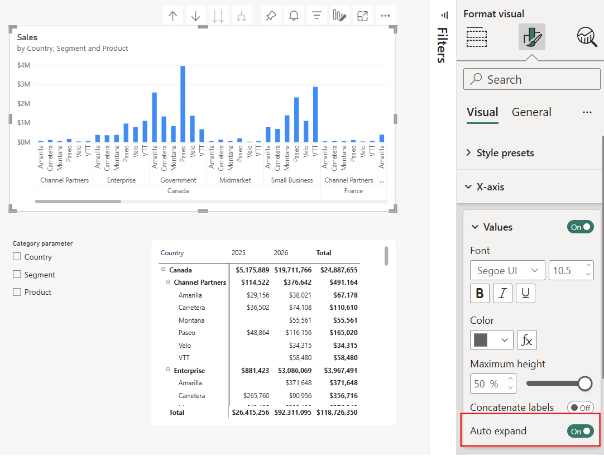
To support operational planning directly within standard reports, Power BI introduces a native Gantt chart visual in preview, offering native time-axis zooming, milestone tracking, and dynamic task grouping.
Source: Microsoft
Additionally, list slicers now feature a dropdown mode with pinned selections, customizable drawer dimensions, and explicit exclusion logic ("Not" selection pills). These UX enhancements reduce report clutter, improve filter clarity, and prevent accidental data misinterpretation when navigating large enterprise datasets.
Driving platform stability and operational efficiency
This update delivers high business value for enterprise organizations balancing scale, cost, and developer productivity. The transition to continuous CU reporting provides immediate operational risk reduction for data platform leaders managing heavy background processing on Fabric capacities, ensuring predictable performance during peak operational windows.
Simultaneously, expanding Copilot's skill set to cover custom visuals reduces technical debt in report authoring, allowing enterprise teams to deliver complex analytical solutions faster.
Learn more on Power BI Updates Blog