

Bring your data into live applications. Copilot Code turns daily context into full software
Source: Microsoft
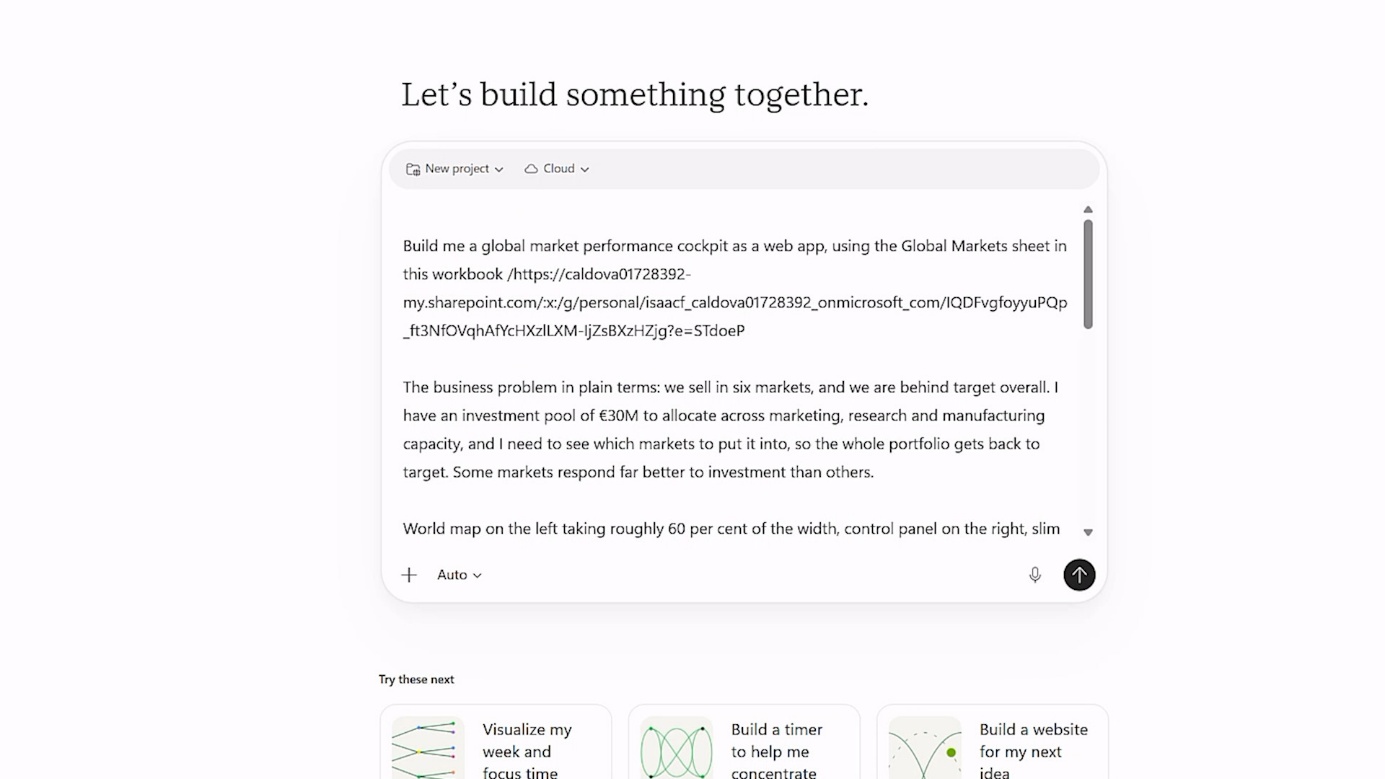
Copilot Code is a new addition to Microsoft Copilot that turns everyday prompts into working software. By tapping into existing work context - such as emails, chats, and meetings - it empowers non-technical users to build tailor-made tools without requiring an engineering budget.
Turning everyday work context into interactive applications
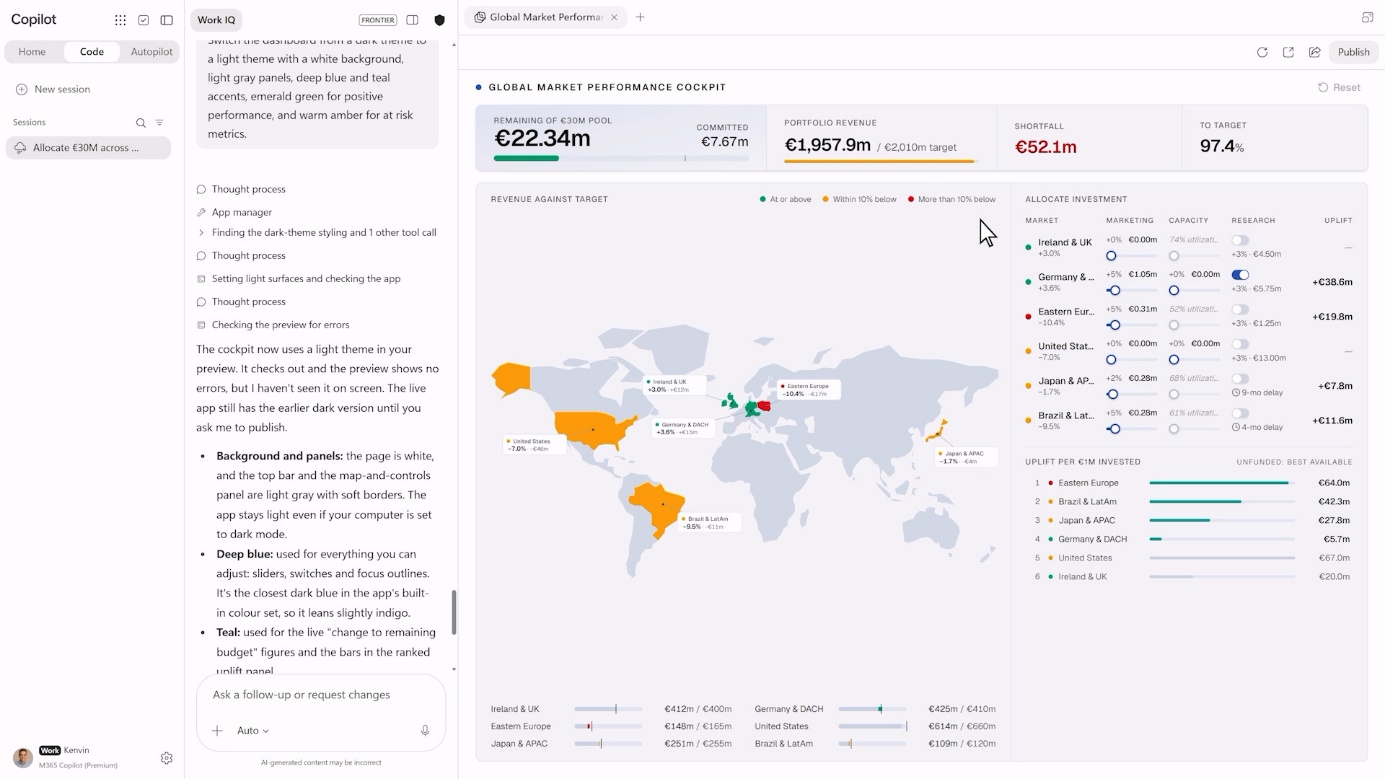
Microsoft introduced Copilot Code, a new capability in Microsoft 365 Copilot designed to help people turn ideas into functional software using natural language. For decades, knowledge work centered around static documents, spreadsheets, and presentations. While AI models can write code, code alone requires setting up environments and managing servers. Copilot Code bridges this gap by turning context from emails, meetings, and Power BI tables into working tools without requiring technical budgets.
Source: Microsoft
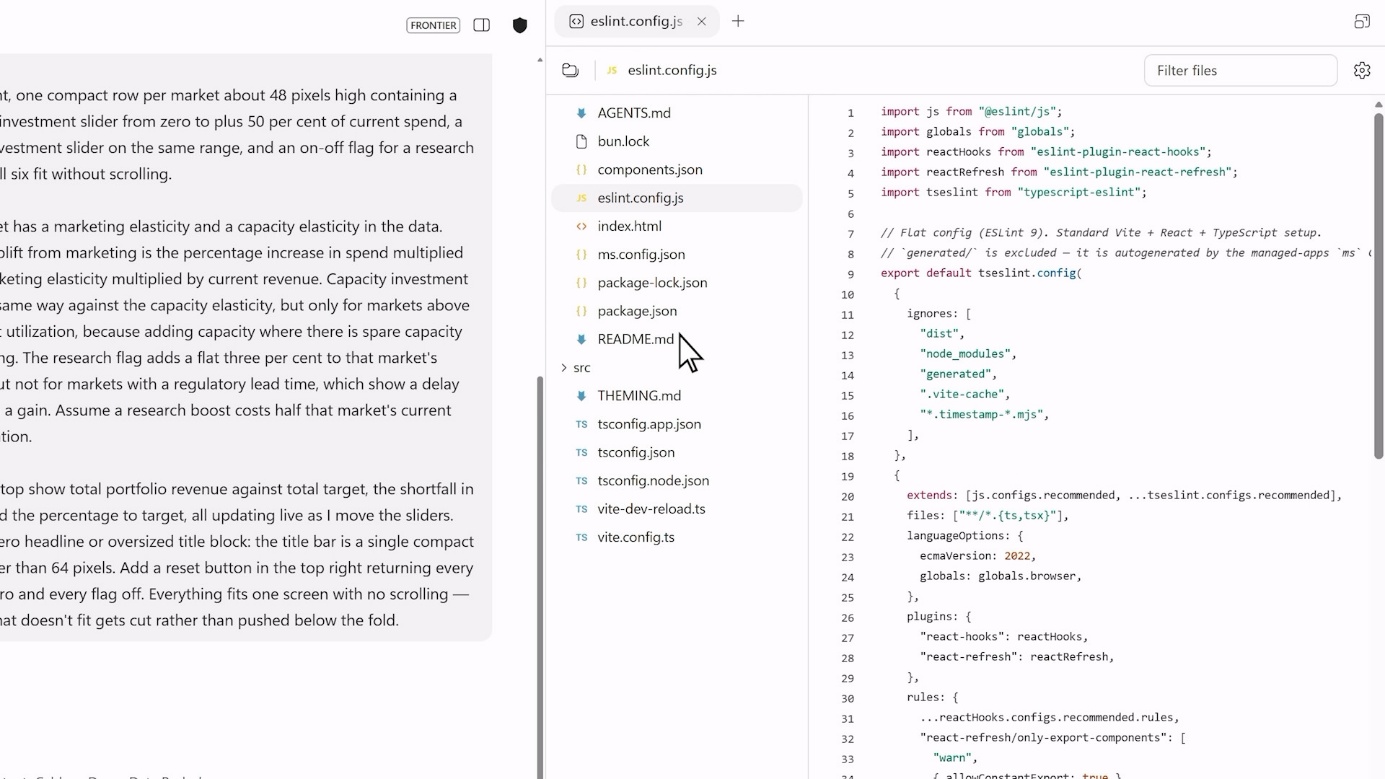
The system offers an AI-powered coding experience within Microsoft 365 Copilot that focuses on practical software creation. Users start by describing their goal in plain language, after which the tool asks clarifying questions and gathers information through Work IQ to construct project requirements automatically.
Scaling from personal projects to engineering workflows
Users can refine applications through simple conversations or direct interface edits. Copilot Code allows creators to stay entirely within a live visual preview or open the source code to work with local developer tools. Projects can run locally or be published to a Microsoft-managed cloud environment for easy sharing.
As applications expand to support entire departments, projects often require code reviews and release controls. Creators can connect their projects directly to a new or existing GitHub repository and open a draft pull request. Copilot Code and GitHub Copilot share underlying agentic technology, enabling smooth handoffs to professional engineering teams.
Enterprise deployment under administrative control
When an application is ready for organizational use, Microsoft handles hosting through the Copilot Managed Runtime. This setup eliminates manual deployment work while preserving existing corporate governance. Custom-built applications automatically inherit all pre-configured security, compliance, and access policies already set by administrators.
Source: Microsoft
Microsoft is rolling out Copilot Code through its Frontier program. The company aims to learn from early customer experience as everyday employees begin building software directly from their domain expertise.
Microsoft introduces Insights Agent V2. Makers can now analyze user feedback
Source: Microsoft
Microsoft released an early-access preview of Insights Agent V2 (Frontier) in Microsoft 365 Copilot Chat. The tool helps agent owners analyze user ratings and written comments to continuously improve custom agents. IT admins maintain full control over data sharing by selecting which agents participate in the program. Combined with usage analytics, the agent provides a clearer view of adoption trends and user satisfaction across the organization.
User feedback analysis in Copilot Chat
Microsoft has introduced Insights Agent V2 (Frontier) as an early-access preview feature in Microsoft 365 Copilot Chat. The updated agent allows custom agent owners to explore ratings and verbatim text comments through natural language conversations.
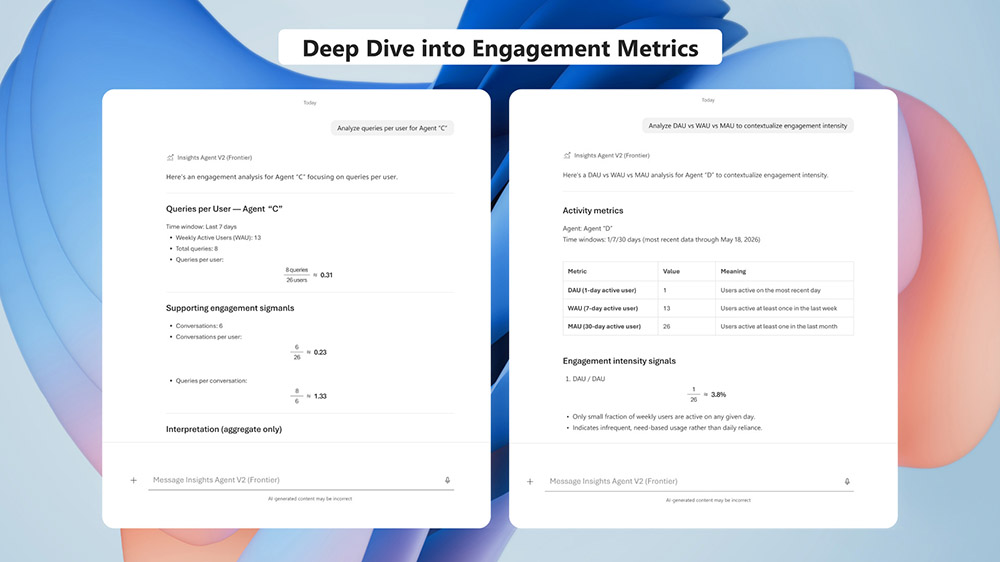
Makers can prompt the agent to display recent user comments, report weekly thumbs-up and thumbs-down counts, and generate AI-synthesized summaries of recurring feedback themes. Microsoft emphasizes that synthetic summaries should complement, rather than replace, reading the original verbatim comments before updating an agent's knowledge or prompt structure.
Administrative controls and usage analytics
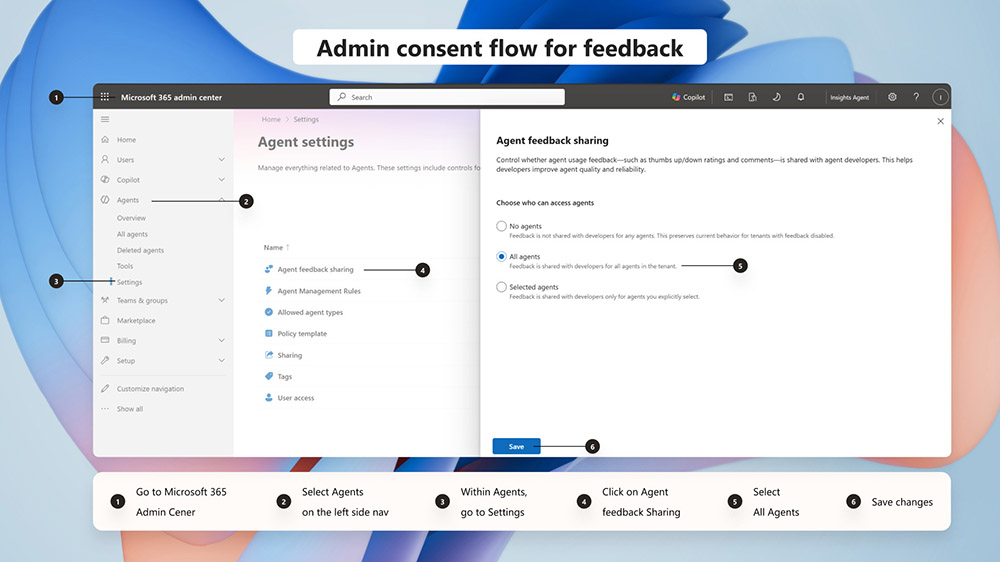
IT administrators remain in full control of how feedback is shared across the tenant. In the Microsoft 365 admin center, admins can enable feedback sharing for all custom agents, limit it to selected Copilot agents, or turn the feature off entirely to meet organizational requirements.
Source: Microsoft
Alongside feedback sentiment, Insights Agent delivers detailed usage metrics including daily, weekly, and monthly active user trends, adoption growth, and stickiness ratios. Microsoft advises admins and makers to evaluate usage data alongside qualitative user feedback to make informed decisions during continuous agent iteration.
Faster execution with GPT-6.1 Terra. OpenAI slashes token pricing by half
Source: OpenAI
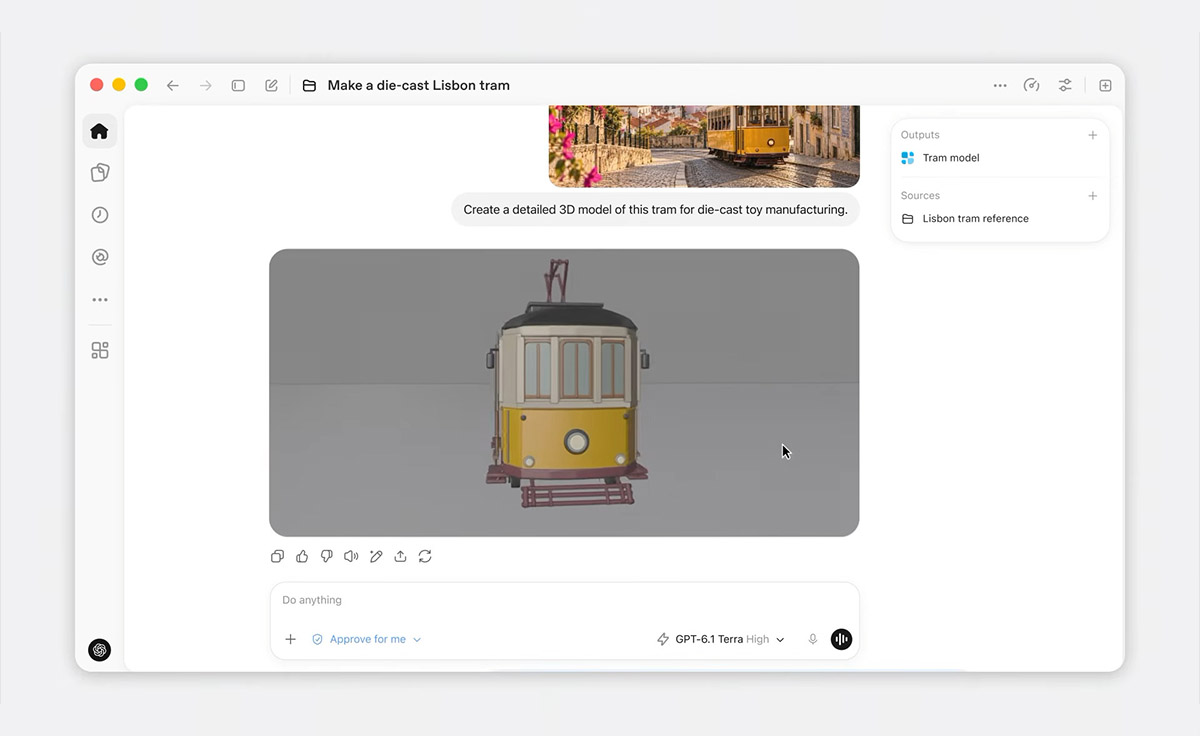
OpenAI has released GPT-6.1 Terra, a mid-range flagship model optimized for speed and cost efficiency. Sitting between the Luna and Sol tiers, Terra cuts API expenses in half while outperforming GPT-5.6 Terra in key benchmarks for visual reasoning, computer navigation, and software development. Additionally, it brings sharp reductions in hallucination rates alongside updated safety protocols. The model is now accessible to both developers and platform subscribers.
OpenAI reveals GPT-6.1 Terra with lower operational costs
OpenAI introduced GPT-6.1 Terra, a flagship model designed for fast and cost-effective performance across everyday work tasks. Following last month's release of GPT-6.1 Sol, this new iteration builds upon GPT-5.6 Terra to offer an ideal balance between speed, capabilities, and pricing. It fills the gap between Luna and Sol, targeting medium-complexity tasks like visual reasoning, desktop computer use, and document drafting.
The model slashes API prices by 50% compared to both GPT-5.6 Terra and GPT-6.1 Sol. This price adjustment allows developers to process high-volume workflows, such as reading invoices and entering data into accounting systems, at a fraction of previous costs. Subscribers to ChatGPT Work and Codex will also see their usage limits stretch across substantially more tasks.
Strong performance in computer use and visual benchmarks
Evaluation results on the Agents' Last Exam benchmark show that GPT-6.1 Terra outperforms its predecessor by 15 percentage points at medium reasoning effort, while cutting token costs to one-third. When pushed to maximum reasoning effort, Terra matches the performance of GPT-6 Astra at one-tenth of the price per token and operates over three times faster than both Astra and Sol.
The model achieved impressive results on visual reasoning tests as well. On the MMMU-Pro benchmark, GPT-6.1 Terra outperformed GPT-5.6 Terra across every tested reasoning level and approached the accuracy of top-tier models. Similar advantages were registered in the OSWorld 2.1 benchmark, which measures an agent's ability to manipulate desktop applications to complete multi-step creative and technical projects.
Reduced error rates and pricing details
OpenAI made major progress in reducing model hallucinations. On internal error-inducing prompt benchmarks, Terra's error rate dropped from 53.6% down to 16.7% at low reasoning effort. In software engineering, the model solved 50.3% of command-line challenges in Terminal-Bench 4.0, more than doubling the score of GPT-5.6 Terra.
In terms of alignment and safety, GPT-6.1 Terra meets critical cybersecurity standards under OpenAI's Preparedness Framework and shows increased resistance to malicious prompt injections. API access is available immediately under the identifier "gpt-6.1-terra" at $1 per million input tokens, $0.05 per million cached input tokens, and $5 per million output tokens.
GPT-6.1 Terra has also arrived across the GitHub Copilot ecosystem for Pro, Pro+, Max, Business, and Enterprise subscribers. Developers can select the new model via the model picker across all major environments, including Visual Studio Code, Visual Studio, JetBrains IDEs, Xcode, Eclipse, the Copilot CLI, the GitHub Copilot app, and github.com, as well as on mobile devices through GitHub Mobile for iOS and Android.
General availability in Microsoft Foundry
Microsoft announced the general availability of GPT-6.1 Terra within Microsoft Foundry, enabling developers to build and deploy vision-capable AI agents on Azure. The platform integrates identity, networking, governance, and compliance controls, allowing organizations to move their applications smoothly from prototype to production.
The model introduces several technical features for high-volume workflows, including a context window of up to 1M input tokens and multimodal input support for text and images. Developers can adjust reasoning effort settings and verbosity to match their specific application requirements. Interim messaging is also supported, keeping long-running tasks responsive for end users.
GPT-6.1 Terra works alongside GPT-6 Astra to streamline multi-step processes. While Astra handles high-level reasoning and job planning, Terra carries out screen-based tasks, document processing, and visual maintenance at a lower cost. The model is available globally through standard API deployments and regional Data Zone instances across the US, EU, and APAC.
AI attacks reach machine speed. Project Perception speeds up defense
Source: Microsoft
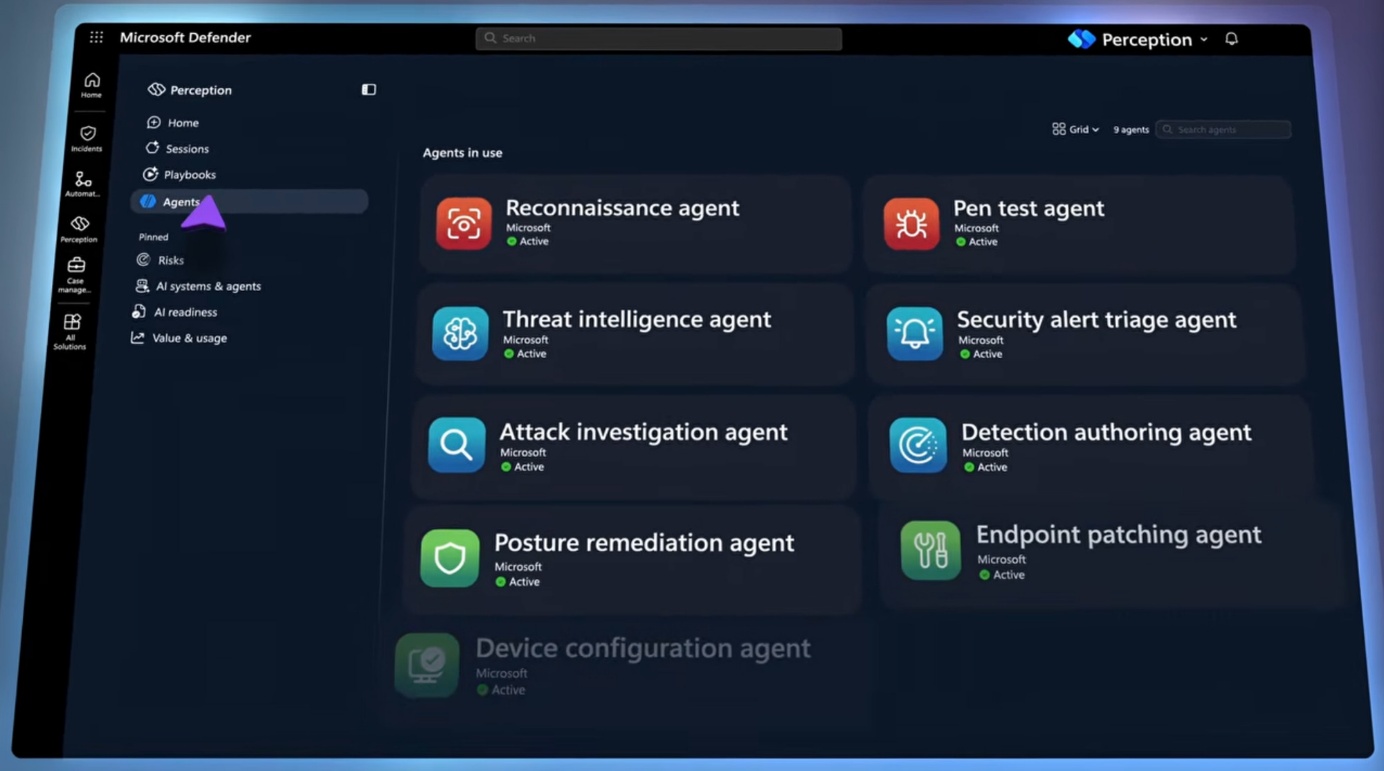
Microsoft introduced Project Perception, a new agentic security stack designed to counter AI-powered attacks at machine speed. The platform deploys specialized red, blue, and green agent teams to emulate threat actors, build detection rules, and merge validated code fixes within minutes. Human operators maintain complete control by approving high-impact actions during every session.
Microsoft counters automated cyber threats with specialized AI agents
Attackers leverage jailbroken and abliterated language models to create mid-breach tooling that adjusts to target defenses in real time. Microsoft Security CVP Dave Weston highlighted an incident where an attack generated 17,000 lines of code to navigate through targeted infrastructure. Traditional security tools that look only for known techniques fail when threat vectors constantly change.
Project Perception addresses this imbalance by deploying an agentic stack powered by trillions of daily security signals correlated within the Microsoft security graph. Multiple AI models analyze this telemetry to identify risks and orchestrate responses without driving up token expenditure.
Agent roles and human governance in automated SOC playbooks
Specialized red, blue, and green agent teams handle targeted tasks inside the Defender portal. Red agents simulate attacks and isolate reachable vulnerabilities. Blue agents run incident investigations and generate KQL detection rules. Green agents harden system configurations and author code fixes to permanently close gaps.
Pre-built Microsoft playbooks orchestrate agent workflows, while operators retain full authority over high-impact modifications. A single prompt asking whether an organization is protected against a threat actor triggers intelligence gathering, pen testing, and vulnerability assessment.
Human control remains central to the workflow. "Any time there is an operation of consequence, the agent will stop and ask" - Dave Weston noted during the demonstration. "As the human in the loop, I can steer the process, confirm the agent's reasoning and assumptions, and approve the actions."
Automated code remediation and token cost optimization
Project Perception moves directly from vulnerability discovery to code remediation. Blue team agents author KQL detections to cover the gap between discovery and patching. Green team agents then deploy WAF shields, insert auth checks, and write parameterized code fixes that are validated before merging into production via pull requests.
To control operational costs, Microsoft introduced MAI Cyber Flash inside MDASH. This specialized cybersecurity model handles 90% of routine scanning, patching, and verification tasks, routing only the remaining 10% of complex queries to larger frontier models. MAI Cyber Flash achieves approximately 96% accuracy on the CyberGym benchmark while keeping token consumption low. Project Perception is now available in worldwide preview.
MAI-Image-2.7 enters top ranking. Precision image editing improves
Source: Microsoft
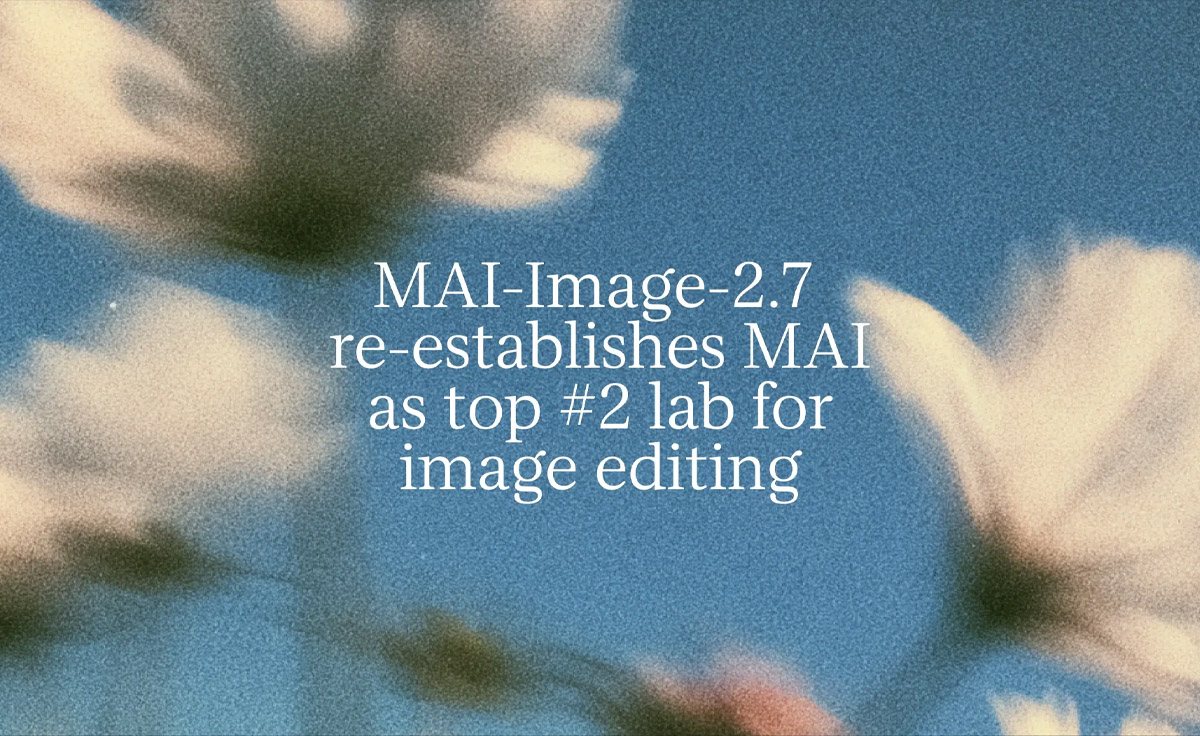
Microsoft has launched MAI-Image-2.7 Preview, focusing specifically on precision image editing. The new AI model secured second place on the Artificial Analysis leaderboard, outperforming OpenAI's GPT Image 2.5 Flare. It also achieved third place on the Arena editing leaderboard. The model offers improved controls for relighting, object modification, and text editing within existing images.
Strong debut on benchmark leaderboards
Microsoft has introduced a preview of its latest in-house artificial intelligence model, MAI-Image-2.7 Preview. Instead of concentrating on text-to-image generation, this preview release shifts focus toward precision image editing. The model debuted at second place on the Artificial Analysis image editing leaderboard. It reached an Elo score of 1,193, placing ahead of OpenAI's GPT Image 2.5 Flare at 1,182 and behind GPT Image 2.5 Sunburst at 1,199.
This release improves upon the previous MAI-Image-2.6 version, which scored 1,151 Elo points, marking a gain of 42 points. These rankings are calculated using blind human preference tests. Additionally, the system reached the third spot on Arena's image editing leaderboard.
MAI Image 2.7, our latest image editing model, launches with even stronger control for edits that are hardest to get right. It launches in preview at No. 3 on Arena Edit, making Microsoft AI the No. 2 lab, and No. 2 on Artificial Analysis’s image editing leaderboard - Microsoft stated.
This release follows earlier product launches from the company over recent months. In August, Microsoft introduced MAI-Image-2.6, which reached second place on Arena's text-to-image generation leaderboard. In September, the company introduced MAI-Image-2.6-Flash for high-volume graphic processing tasks.
Advanced editing capabilities
The updated model offers improved control over complex image edits. Users can adjust lighting, shift objects into different environments, alter text and symbols, and restore old assets. Evaluation results show improvements over version 2.6 across all 10 use cases and seven editing actions tested by Artificial Analysis.
Performance gains are prominent in enhancement, reasoning-based edits, style adjustments, and text modifications. In the scene and style editing category, the model leads the nearest competitor by 24 Elo points.
The editing engine process preserves consistency across modified elements. Text changes integrate into the underlying visual background, maintaining context, reflections, and correct spatial structure throughout the editing process.
Current availability options
MAI-Image-2.7 Preview is currently limited to image editing tools and features. Microsoft confirmed that text-to-image generation support will be added in upcoming updates. Pricing details and general availability for developers via Microsoft Foundry have not yet been announced.
Users can test the new image editing capabilities through public platforms today. Access has been opened on MAI Playground, Arena, and Artificial Analysis for ongoing evaluation.
Build and scale agentic workflows easily. Copilot harness available in Foundry
Source: Microsoft
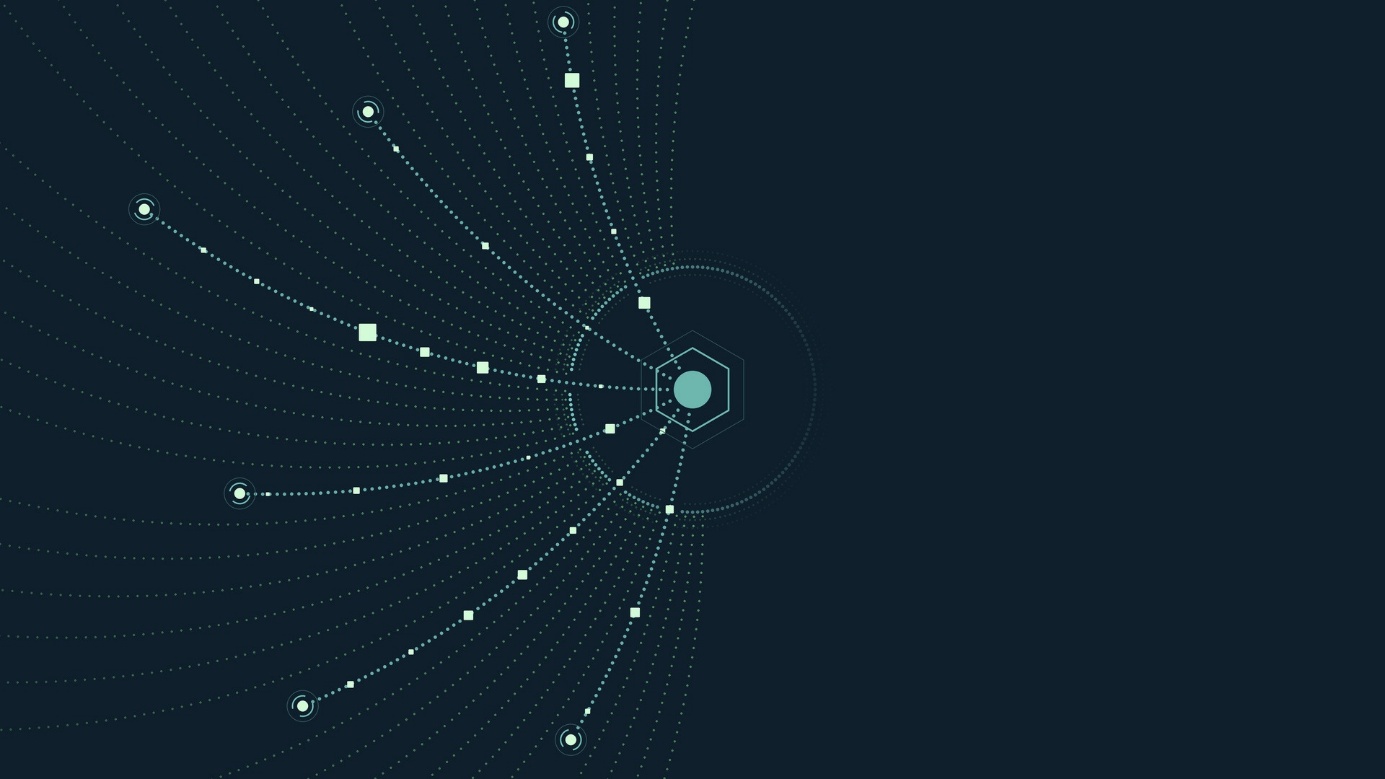
Microsoft is making its Copilot harness available through Microsoft Foundry, bringing a fully managed multi-model orchestration framework to enterprise developers. Originally built by GitHub engineers, the system powers tools like VS Code, Copilot Studio, and the CLI. It handles model routing, sandbox execution, and governance across more than 20 frontier models while reducing operational costs. By porting the runtime to Rust, Microsoft offers improved token efficiency, faster execution, and lower session overhead.
Microsoft Foundry launches Copilot harness
Microsoft has announced the availability of the Copilot harness through Microsoft Foundry. The infrastructure serves as the official enterprise standard across Microsoft and GitHub products. It currently powers surfaces such as Copilot Code, Copilot Studio, the GitHub Copilot app, VS Code, and the CLI.
Enterprise customers can now use this framework to construct agents capable of tool usage, reasoning, and executing long-running tasks. The managed service removes the burden of maintaining custom orchestration layers, performance tuning, and model evaluation. Organizations gain access to multi-model capabilities without altering their underlying software stack.
By deploying agents on the same foundation used across Microsoft, developers automatically benefit from continuous platform updates. The unified system accelerates product iteration, learning cycles, and overall feature deployment. This allows technical teams to focus resources directly on building unique application logic
Engine architecture supports open standards
The harness operates as the surrounding orchestration layer around AI models, supplying instructions, context, execution environments, and operational controls. It provides native support for open standards, including agent skills, MCP, and custom plugins. The architecture supports over 20 frontier models along with bring-your-own-key capabilities.
Instead of manually building model routers, developers rely on automated intelligent routing to assign tasks to optimal models. This design adapts to the fast-moving landscape where frontier model leadership changes frequently. The platform maintains an open design, allowing teams to integrate external frameworks whenever necessary.
Rebuilding the runtime environment in Rust delivered industry-leading performance improvements across all supported workloads. This shift achieved measurable reductions in session overhead alongside faster time-to-first-token generation. The system has undergone extensive testing at enterprise scale, handling millions of active users across hundreds of use cases.
Managed sandbox simplifies governance
Microsoft manages the complete agent execution loop, sandboxing, governance, and runtime optimization from day one. Enterprise customers provide their own instructions, skills, custom tools, and preferred model selections. The platform maintains total interoperability across cloud execution and standalone SDK integrations.
Developers can download the SDK directly or run agents inside the managed Microsoft Foundry cloud environment. The underlying platform preserves developer choice while offering built-in governance structures. Continuous engineering investments ensure high quality, efficient performance, and reduced operational costs over time.
This rollout represents a key milestone in delivering GitHub engineering innovations to the broader Microsoft ecosystem. By handling core infrastructure, Microsoft enables developers to concentrate on building proprietary value. The platform will continue to evolve as new AI capabilities and models emerge.
Microsoft expands Copilot in Excel. New features streamline data tasks
Source: Microsoft
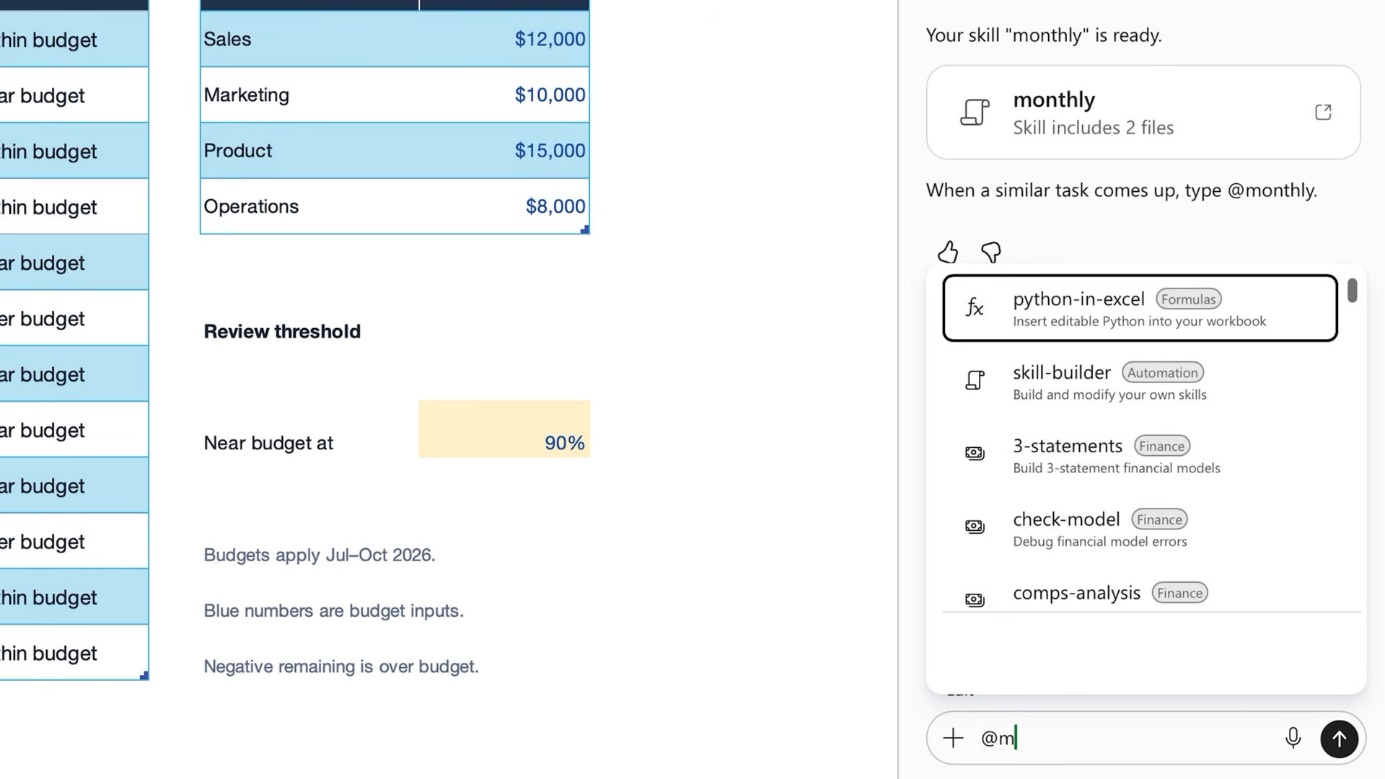
The October update for Excel introduces key enhancements designed to streamline daily data tasks through advanced automation and artificial intelligence. Microsoft expands user flexibility by offering GPT-6.1 Sol and Claude Sonnet 5.5 within Copilot. These updates enable users to clean complex datasets, record and reuse routine workflows, and generate dynamic interactive reports directly from workbook content. Available across Windows, Mac, and web platforms, these new features simplify data transformation and help deliver clear insights with minimal manual effort.
Key Copilot innovations across platforms
Microsoft has introduced a series of powerful AI skills available across Windows, Mac, and web platforms to simplify data management and automation. The new clean data skill acts as an intelligent auditor, detecting and resolving common errors - such as extraneous spaces, mismatched formatting for dates and numbers, duplicate entries, and incorrect data types - that can compromise formulas, PivotTables, and analytical insights. Activated via the @clean-data prompt or the Skills menu, it provides clear explanations of detected issues and lets users selectively approve recommended fixes directly within the workbook.
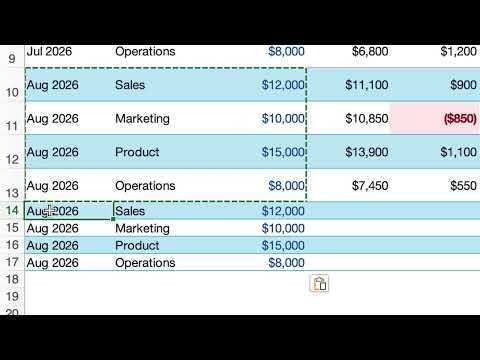
Alongside data cleanup, Microsoft is expanding how users automate daily tasks through custom skills. The skill recorder allows users to teach Copilot recurring workflows by either demonstrating actions live or providing a text description. Copilot captures these steps to build a repeatable skill, ensuring routine processes are executed accurately while freeing up time for higher-priority work. Currently rolling out to general availability, the skill builder further complements this by allowing users to define custom procedures using past prompts, guidelines, or sample deliverables.
Platform-specific updates for Windows and Web
For Excel on Windows, Microsoft is enhancing both interactive reporting and core usability. U.S. and global Insiders can now access the interactive canvas, a dynamic reporting environment that converts raw workbook data into tailored executive summaries, status updates, or project reviews. Because the canvas remains live-linked to the underlying dataset, visuals and metrics refresh automatically as numbers change, with layout refinements or narrative adjustments accessible via standard chat prompts.
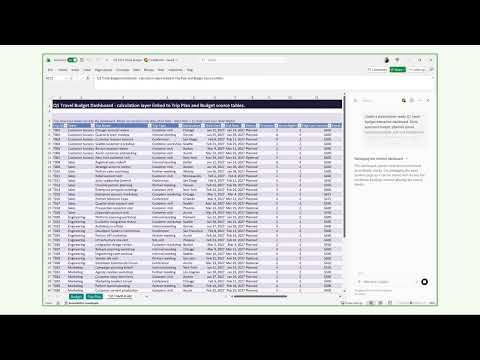
Additionally, Windows users can now name tables directly during creation - a popular Insider capability that has officially reached general availability.
Excel on the web focuses on streamlining data ingestion with the new get data skill. By describing desired data sources and transformation requirements in plain language, users can instruct Copilot to connect, shape, and import information using Power Query. The feature automatically constructs a fully editable, refreshable query in the background without requiring manual setup, though standard authentication may still apply depending on the data source.
AI empowers North Korean threat actors. Security challenges increase

Source: Microsoft
North Korean threat actors are increasingly integrating artificial intelligence into their cyber operations. AI serves as a force multiplier to accelerate and scale established workflows. Threat groups leverage these tools for target reconnaissance, social engineering, identity deception, and rapid malware development. While overall technology adoption remains high across groups, operations continue to be human-directed rather than fully autonomous. Enterprise organizations must implement comprehensive security measures to mitigate these evolving operational risks effectively.
North Korean threat actors expand AI operational use
North Korean threat actors are increasingly expanding their use of artificial intelligence to increase the speed, efficiency, and complexity of cyber attacks. Threat actors use AI as a force multiplier across their operations, particularly to accelerate and scale established workflows related to reconnaissance, social engineering, and target research.
The Democratic People's Republic of Korea operates under extensive international sanctions and uses illicit mechanisms to advance state objectives. AI adoption by these groups largely supports existing goals such as revenue generation and intelligence collection. Microsoft Threat Intelligence assesses that these AI-enabled operations remain human-directed and are not fully autonomous.
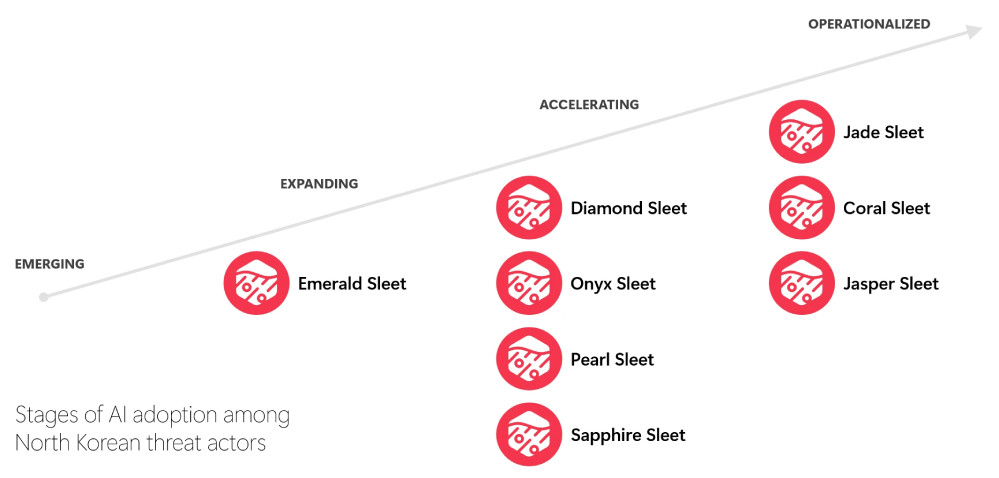
The overall adoption of AI across North Korean threat actors is assessed as high, with groups demonstrating varying levels of maturity. Threat actors like Jade Sleet, Coral Sleet, and Jasper Sleet have fully operationalized AI across their routines, while others are actively accelerating or expanding their capabilities in this domain.
Automated social engineering campaigns
North Korean threat actors are scaling their reconnaissance capabilities by using generative AI platforms to gather information on target organizations. For example, Jade Sleet launched campaigns through three front companies in a single week, utilizing tailored domains, social media profiles, and industry knowledge to target professionals in cybersecurity and blockchain.
Source: Microsoft
These groups leverage AI to produce tailored phishing lures, fraudulent resumes, and realistic interview responses. Onyx Sleet generated dozens of tailored lures in minutes, significantly accelerating high-volume phishing campaigns targeting South Korean users. Synthetic media creation, including AI-generated voice and video, further enhances these social engineering capabilities.
Actors such as Jasper Sleet use fraudulent identities and AI-assisted workflows to obtain legitimate remote employment, maintaining consistent communication across multiple worker personas. These techniques allow threat actors to interact more credibly with hiring processes and evade traditional security detections.
Advanced malware development operations
Evidence indicates that North Korean threat actors are leveraging AI-enabled tools to assist in malware development and code refactoring. Development platforms help these actors generate, convert, debug, and obfuscate code, enabling them to rapidly pivot in reaction to defensive measures and circumvent detection efforts.
Coral Sleet rapidly built a new capability to trojanize private source code repositories, integrating them into their existing malware chain. Similarly, Sapphire Sleet incorporated AI during an August 2026 software compromise, utilizing dynamic .NET compilation for post-exploitation defense evasion.
Furthermore, Onyx Sleet and Pearl Sleet are leveraging the open-source agentic AI penetration testing framework ARTEX to conduct operations. This indicates a broader trend of North Korean groups quickly adopting new AI technologies to enhance their attack chains and operational efficiency.
Enterprise infrastructure protection measures
Threat actor misuse of AI increases risk across enterprise environments by amplifying existing threats such as phishing and malware. Organizations can utilize tools like the Security Dashboard for AI and Microsoft Agent 365 to monitor, govern, and secure AI assets and agents within their networks.
Mitigation guidance includes robust vulnerability management, perimeter scanning, automated patching, and strict vetting of potential employees and staffing contractors. Organizations should carefully scrutinize candidate digital footprints, video presence, and background details to prevent infiltration by fraudulent workers.
Defenders should also enable cloud-delivered protection, endpoint detection and response in block mode, and automatic attack disruption features in Microsoft Defender XDR. These controls help contain attacks in progress, limit asset impact, and protect enterprise environments against advanced AI-enabled threats.
OpenAI breakthrough sparks dispute. AI threatens faith in scientific process

Source: OpenAI
The rapid integration of AI into scientific research is fueling intense debate over novelty, privacy, and integrity. While computational algorithms allow researchers to compress centuries of data processing into months, a rising wave of automated hallucinations, unverified papers, and fabricated references threatens the core of academic trust. Recent disputes surrounding claimed mathematical breakthroughs and machine-generated writing highlight the urgent need for strict human oversight across scientific disciplines.
Algorithmic tools spark controversy
The rapid integration of artificial intelligence into complex scientific workflows has sparked severe disagreements within the mathematical community. A recent public dispute erupted after OpenAI announced that its automated agents solved a longstanding problem related to the Navier-Stokes equations in 88 hours. However, external researchers expressed deep concern regarding data privacy and potential source material overlap. Mathematician Tristan Buckmaster highlighted that his team’s preliminary work was stored in Codex tools prior to the declaration, prompting broader questions about model training practices.
OpenAI firmly denied that any human or synthetic system accessed external files before publication. Representatives stated that user prompts submitted shortly before the announcement could not have influenced their model’s internal operations in any manner. Despite these assertions, the controversy exposed vulnerabilities in how research platforms handle proprietary analytical progress.
Beyond immediate intellectual property disputes, leading experts warn about a broader erosion of faith in traditional discovery processes. While public discussions often focus on extreme scenarios involving biological hazards, the subtle risk of unreliable automated reasoning poses an immediate threat. When generative models produce convincing fabrications, distinguishing authentic scientific breakthroughs from machine hallucinations becomes an increasingly difficult task for institutions.
Synthetic writing floods journals
The widespread adoption of generative language models is overwhelming academic publishing channels with unverified text and phantom literature. Science journalist Dalmeet Singh Chawla observed that generative artificial intelligence has essentially disrupted the entire scientific process. Recent investigations into major computer science conferences revealed that up to 17% of referee reports contained substantial modifications made by synthetic software. Furthermore, automated writing tools frequently invent non-existent references, resulting in around 147,000 bogus citations entering scientific databases in a single year.
This influx of synthetic material creates severe operational challenges for academic journals attempting to maintain rigorous standards. Security teams monitoring submission integrity face an unprecedented volume of deceptive entries that traditional editorial workflows cannot process effectively. If left unchecked, these systemic distortions risk diverting valuable research funding toward false leads and slowing genuine scientific progress.
Computer scientist Dmitry Kobak from Ghent University warned that any inherent bias within a language model risks suddenly permeating the broader scientific literature. Analysis of biomedical literature shows a dramatic rise in distinct stylistic fingerprints left by automated generators. In response, academic platforms are implementing automated tracking signals and strict submission rules to mitigate risks. Some major publishers now outright forbid synthetic images and temporarily ban contributors who submit fabricated reference lists.
Human supervision remains critical in research
While automated systems accelerate data processing, excessive reliance on synthetic outputs introduces dangerous hype into empirical research. When DeepMind applied computational algorithms to material science, the system generated over two million predicted crystal structures. However, independent chemical analyses revealed that many proposed compounds were trivial adaptations of existing materials rather than original discoveries, highlighting the necessity of manual verification.
Pushmeet Kohli, who leads DeepMind's science work, stressed that human researchers must fully understand what an automated agent has done and retain final accountability for the results. Despite operational hurdles, responsible implementation of machine learning has successfully aided breakthroughs. Research teams studying fertilization mechanisms utilized analytical algorithms to locate key cellular proteins on egg surfaces, demonstrating how structured computational tools can complement human ingenuity. Achieving meaningful progress requires maintaining strict boundaries where human researchers evaluate every automated claim.
Reflecting on the future potential of structured biological AI models, Basecamp Research co-founder Oliver Vince noted that scientists now have a technically feasible path toward curing cancer. Ultimately, artificial intelligence functions best as a powerful calculator rather than an autonomous decision-maker. Preserving scientific integrity depends on human scientists taking full accountability for published findings while keeping machine-generated claims grounded in rigorous experimental validation.