

Claude joins the EU Data Boundary. Copilot gains privacy updates

Source: Microsoft
Microsoft has officially announced that Anthropic's Claude models inside Microsoft 365 Copilot will be integrated into the EU Data Boundary by the end of 2026. This change allows organizations across the European Union and EFTA to access alternative AI models while ensuring that their operational data is processed and stored strictly within European infrastructure.
Microsoft brings Claude data processing to the EU
Microsoft has officially announced the expansion of its data isolation framework. Claude models developed by Anthropic will soon operate inside the EU Data Boundary for Microsoft 365 Copilot, providing European organizations with broader technological options without compromising localized processing commitments.
The update ensures that business data submitted through enterprise tools stays entirely within regional boundaries.
This means customers will no longer need to choose between access to Claude models and the Microsoft regional data-processing commitments they rely on - stated Charles Lamanna, Executive Vice President of Copilot, Agents, and Platform at Microsoft.
By the end of 2026, organizations located in the European Union and the European Free Trade Association will process queries locally. The coverage applies across the entire Copilot suite, including tools such as Copilot Cowork and Copilot Code, leveraging the existing European data centers where customer information is already stored.
Strengthening governance across European operations
The EU Data Boundary is Microsoft's dedicated framework for storing and processing tenant data inside the EU and EFTA territories for Microsoft 365 services. Included automatically in standard enterprise contract terms, this feature requires no additional purchases or opt-in procedures for eligible organizations.
Entities requiring stricter data residency controls can also utilize localized storage solutions across 10 European nations. Integrating Anthropic's systems alongside Microsoft-operated models enables public sector bodies and heavily regulated industries to meet strict statutory compliance targets while scaling generative workflows.
All Claude models integrated into Microsoft Copilot operate under enterprise-grade protections. Customer inputs remain fully confidential and are never utilized to train underlying foundation models, giving IT leadership granular administrative authority over user access.
Seamless update for Microsoft 365 Copilot users
For European enterprises currently using Claude models inside Microsoft 365 Copilot, the infrastructure transition will happen automatically. Processing location updates will take effect behind the scenes once the localized deployment completes, requiring no technical action from customer IT departments.
Organizations that have not activated these models retain the ability to enable them whenever required. To uphold strict default security baselines across the EU and EFTA regions, the features remain turned off by default until administrators explicitly grant access through the Microsoft 365 admin center.
Flexible deployment controls ensure companies can select the most effective model for specific workplace tasks without breaking security protocols.
Extending the EU Data Boundary to Claude models is the next step. For organizations across Europe, this means the latest AI in Copilot, with the data commitments they trust - added Charles Lamanna.
What’s new in Microsoft Copilot for October 2026? Full feature update
Source: Microsoft
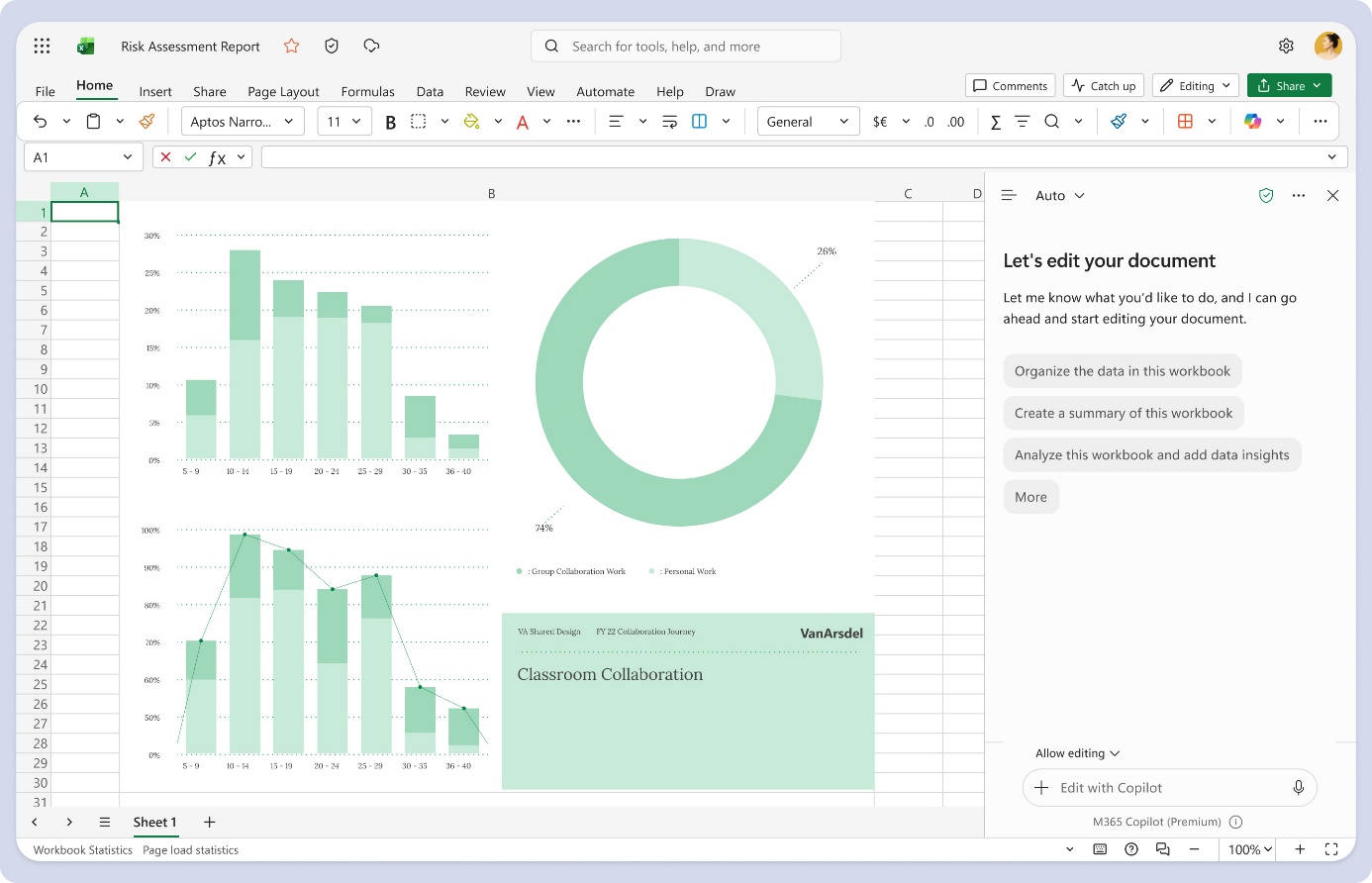
Microsoft has rolled out its October 2026 update for Microsoft 365 Copilot, introducing powerful new productivity features, advanced assistant workflows, and robust IT admin controls across Microsoft 365 apps. Highlights include unified home navigation, Copilot Cowork task catalogs, enhanced Word, Excel, and PowerPoint capabilities, and specialized life sciences connectors, empowering users and organizations to streamline complex tasks securely.
Unified navigation, Cowork, and user experiences
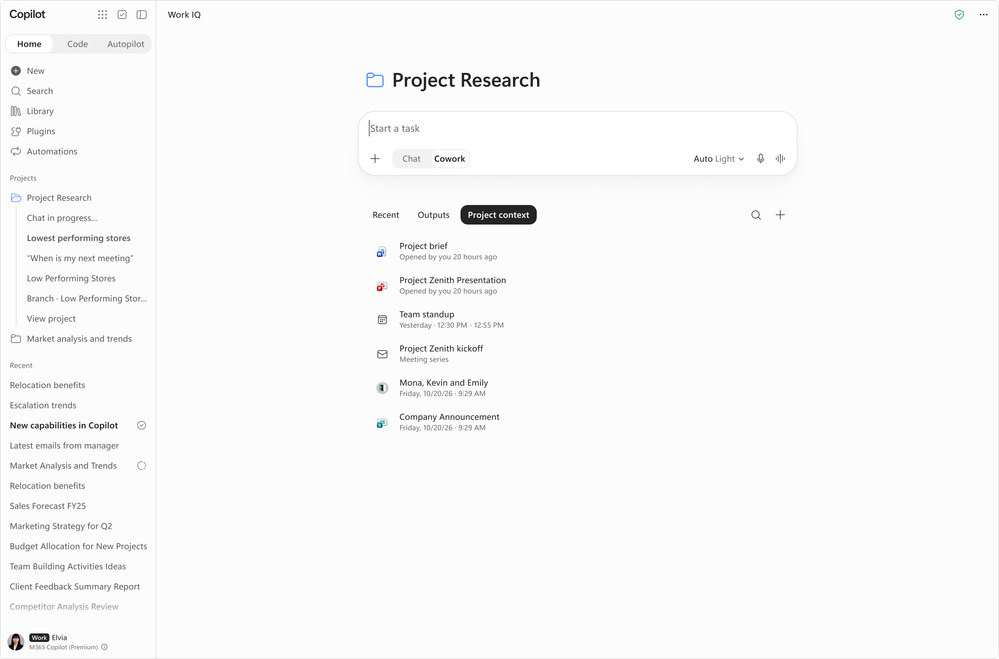
Microsoft has reimagined the starting point for work with updated Home navigation in the Copilot app, bringing Chat and Cowork together in a single shared pane. Chat handles questions, ideas, and first drafts, while Cowork manages complex, multi-step tasks. The layout organizes plugins, automations, workspaces, projects, and conversation history for seamless daily workflows.
Copilot Cowork introduces role-based plugins with pre-built skills for Sales, Service, Education, Legal, and Finance, allowing users to jump straight into specialized tasks like contract review or case triage. A new task catalog provides suggested tasks for common scenarios, helping professionals start complex workflows without building prompts from scratch.
Source: Microsoft
Projects and skills bring unprecedented continuity and personalization to Copilot. Projects give teams a dedicated space to keep related files, chats, and instructions together without rebuilding context. Meanwhile, skills enable users to capture reusable expertise using natural language in Chat, sharing best practices across teams instantly.
Furthermore, Autopilot arrives as an always-on cloud-based personal agent designed to handle routine responsibilities autonomously. Operating with its own account and mailbox, Autopilot carries work forward based on user goals, maintaining strict human control through robust access controls and approval guardrails.
App-specific enhancements in Office and Teams
Microsoft 365 core applications receive significant workflow upgrades, starting with a refreshed visual design for Copilot in Word, Excel, and PowerPoint that aligns seamlessly with the main Copilot app. In Word, the newly introduced legal plugin offers over 20 purpose-built legal skills for drafting and redlining agreements, alongside document-specific formatting and Markdown support.
Excel expands its analytical prowess with accounting skills that assist professionals in reconciling accounts and analyzing financial performance directly within workbooks. Additionally, the clean data skill scans files for hidden inconsistencies and duplicates, while the interactive canvas dynamically turns workbook data into polished reports and visualizations.
Source: Microsoft
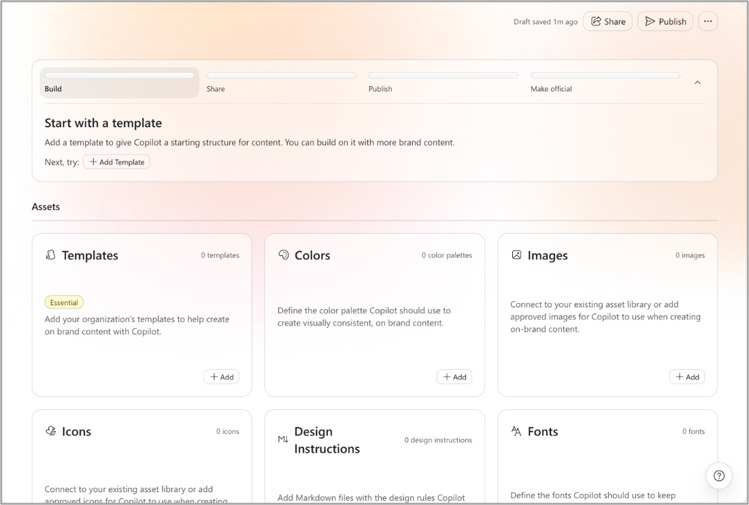
PowerPoint receives a powerful model update with Sonnet 5.5 to elevate visual hierarchy and slide layout consistency. Brand kit setups are now streamlined, allowing brand managers to publish or unpublish official kits easily, supported by a template assessment skill and interactive slide generation capabilities.
Collaboration reaches new heights through Copilot Workspaces, which evolve from notebooks into dynamic, shared team environments featuring live cursors. Workspaces now support direct file editing for Office documents, expanded audio overviews with topic-based episodes, and compatibility with additional file formats like images and CSVs.
IT admin capabilities, governance, and ecosystem updates
IT administrators gain advanced oversight tools, including the Insights Agent, which tracks agent usage, adoption trends, and active user metrics through natural-language queries. Additionally, the Workforce Insights Agent provides a dedicated workspace for configuring organizational definitions and validating how AI reasons over enterprise data.
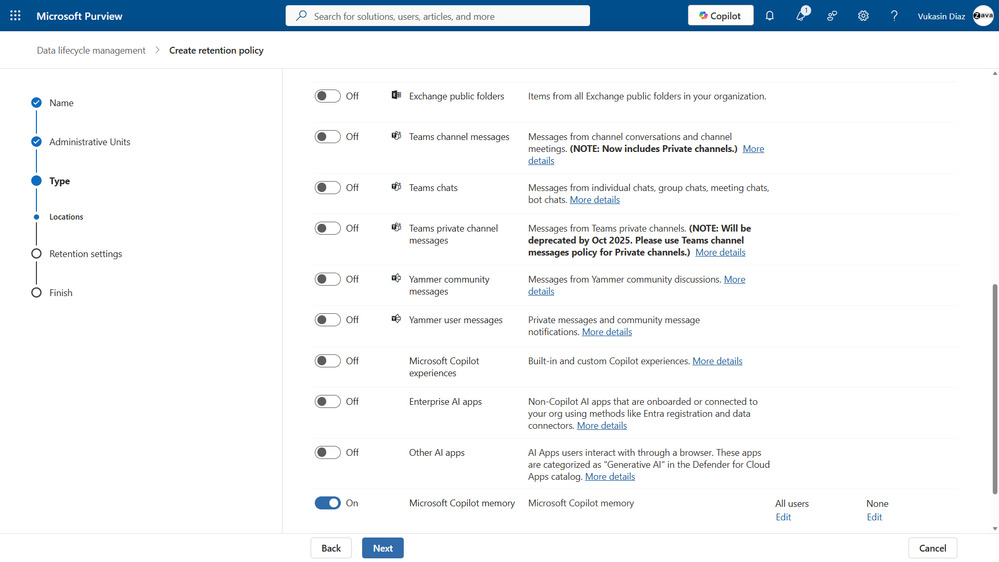
Compliance and security receive major boosts with Microsoft Purview Data Loss Prevention expanding to Microsoft Cowork. Security admins can now apply unified policies across chat and Cowork, block sensitive data prompts, and configure retention policies for Copilot memory within Purview Data Lifecycle Management.
Source: Microsoft
The Microsoft 365 Copilot ecosystem expands significantly with new life sciences connectors tailored for researchers and medical professionals. These connectors integrate trusted data sources across research, drug discovery, regulatory intelligence, and clinical development directly into Copilot reasoning workflows.
Finally, Microsoft Teams and Edge receive practical refinements, including intelligent meeting recap options that function without saving transcripts, and call recap features within the Queues app. Government Clouds also gain crucial Copilot editing capabilities across PowerPoint, Word, and Excel.
Agent-led customer support. New conversational AI system in Copilot Studio
Source: Microsoft
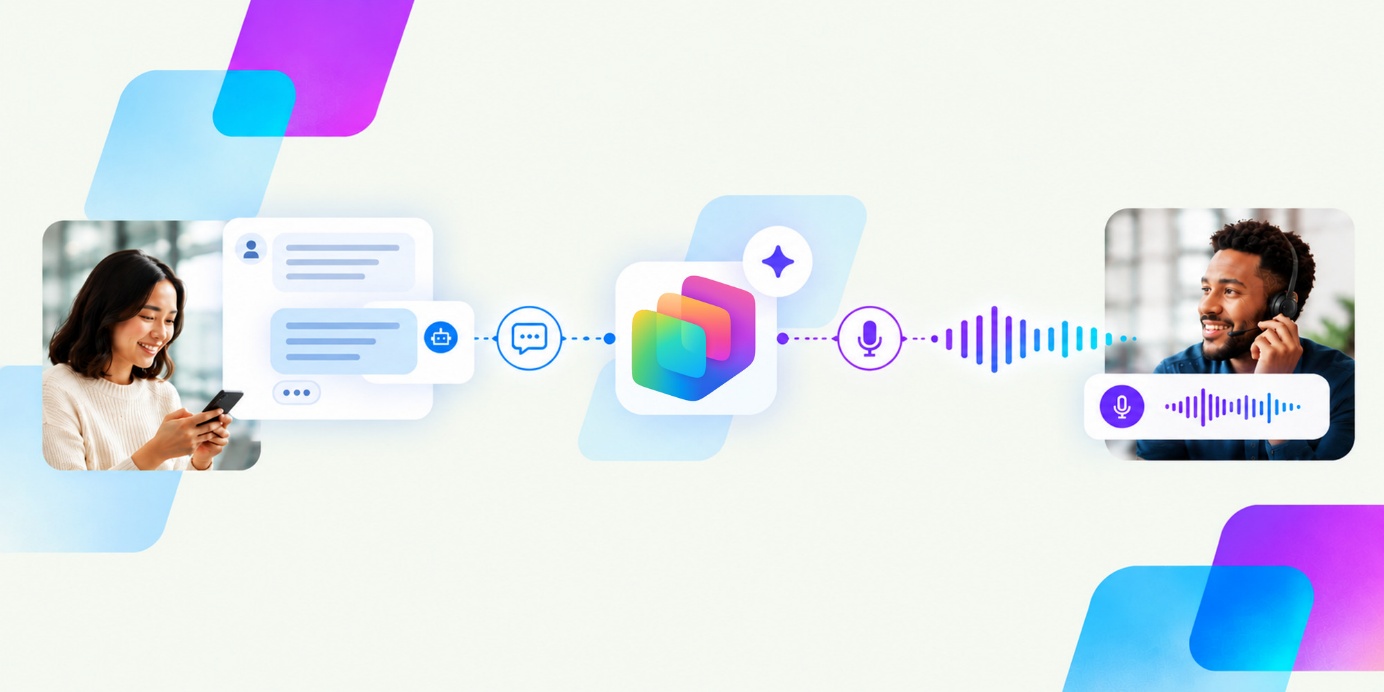
Microsoft announced the public preview of its new customer conversation harness in Microsoft Copilot Studio. Designed specifically for customer engagement, this solution allows organizations to build omnichannel AI agents that handle both voice and chat interactions. The tool combines generative skills with deterministic topics, enables biometrics authentication, and provides seamless handoffs to human representatives. Integrated with enterprise context via Microsoft IQ and Agent 365 governance, it helps modernize legacy customer service systems.
Next generation customer engagement
Microsoft announced the public preview of the customer conversation harness within Microsoft Copilot Studio. Built specifically for customer service environments, this tool enables organizations to create omnichannel conversational agents. These agents can seamlessly shift between voice and digital channels while maintaining conversation context and history.
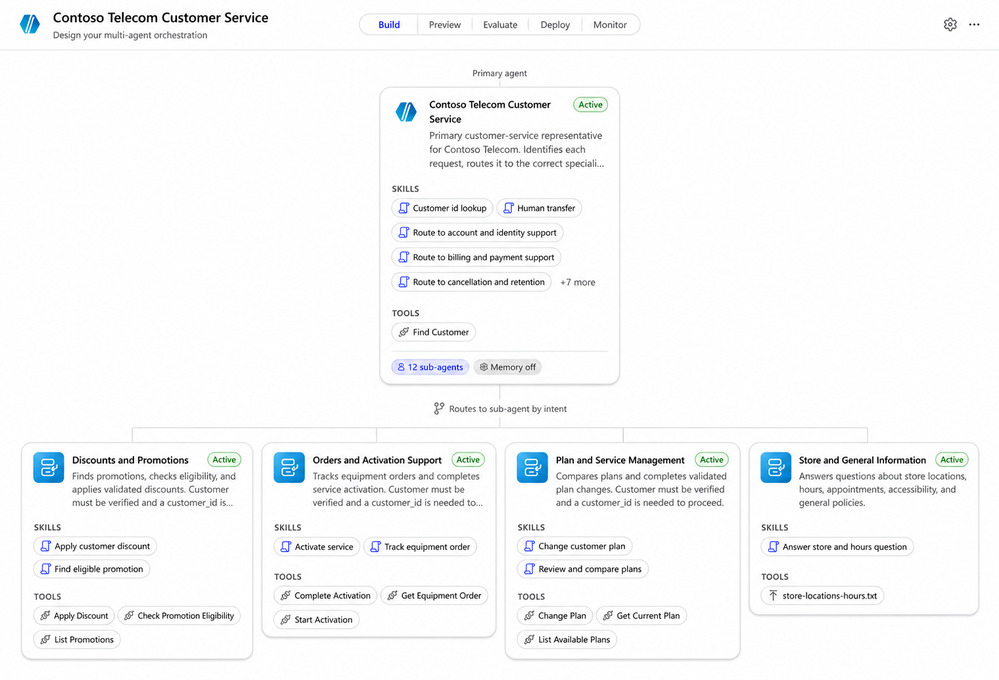
Makers can now build hybrid conversational experiences inside a single agent. The new harness allows each agent skill to be either fully generative, driven by broad prompts, or fully deterministic, using step-by-step topic structures. This flexibility resolves long-standing trade-offs between dynamic natural conversation and strict procedural workflows.
Generative skills rely on prompt instructions for adaptable decision making during unstructured context gathering. Deterministic topics enforce step-by-step routing for exact operations such as payments or identity verification. Developers no longer need to choose one approach over the other, as both can function harmoniously within the same operational framework.
Specialized agent teams and enterprise data
At the core of the system is the ability to connect multiple specialized sub-agents into a unified team. Each sub-agent can possess its own knowledge, tools, and dedicated language model. This approach allows organizations to balance complex reasoning capabilities against latency and operational cost.
Source: Microsoft
Developers can integrate custom agents created in Microsoft Foundry with a few clicks. Context awareness is provided through Microsoft IQ, which grounds agent decisions in Microsoft 365 app data, Teams threads, and SharePoint documents. Large-scale knowledge sources are accessed via Foundry IQ and Azure AI Search, alongside business data from Fabric IQ.
Agents access these data sources using their own individual enterprise identities. This ensures that all existing security policies, compliance rules, and data access controls are respected during every customer interaction.
Voice biometrics and contact center integration
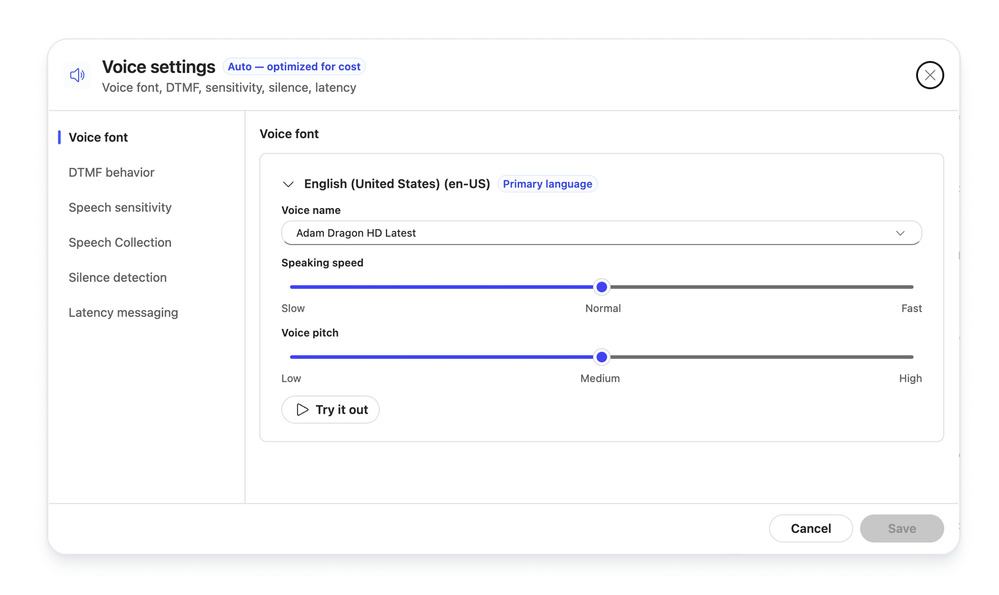
Voice interactions receive comprehensive configuration options, including speech instructions, voice fonts, DTMF settings, and speech sensitivity control. Phone numbers can be acquired and assigned directly within the Copilot Studio interface for rapid deployment across channels.
Source: Microsoft
Through integration with Microsoft Contact Center Intelligence, the harness supports real-time voice biometrics. Customers can state their issue naturally while the system verifies their identity against a secure voiceprint. This removes the friction of security questions or passcode verifications.
Escalation mechanisms allow callers to be routed directly to internal Teams queues or external contact centers. All deployed agents are automatically registered in Microsoft Agent 365, granting administrators centralized oversight over agent permissions, tool access, and usage billing via Copilot Credits.
MAI-DxO beats doctors in diagnosis. It slashes diagnostic costs

Source: MAI Health Team
Microsoft has introduced the Microsoft AI Diagnostic Orchestrator (MAI-DxO), a multi-agent diagnostic framework evaluated on a new interactive benchmark called SDBench. Instead of relying on static vignettes, the system simulates a panel of virtual physicians that iteratively orders tests and asks follow-up questions starting from a patient's chief complaint. MAI-DxO achieved over 80% accuracy on complex NEJM cases and MIMIC-IV-ED emergency cases, outperforming human physicians while cutting workup costs. The findings mark a significant shift toward step-by-step clinical reasoning.
AI outperforms doctors in benchmarks
Microsoft AI Diagnostic Orchestrator (MAI-DxO) is a framework designed to transform how clinical diagnoses are performed and evaluated. Unlike traditional benchmarks like the United States Medical Licensing Exams (USMLEs) that present all medical case details upfront, MAI-DxO operates through an interactive model called sequential diagnosis. The system starts with only a patient's chief complaint and iteratively determines which follow-up questions to ask and which diagnostic tests to order.
To rigorously evaluate step-by-step diagnostic reasoning, the researchers developed the Sequential Diagnosis Benchmark (SDBench). The platform assesses performance across complex cases from "The New England Journal of Medicine" (NEJM) clinicopathological conferences as well as typical emergency department presentations from the MIMIC-IV-ED dataset. Rather than relying on a single model to produce an instant output, MAI-DxO functions like a panel of virtual physicians. These virtual agents propose differential diagnoses, suggest cost-effective tests, and challenge emerging hypotheses over several rounds of structured debate.
Given a brief clinical presentation, clinicians selectively acquired information to reach a diagnosis, enabling assessment of diagnostic accuracy and workup cost - explained Harsha Nori and the research team in "Science".
The approach reflects the realities of clinical medicine where diagnostic decisions are built step by step rather than provided in neat written vignettes.
The system's findings demonstrate significant leaps in accuracy while simultaneously curbing overall diagnostic expenditures. On complex NEJM cases, MAI-DxO achieved an 83.2% diagnostic accuracy rate, whereas human physicians reached 36.1% with access to external references and 22% without them. On emergency department cases from MIMIC-IV-ED, the AI system reached 80.3% accuracy compared to 46.8% achieved by generalist physicians. Across both datasets, no other human or artificial intelligence approach proved to be both more accurate and less costly.
Unlocking unprecedented diagnostic accuracy at reduced care costs
The diagnostic orchestrator maintains high performance while actively prioritizing cost-effective medical workups. By weighing each prospective test's likely value against its financial impact, the system achieves diagnostic accuracy at half or even one-third of the cost of comparative approaches. When optimized heavily for efficiency, one configuration of MAI-DxO maintained an 81% accuracy rate on complex NEJM cases while dramatically cutting testing expenses.
Performance improvements were shown to persist and even expand when newer base models, such as GPT-5.5, were integrated into the architecture without altering the underlying orchestration method. This suggests that the multi-agent panel approach provides a durable framework that scales alongside future advancements in foundation models.
Although these findings were obtained in a controlled benchmark setting, they highlight the promise of language models for supporting more accurate, lower-cost diagnoses - noted Yevgeniya Nusinovich, editor in "Science".
The open-sourcing of SDBench code and evaluation tools allows external researchers to reproduce these results independently.
Beyond diagnostic accuracy, the orchestrator minimizes unnecessary procedures, offering a potential solution to rising healthcare costs. The system's ability to selectively gather clinical evidence prevents diagnostic over-testing while reaching definitive conclusions faster than standard care pathways.
Moving beyond benchmarks toward real-world clinical deployment
While benchmark results establish proof of concept, Microsoft is partnering with leading healthcare institutions to validate the technology in live clinical environments. A prospective study at Beth Israel Deaconess Medical Center in Boston will evaluate patient interactions with the AI system directly, measuring its diagnostic choices against independent physician assessments. These clinical trials aim to identify operational strengths, recognize limitations, and seamlessly blend AI tools into busy emergency workflows.
In parallel, a collaboration with Mayo Clinic focuses on uniting frontier AI models, clinical expertise, and longitudinal multimodal data. This broader effort aims to address complex care journeys beyond single diagnostic tasks, including treatment selection, monitoring patient changes over time, and supporting value-aligned medical decisions.
In multiple test settings, this system achieved higher accuracy than human responders and at a lower total cost, demonstrating its potential as a tool to assist physicians - summarized Yevgeniya Nusinovich.
By combining scientists from Microsoft Research with product teams behind tools like Dragon Copilot and PowerScribe, Microsoft is pushing toward a integrated vision of medical superintelligence. The ongoing research highlights a shift from basic medical knowledge retrieval to interactive, cost-aware clinical reasoning in modern healthcare.
OpenAI updates its visual model. Images 2.6 brings moving graphics

Source: OpenAI
OpenAI has officially launched ChatGPT Images 2.6, introducing animated GIF creation and SVG export options. The updated model is 50 percent faster than version 2.5 released two months ago, delivering improved consistency across character edits and visual elements. Weekly creation metrics have surpassed 4 billion images across ChatGPT, Codex, and the API. Developers can now utilize two dedicated API models, Flare and Sunburst, along with enhanced canvas markup capabilities and precise complexity control parameters.
OpenAI launches ChatGPT Images 2.6
OpenAI has officially launched ChatGPT Images 2.6 across its web, mobile, and desktop applications, bringing a substantial performance upgrade to its image creation ecosystem. The updated infrastructure runs 50 percent faster than the previous release from September, allowing prompt processing to execute with significantly reduced latency. This update arrives as global usage metrics surge past 4 billion images created each week across ChatGPT, Codex, and the API.
The headline functional addition in Images 2.6 is native support for generating animated GIFs directly from prompt sequences or raw sketches. Creators and marketing teams can utilize this capability to convert static concept art into moving brand mascots, generate customized social media reactions, or construct pre-visualization storyboards before transitioning to full video production pipelines.
The release also expands vector output flexibility through native SVG file generation. This addition allows web designers, application developers, and print specialists to export scalable visual elements directly without relying on external raster-to-vector conversion utilities.
New developer API controls
To support varied technical requirements, OpenAI has segmented its API offering into two specialized models: GPT-Image-2.6 Flare and GPT-Image-2.6 Sunburst. The Flare variant emphasizes operational velocity, capable of returning rendered images in as little as six seconds when set to low-quality modes. It also introduces structural layout improvements tailored for promotional posters and product compositions.
For workflows demanding higher fidelity, the Sunburst model focuses on maintaining visual continuity and character preservation across iterative edits. This model ensures that key product details, branding materials, and facial features remain stable throughout complex image manipulations. Developers also gain access to image markup tools for precise regional edits, alongside a new complexity parameter to guide scene planning.
The launch comes amid intensifying competition in the visual generative AI landscape. Microsoft recently introduced its MAI-Image-2.7 Preview, which surpassed OpenAI's GPT Image 2.5 Flare model on Artificial Analysis's image editing benchmark leaderboard. While Microsoft's latest entry managed to outperform the Flare variant, it continues to trail OpenAI's high-fidelity Sunburst model in overall editing performance.
OpenAI reveals GPT-6 Cyber. New model identifies critical Linux flaws

Source: OpenAI
OpenAI has launched GPT-6 Cyber, a specialized model designed for vulnerability discovery, exploit development, and patch generation. The system marks a major step forward, scoring 48.5% on the ExploitGym benchmark and completing 95% of tasks on RemoteExploitBench. During safety research, it discovered 81 novel high-severity vulnerabilities in Firefox and developed 948 exploits for the Linux kernel. With enhanced alignment training, GPT-6 Cyber reliably stays within target boundaries. Access is initially rolling out to approved security teams through the Daybreak Red program.
Real-world discovery of software vulnerabilities
GPT-6 Cyber demonstrated significant gains over previous iterations, achieving a 48.5% score on the ExploitGym benchmark compared to 32.1% by GPT-5.6 Cyber. On the new RemoteExploitBench suite, it successfully executed 95% of assigned remote exploit development tasks.
During preliminary testing, the model discovered 81 novel high-severity vulnerabilities in Firefox and confirmed that 30 previously identified issues carried a higher security risk than initially assessed.
GPT-6 Cyber is a world-class model for cyberdefense. Firefox entered 2026 as one of the world’s most hardened and scrutinized codebases. Even after further hardening with multiple generations of frontier models, GPT-6 Cyber uncovered previously unknown high-severity vulnerabilities, identified architectural improvements, and helped us ship fixes to millions of users - stated Brian Grinstead, Distinguished Engineer at Firefox.
In the Linux kernel, GPT-6 Cyber successfully reproduced 1,724 vulnerabilities and created 948 functional privilege escalation exploits, prompting OpenAI to disclose over 300 critical findings to maintainers alongside candidate patches.
Availability of GPT-6 Cyber for security teams
To mitigate the risk of unintended actions, GPT-6 Cyber underwent targeted alignment training to follow engagement rules.
We’re introducing GPT-6 Cyber, a major leap in security research: more capable at finding and fixing vulnerabilities, and far more reliable staying within the boundaries researchers set. GPT-6 Cyber delivers major gains on key cybersecurity benchmarks over GPT-5.6 Cyber, including a 51% relative improvement on ExploitGym and a step function improvement when tested on staying within scope - declared OpenAI.
In the ExploitGym Honeypot evaluation, the model successfully avoided exploiting out-of-scope services in 99.93% of tests without system safety prompts, and achieved 100% boundary adherence when system prompts were included.
Access to GPT-6 Cyber is currently limited to verified security teams under the Daybreak Red program via API and Codex. Meanwhile, GPT-5.6 Cyber has been made available to all Daybreak Red participants, and GPT-6 Astra access under Daybreak Blue is expanding to broader defender groups, including critical infrastructure operators through partnerships with security firms like Dragos.