

New feature in ChatGPT. Artificial intelligence pays for shopping
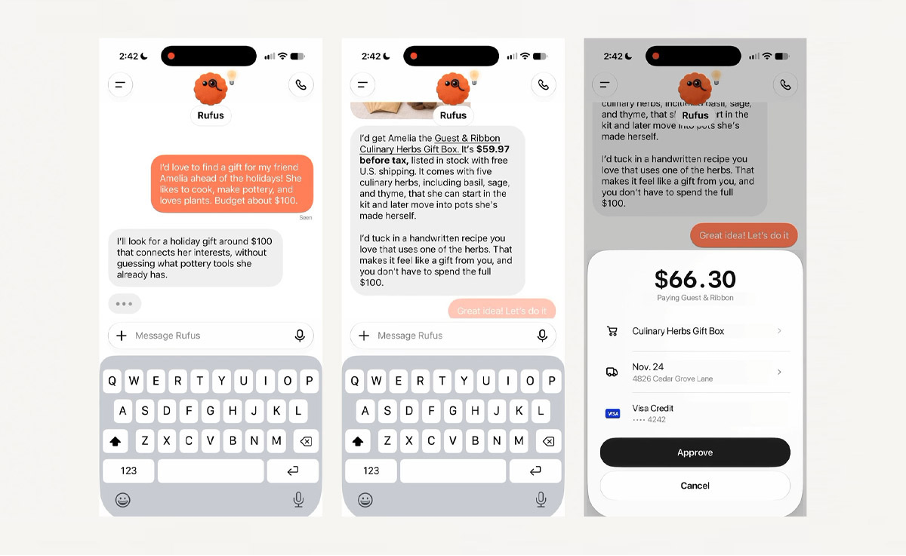
OpenAI has introduced ChatGPT Wallet, a new payment feature enabling AI agents to complete purchases on behalf of users. Instead of storing raw credit card details, the system generates single-use virtual tokens to protect financial data during transactions. Built in partnership with American Express, Mastercard, and Visa, the tool is rolling out first to ChatGPT Pro subscribers aged 18 and older in the United States who hold an eligible US-issued card.
AI agents will safely pay for web shopping
OpenAI announced ChatGPT Wallet, a payment feature that allows artificial intelligence agents to complete online purchases for users. The company partnered with major card issuers American Express, Mastercard, and Visa to build this tool. Users can save their credit cards and authorize agents to pay on the web without exposing their actual card numbers.
For instance, after selecting a hotel for an upcoming trip, a user can ask their agent in dots to finalize the booking through ChatGPT Wallet. The feature acts strictly as a frontend layer, meaning charges go directly to the user's existing credit card.
We're introducing ChatGPT Wallet, setting a new bar for secure payments by agents. It's the first wallet that lets agents pay without access to users' actual card details and that requires a security check for every purchase, while also preserving existing card rewards and protections for eligible disputes - stated OpenAI.
Customers continue to transact directly with merchants, who remain responsible for pricing, order fulfillment, returns, and customer support.
To make a purchase, users add their card once and then review the items, total cost, and chosen card before each transaction. They approve the payment using a security check like Face ID or a fingerprint scan, after which the payment network issues a single-use token with a substitute card number, security code, and expiration date. In the future, OpenAI plans to let users delegate purchases entirely by setting predefined spending limits, product categories, and time frames.
Preparing businesses for agentic commerce
While Wallet's payment tokens work with existing checkout systems, some websites might block AI agents or decline valid orders due to fraud filters, similar to how Amazon blocked Meta's Muse agent. To help merchants adapt, OpenAI released a Commerce Partner Playbook with practical guidance on uploading product feeds, configuring firewalls to accept signed requests via Web Bot Auth, and building plugins or WebMCP tools.
To accept payment from ChatGPT Wallet, websites need to ensure agents are not inadvertently blocked, and payment and risk systems need to recognize legitimate purchases made by agents - noted OpenAI.
OpenAI is also collaborating directly with fraud prevention firms including Forter, Riskified, Sardine, and Signifyd, alongside payment providers like Adyen, Checkout.com, and Stripe, to prevent unnecessary transaction declines. With 1.2B weekly users already researching products on the platform, ChatGPT Wallet is rolling out first to US-based ChatGPT Pro subscribers aged 18 and older with eligible American Express, Chase, Mastercard, or Visa cards, with broader availability planned later.
Copilot Cowork takes on complex work. New features debut at Ignite 2026
Copilot Cowork is shifting enterprise AI from simple question-and-answer prompts to full task delegation across major corporations. Used by nearly 80% of Fortune 500 companies - including AMD, BlackRock, Blackstone, Chevron, and Lilly - the platform handles heavy lifting across sales, finance, HR, legal, and research teams. At Microsoft Ignite 2026, the Redmond Giant introduced a major wave of updates focused on intelligent model routing, proactive assistance, cross-system integrations, and enterprise governance.
Smarter model routing and proactive task suggestions
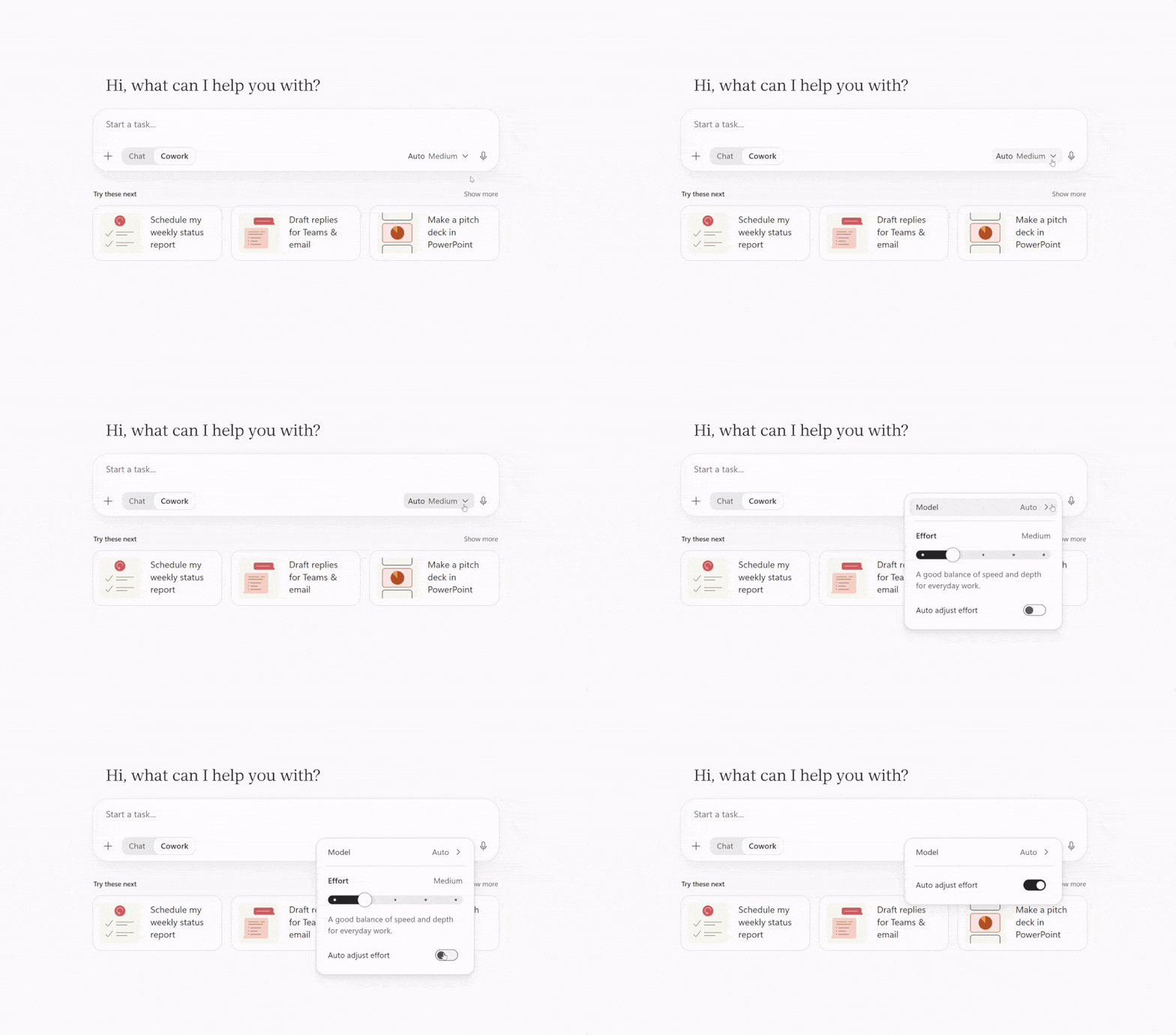
To eliminate the guesswork of matching AI models to specific tasks, Cowork upgrades its Auto feature with the Microsoft-Decision-1.1 decision model, dynamically adjusting reasoning depth per step. For complex workflows, Auto splits tasks across parallel subagents using different providers - pairing Claude for competitor research with GPT for financial comparisons before merging outputs into one brief.
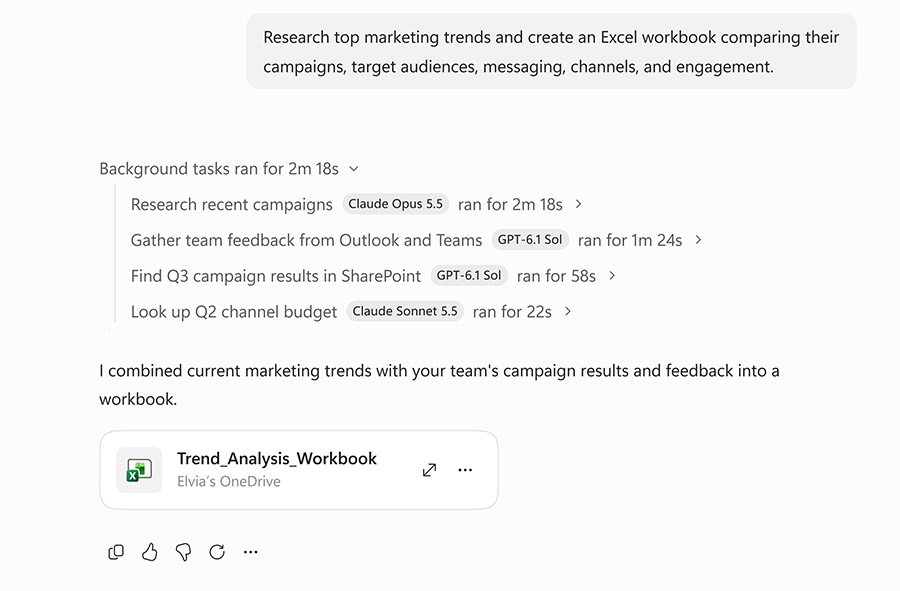
Microsoft also added GPT 6.2 Sol, Claude Fable 5.2, and Fast mode for Claude Opus and GPT Sol to handle last-minute deadlines, while the Copilot Home screen now automatically suggests moving complex requests into Cowork.
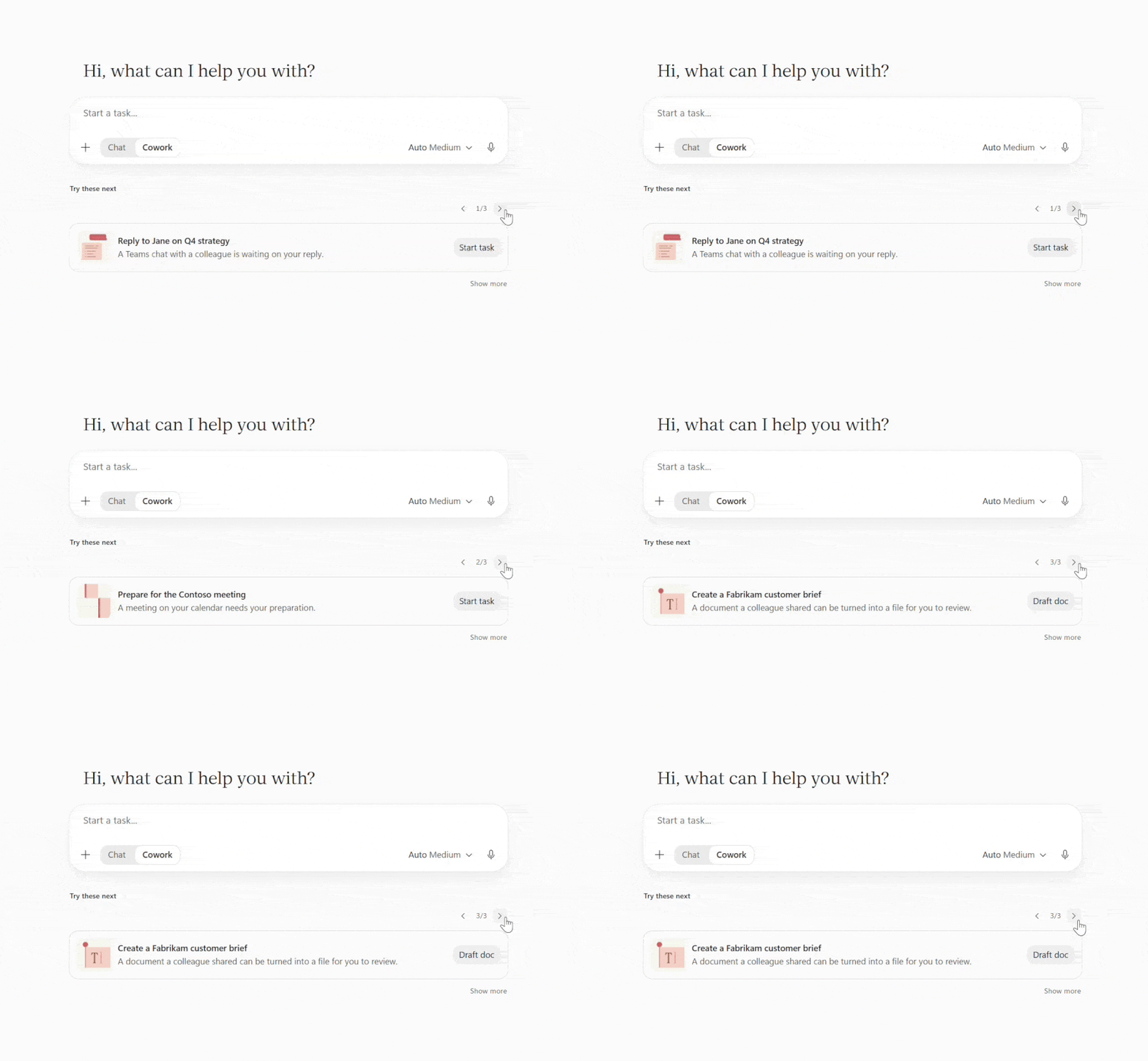
Beyond manual prompts, Cowork introduces proactive recommendations powered by Work IQ, now available in Frontier. By scanning emails, meetings, and Teams chats, the system identifies pending obligations - such as preparing for an upcoming client call or closing an open thread - based on a user's organizational context. Suggested tasks appear directly beneath the prompt composer, allowing users to offload pressing work with a single click.
On-brand content creation, custom apps, and new plugins
Cowork now ensures generated decks, documents, and dashboards adhere to corporate identity from the start through Brand Kit integration, which applies company colors, fonts, and brand voice when referenced in a prompt. For recurring deliverables like weekly trackers, a newly generally available app-building capability turns prompts or task outputs into shareable apps running on the Copilot Managed Runtime, fully visible to IT in the Microsoft 365 admin center.
To bridge data silos outside Microsoft 365, a new plugin catalog and admin governance controls bring external systems into Cowork. A public preview of Salesforce in Microsoft 365 Copilot introduces 39 sales skills grounded in CRM and Microsoft 365 data, alongside updated Microsoft plugins for Sales (19 new skills), Planner, Viva Engage, and Workforce Intelligence. Furthermore, Cowork in Edge for Business automates multi-step tasks across web portals and internal tools while requiring user sign-in and explicit approval for sensitive actions.
Measuring AI impact alongside strict cost controls
As AI adoption scales, leaders gain new visibility through Agent 365 Business Analytics in Frontier, which correlates AI usage and spending with business outcomes. By combining standard task durations with Cowork's contribution, the platform estimates "assisted hours" and translates them into directional dollar values to demonstrate enterprise impact.
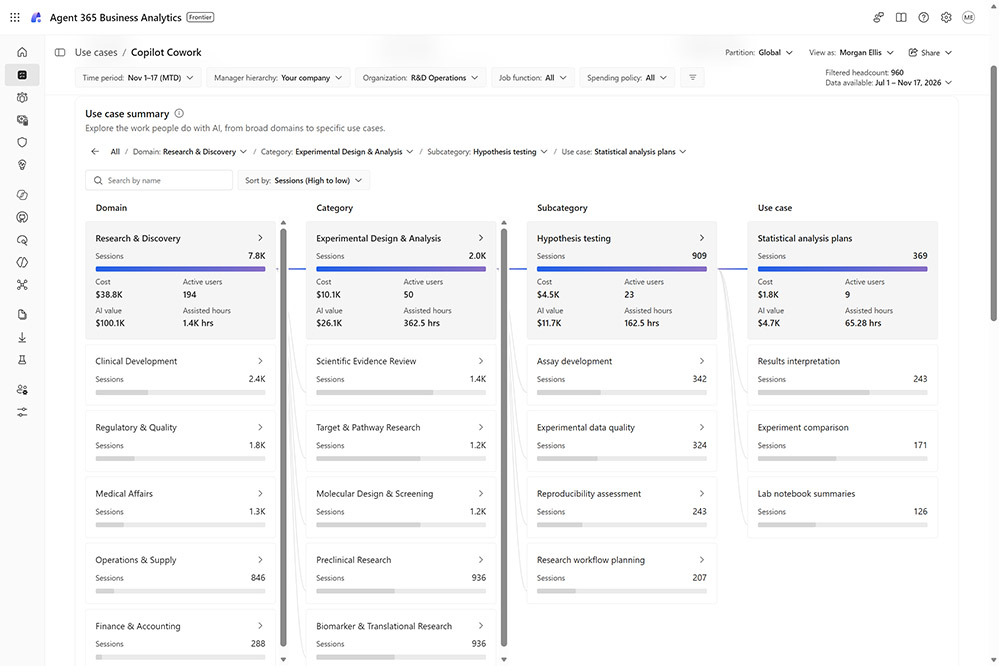
On the financial governance side, Agent 365 Cost Management in the Microsoft 365 admin center enables IT teams to track consumption across users, agents, and models, enforce spending caps, configure alerts, and restrict model access to keep budgets predictable. Finally, Microsoft confirmed that Copilot Cowork in GCC begins rolling out this month, allowing government organizations to delegate complex workloads within established public-sector cloud security and compliance boundaries.
Microsoft launches Today in Copilot. The hub prepares drafts automatically
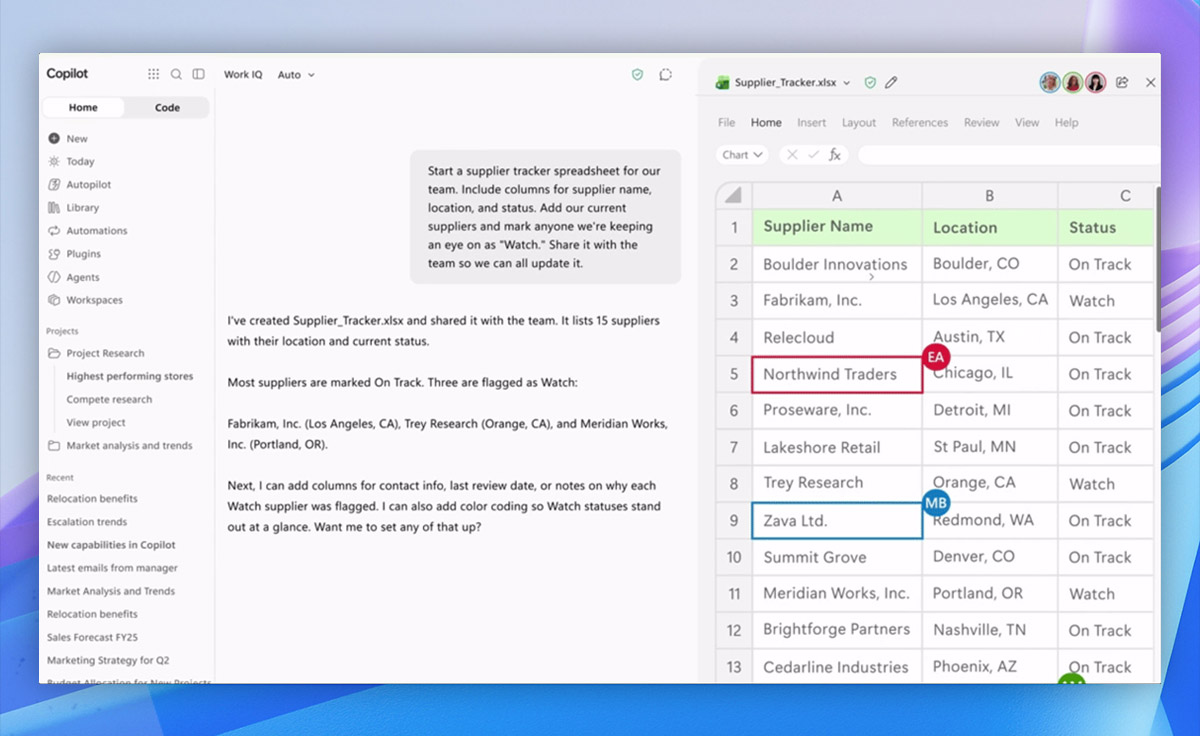
At its annual Ignite conference, Microsoft unveiled a wave of updates for the Copilot app focused on proactive assistance. The highlight is Today, a central hub that pulls data from emails, calendars, and Teams to prepare drafts and schedule suggestions without requiring a prompt. Microsoft also merged Chat and Cowork in Copilot Home, added full Office file editing, and introduced Workspaces, Projects, and the autonomous Autopilot agent for background tasks.
Microsoft unveils Today and expanded Copilot Home capabilities
During its annual Ignite conference, Microsoft introduced a series of updates across its product lineup, highlighted by the new Today feature for Copilot. Designed as a central hub within the Microsoft Copilot app, Today aggregates content from emails, calendars, Teams conversations, meetings, and tasks. By pulling this data together, Copilot can proactively prepare drafts, suggest schedule adjustments, and surface reminders before the user even enters a prompt, leaving the human in control to edit, approve, or reject the proposals.

The Today experience consists of two main components: Today Brief, which delivers a personalized morning agenda of top priorities, and Today Feed, which dynamically refreshes throughout the day as new information arrives. First teased in September alongside Copilot Home, Today is currently available in Frontier private preview inside the Copilot app and Outlook, with no general availability date announced yet.
A unified starting point in Copilot Home
Beyond Today, Microsoft is expanding Copilot Home into a single front door for everyday workflows by merging Chat and Cowork into one shared experience, now generally available. Users can transition smoothly from quick questions to multi-step delegated tasks while keeping their conversation history in one place.
Full Office integration is also generally available within both experiences, allowing teams to create, edit, and collaborate on Word, Excel, and PowerPoint files saved directly to OneDrive without leaving the Copilot app.
To handle complex requests, Home uses an Auto routing system that recommends switching from Chat to Cowork while carrying over the relevant prompt and context. Inside Cowork, Auto routing now leverages Microsoft-Decision-1.1 to adjust effort levels and split complex work across parallel subagents, rolling out to Frontier preview this week.
Managing ongoing workstreams and autonomous agents
To keep long-term projects organized, Microsoft introduced Copilot Workspaces in Frontier preview as an evolution of Copilot Notebooks, giving teams a shared space with live presence and automatic change tracking. Meanwhile, the now generally available Projects feature groups related chats, tasks, and OneDrive outputs under persistent instructions and Microsoft 365 context so users do not have to re-explain their goals.
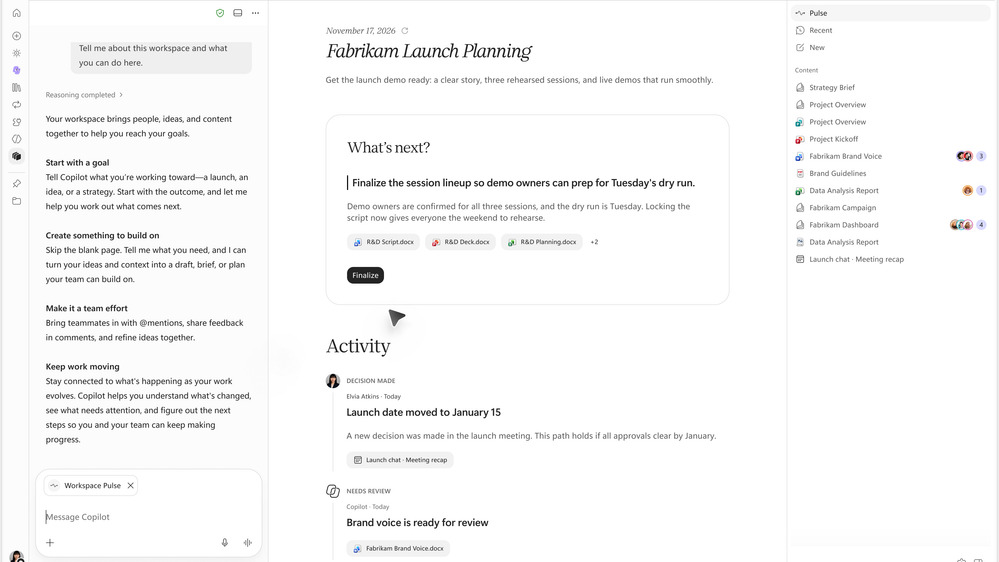
Finally, Home centralizes oversight of background AI tasks through two dedicated tools. Autopilot, rolling out in Frontier, acts as a personal proactive agent with its own memory and tools that works autonomously across apps, while the generally available Automations view lets users monitor, modify, and manage all scheduled Copilot tasks from a single dashboard.
Windows evolves into a secure platform for hybrid intelligence and AI agents
At Microsoft Ignite 2026, Pavan Davuluri, Executive Vice President for Windows + Devices, outlined how Windows - running on over a billion devices - is adapting to the rise of autonomous AI agents. As organizations shift from experimenting with AI to deploying agents across daily workflows, Microsoft is introducing new security boundaries, local AI processing, and unified cloud-to-server infrastructure to control costs and risks.
Hardening the Windows foundation against AI-driven threats
With AI enabling attackers to weaponize vulnerabilities from a single prompt, Microsoft is isolating core system defenses and accelerating updates. The newly generally available Windows endpoint security platform allows partners like CrowdStrike, Bitdefender, and SentinelOne to run protections in user mode rather than the Windows kernel, preventing security software crashes from taking down entire devices.
Additionally, Windows administrator protection is now generally available, keeping local admins at standard privilege levels by default and granting temporary elevation via Windows Hello only for specific tasks, while Windows baseline protection enters preview to provide a unified, verifiable device security state.
To counter a projected doubling of industry vulnerabilities, Microsoft uses its multi-model scanning harness, MDASH, which helped patch over 1,100 flaws in October alone. Delivering these fixes relies on Windows Autopatch - now managing over 150 million devices and deploying updates more than 40 percent faster than on-premises tools with just one monthly reboot - alongside upcoming Intune capabilities to automatically update user-installed apps.
Securing autonomous agents and enabling local Copilot actions
Because agents interact directly with corporate files and networks, Microsoft is expanding Microsoft Execution Containers (MXC) on Windows 11 to enforce runtime containment policies. Already adopted by OpenAI, Meta, Anthropic, and Replit, MXC is gaining preview process container improvements, generally available learning modes, and experimental hardware-isolated local Micro VMs, all governed via Agent 365, Entra, and Intune.
For agents requiring full desktop environments to operate legacy apps without APIs, Windows 365 for Agents provides dedicated Cloud PCs billed through Copilot Credits, a setup that has already cut order processing times by 60 percent for Microsoft's internal operations.
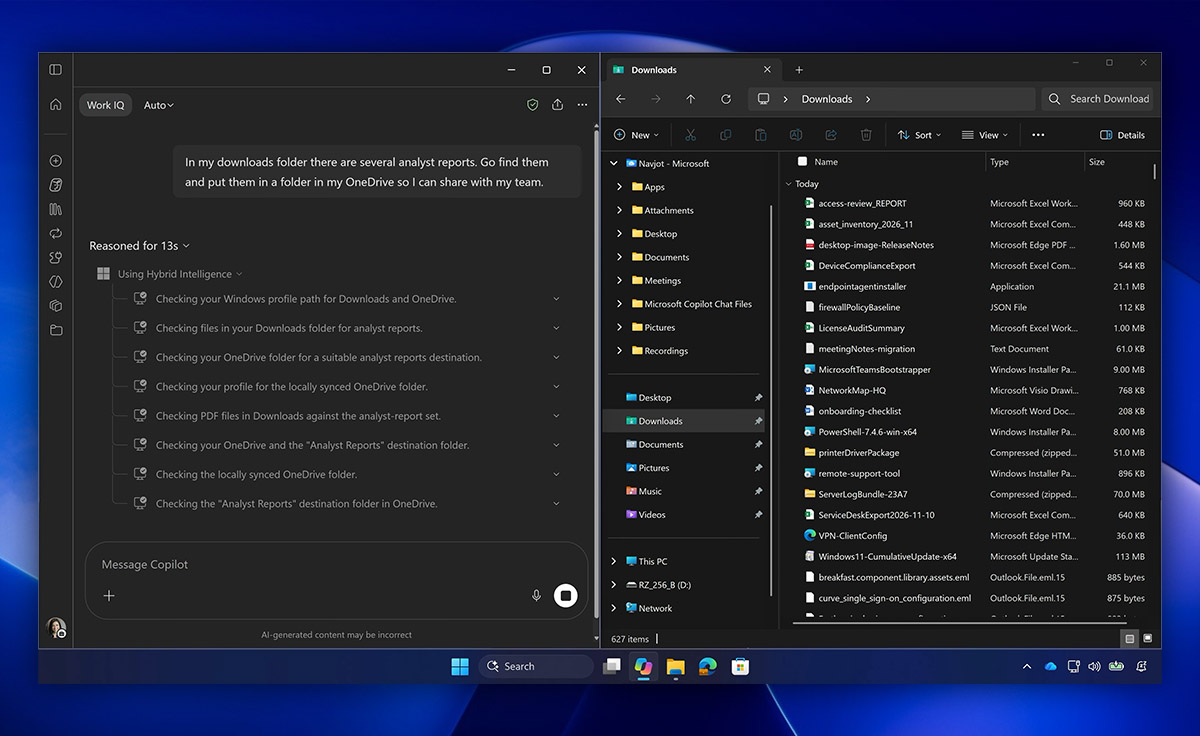
On the client side, Hybrid Intelligence routes AI tasks between the cloud and local silicon to optimize token spend. Copilot+ PCs will soon receive three local capabilities: opt-in local context from open files and apps, natural-language local file actions to organize or rename documents, and read-only local PC diagnostics to troubleshoot issues like Bluetooth or network drops without IT intervention.
Similarly, GitHub Copilot Fusion is entering preview on Windows, routing coding tasks to local models like MAI Code 1.1 Flash on PCs powered by NVIDIA RTX Spark and AMD Ryzen AI Max processors.
Unifying client devices, cloud PCs, and Windows Server 2028
Microsoft is connecting edge devices, cloud streaming, and on-premises servers into a single AI compute estate. For Windows 365 and Azure Virtual Desktop, the new Direct Stream protocol improves connection reliability by nearly 300 percent, with NVIDIA GPU-backed Cloud PCs arriving in preview early next year to support dual 4K 60fps streaming and local model execution.
In the datacenter, Windows Server 2028 enters public preview with post-quantum cryptography, Trusted Launch VMs, and unified fleet management via Intune and Autopatch. By bringing Microsoft Foundry to Windows Server 2028 alongside support for AMD MI350P accelerators and NVIDIA DGX Station hardware featuring the GB300 Grace Blackwell Ultra superchip, enterprises can build agents on Windows PCs, run them locally next to sensitive data, and scale to Azure as needed.
GPT-6.2 Astra and Sol hit Foundry. Enterprise AI gets an upgrade
OpenAI has unveiled GPT-6.2 Astra and GPT-6.2 Sol, delivering higher accuracy with fewer output tokens. Flagship Astra sets new records in science, law, finance, and 3D design while cutting API prices by 20%. Meanwhile, Sol nearly matches Astra's coding skills at one-fifth the cost. Both models launch with stricter safety monitoring and are now generally available for enterprises in Microsoft Foundry.
OpenAI launches efficient GPT-6.2 Astra and GPT-6.2 Sol models
OpenAI has introduced two new AI models, the flagship GPT-6.2 Astra and the everyday workhorse GPT-6.2 Sol, designed to deliver higher accuracy with fewer output tokens. This release comes as a response to fierce competition following September's GPT-6 Astra launch, after Anthropic's Claude Fable 5.2 took the lead in coding benchmarks and Google's Gemini 4 Carbon offered competitive performance at a lower cost.
We're introducing GPT-6.2 Astra, our new frontier model for your hardest projects, and GPT-6.2 Sol, our efficient, versatile model for everyday work - OpenAI stated in its release notes.
Both models are rolling out today across ChatGPT Work, Codex, and the API, with Ultrafast mode available for Pro 500 users on both models and expanding to Pro 200 subscribers starting with GPT-6.2 Sol.
GPT-6.2 Astra sets new records in complex professional tasks, including legal briefs on Harvey LAB-AA v1.1, financial modeling, and scientific research on Terminal-Bench-Science 0.1 and Vals Science Index. It also improves computer use for CAD simulations, 3D web design, and slide generation while cutting API input and output prices by 20% to $8 and $40 per million tokens, respectively.
Meanwhile, GPT-6.2 Sol matches nearly all of Astra's coding performance on FrontierCode 2.0 at a fifth of the cost, keeping its predecessor's API pricing of $2 for input and $10 for output per million tokens.
Due to enhanced capabilities in cybersecurity, biology, and AI self-improvement, OpenAI deployed stricter safeguards and a new Control Room monitoring system to pause unauthorized workloads.
Enterprise availability in Microsoft Foundry
Alongside OpenAI's rollout, GPT-6.2 Astra and GPT-6.2 Sol are now generally available in Microsoft Foundry on Azure. Both models support text and image inputs and integrate directly with Foundry's evaluation, tracing, and monitoring tools to help enterprises move production agents from prototype to scale.
Better answers for less: the newest Astra reasoning model delivers higher accuracy with fewer output tokens in Foundry testing, bringing down cost per task - Microsoft explained in its announcement.
To further optimize costs, Foundry introduces an opt-in 12-hour prompt caching window alongside the 30-minute default, allowing idle agents to reuse cached context at discounted rates.
Organizations can deploy both models via Global Standard across 28 Azure regions, Data Zone Standard for US, EU, or APAC data residency compliance, or Global Provisioned Throughput for reserved capacity. All deployments inherit Azure's enterprise security controls, including Microsoft Entra identity management, private network isolation, Microsoft Purview governance, and strict data privacy guarantees ensuring customer prompts are never used for model training.
Microsoft brings agentic security to enterprises. Perception is now available
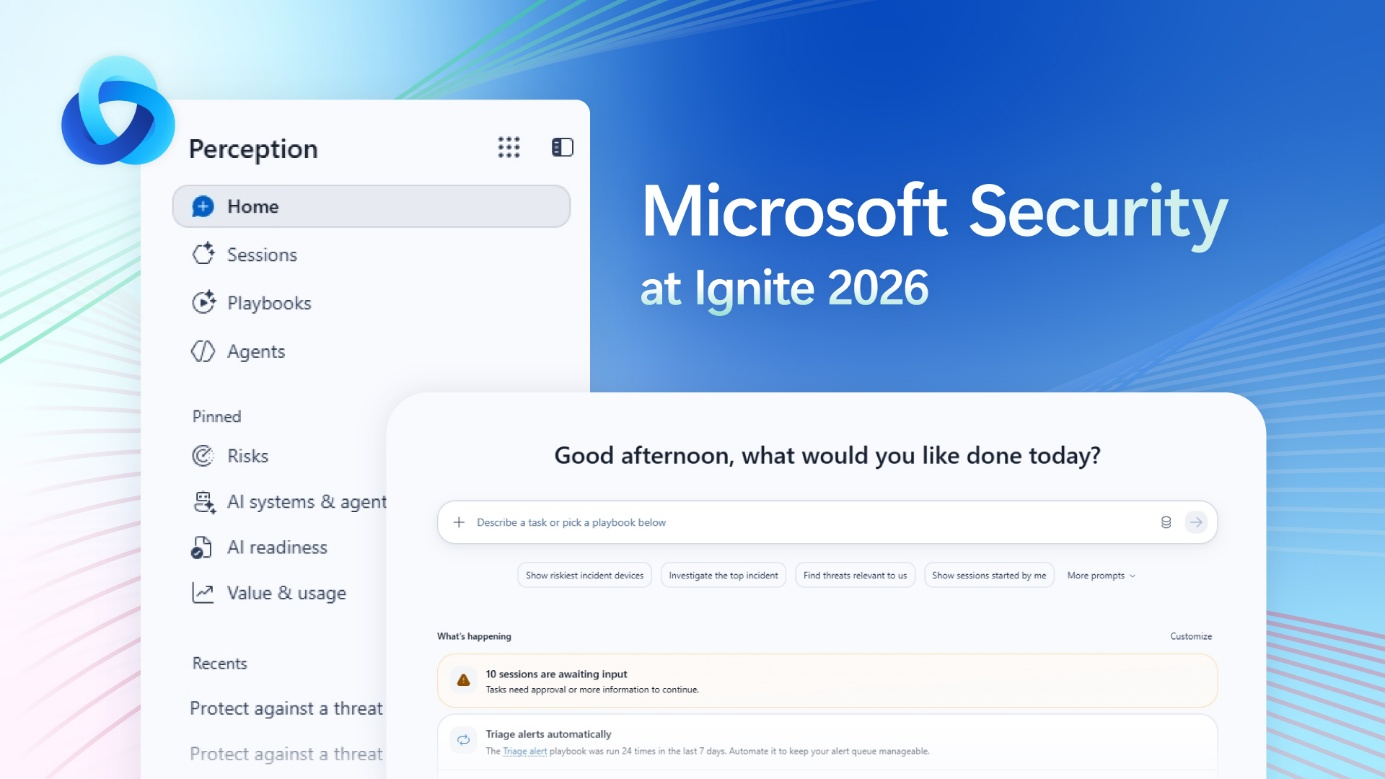
Microsoft has announced the general availability of Microsoft Perception, a security platform coordinating red, blue, and green AI agents to detect, investigate, and remediate cyber threats. The launch addresses the rise of AI-assisted attacks that shrink vulnerability exploitation timelines from months to minutes.
Microsoft Perception reaches GA at Ignite 2026
At Ignite 2026 conference, Microsoft announced the general availability of Microsoft Perception, its security platform previously previewed as Project Perception. The system orchestrates red, blue, and green AI agents through automated playbooks to detect, investigate, and remediate cyber threats at machine speed.
Microsoft emphasized that traditional human-paced security operations can no longer keep up with frontier AI and open-weights models that enable attackers to find and weaponize vulnerabilities in minutes rather than months - a shift highlighted by recent critical PHP remote code execution flaws that left roughly 29 million servers exposed weeks after disclosure, alongside more than 96,000 CVEs published in 2026 alone.
To counter autonomous attacks and manage the emerging risk of "agentic insiders" operating continuously across corporate networks, Microsoft rebuilt its security architecture into a three-layer stack.
A foundational layer of sensors and actuators across Defender, Entra, Intune, Purview, Sentinel, and over 500 third-party connectors processes more than 165 trillion daily signals. A context layer structures these signals in real time, feeding the top layer where Perception coordinates specialized agents under human-defined guardrails, supported by new cost management dashboards and estimators.
Specialized agents and unified SIEM tools
Microsoft Perception now offers general availability for its Recon Agent on the red team, four blue team agents covering alert triage, attack investigation, detection authoring, and threat intelligence, and the green team's Posture Prioritization Agent.
Additional tools, including the Web App Pen Test Agent and the Risk Reduction Agent across Azure, AWS, and Google Cloud, are available in preview alongside a new vulnerability shielding feature that applies temporary network and permission protections before patches can be deployed.
On the operational foundation, Microsoft announced general availability for core capabilities of the Integrated Security Operations Center (ISOC) in Microsoft Defender, uniting SIEM, user behavior analytics, and threat intelligence with 90-day data retention and Sentinel features for eligible enterprise plans.
Developers and security teams can also connect Perception workflows via Model Context Protocol (MCP) and APIs, scan repositories up to 5 GB using the expanded Codename MDASH scanner powered by MAI-Cyber-2, and leverage upcoming Microsoft Purview data loss prevention controls for local Windows agents and Copilot grounding.
Governing autonomous agents and establishing transparency standards
Because AI agents operate with broad access to data and tools, Microsoft expanded discovery and governance capabilities in Microsoft Agent 365 and Entra Suite to cover 60 local agent types - including Claude Code, OpenAI Codex, and GitHub Copilot - as well as third-party cloud agents.
Discovered agents and Microsoft Autopilot tools receive dedicated Entra Agent IDs, allowing administrators to enforce Conditional Access, Intune containment policies, and time-bound permissions based on real-time Dynamic Agent Risk assessments.
To provide visibility into how underlying models reach decisions, Microsoft also launched the AI Transparency Initiative and expanded its collaboration with the National Institute of Standards and Technology (NIST).
Working alongside more than 40 organizations, including Accenture, Adobe, KPMG, Mastercard, and Volvo Cars, Microsoft is developing open industry standards to audit AI requests and outcomes across Microsoft Foundry and Copilot.
Microsoft brings continuous improvement to AI agents in Foundry
Microsoft introduced continuous improvement for AI agents on the Microsoft Foundry platform. The new mechanism enables systems to learn from real-world interactions and expert feedback, built on tight integration with GitHub and the Azure cloud. Using a model router and dedicated optimization tools, organizations can lower operational costs while keeping full control over which updates reach production.
Building business advantage with GitHub and Foundry
As new AI models ship every few weeks and customer queries become harder to predict, Microsoft announced continuous improvement capabilities for Microsoft Foundry at Microsoft Ignite. Part of the new Microsoft IQ layer, the system ensures an organization's institutional knowledge remains its competitive edge while agents grow more capable over time. By feeding agent traces and user input back into the platform, teams create a closed learning loop that adapts out-of-the-box models to specific business workflows.
The end-to-end lifecycle connects GitHub for development with Microsoft Foundry for runtime governance on Azure. Developers can describe a workflow in plain language, allowing GitHub Copilot and Copilot Fusion to generate code and orchestrate models across performance, latency, and cost requirements. Once deployed to Foundry, teams can access over 11,000 models from providers including OpenAI, Anthropic, Meta, Mistral, open-source communities, and Microsoft AI (MAI). Foundry's model router directs simple queries to smaller models and complex requests to frontier models, cutting costs by up to 65%.
Governance and flexible runtime orchestration
Every agent running in Foundry receives an Entra Agent ID and operates within strict guardrails, keeping humans in the loop for sensitive actions. Foundry Safety enforces behavioral policies at runtime, while Foundry Agent Service supports custom frameworks via hosted agents, now generally available with higher concurrency and faster startup times in preview.
Teams preferring a managed setup can use the Microsoft Copilot harness in preview, which includes reusable skills and sub-agents - a setup currently used by fashion company Fashable alongside generally available voice agents to streamline sourcing and design.
The four-step continuous improvement loop
Foundry structures agent evolution into four repeatable phases: Establish, Identify, Optimize, and Validate. First, teams define quality and safety standards using rubric evaluators and convert expert annotations on real execution traces into evaluation datasets and a benchmark golden dataset. Next, the generally available Insights feature clusters recurring production issues and identifies root causes, extending visibility to external frameworks like LangGraph, LangChain, and CrewAI.
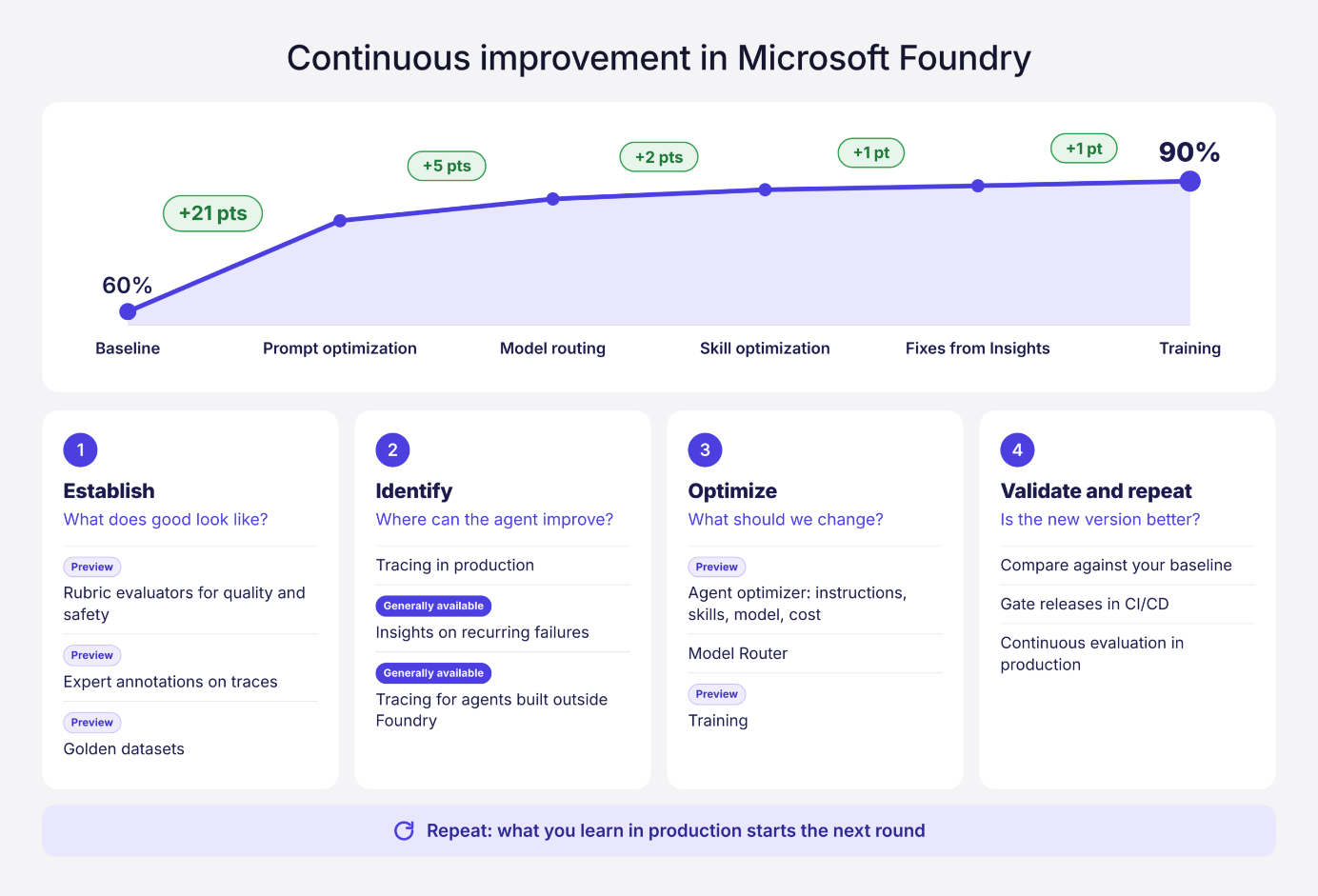
In the Optimize phase, Agent optimizer tests improvements to prompts, versioned skills, and model selection before human operators approve any production release. Organizations can also fine-tune models on proprietary data using Managed Training - which helped Docusign cut AI processing costs by 90% - or run custom Python recipes on serverless GPUs with Programmed Training, used by clinical AI firm Heidi to reduce note-generation costs by 87%. Similarly, Alaska Airlines fine-tuned MAI-Code-2-Flash for aircraft maintenance classification, boosting accuracy from 81.2% to 91.1% and outperforming GPT-6 Astra and GPT-6.1 Sol.
Finally, Foundry validates updates through statistical testing integrated into GitHub Actions or Azure DevOps, backed by live traffic sampling, scheduled red-team scans, and unified monitoring dashboards. Any performance drop triggers a new Insight, restarting the cycle. Enterprise adopters like NTT DATA are already applying this loop to program-management agents ahead of scaling across more than 1,000 internal projects, grounding their AI systems in company data via Microsoft IQ.
Building trusted enterprise agents. Oracle integrates with Azure
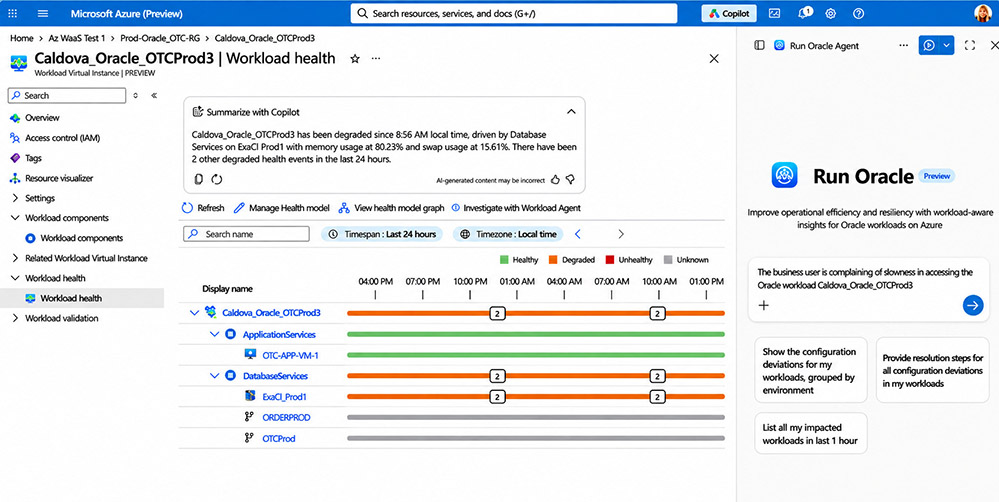
At Microsoft Ignite 2026, Microsoft and Oracle announced new integrations that bring agentic AI directly into enterprise workflows. Built on Oracle AI Database@Azure, which now spans 33 Azure regions, these capabilities allow AI agents to reason across critical Oracle business data and combine it with work context from Microsoft Work IQ across meetings, emails, documents, and Teams.
Unified monitoring for IT operations
Microsoft introduced a limited preview of Azure Workload Center for Oracle, which groups a workload's architecture, resources, and dependencies into a Workload Virtual Instance (WVI). By connecting WVI with Azure Monitor Health Models and the Microsoft Azure Copilot Run Oracle agent, IT teams gain unified visibility across application, database, and infrastructure layers.
Security remains central to these operations through Microsoft Entra authentication, Oracle Deep Data Security, and auditable database calls routed via a managed Model Context Protocol (MCP) server.
When an order processing application slows down, an administrator can use a natural-language prompt to launch a coordinated investigation across multiple permission-bound agents, receiving a single operational conclusion.
Business insights in Excel
To eliminate manual data exports and IT tickets, the new Oracle AI Database plug-in for Excel lets business users pull trusted data directly into spreadsheets and analyze it with Copilot.
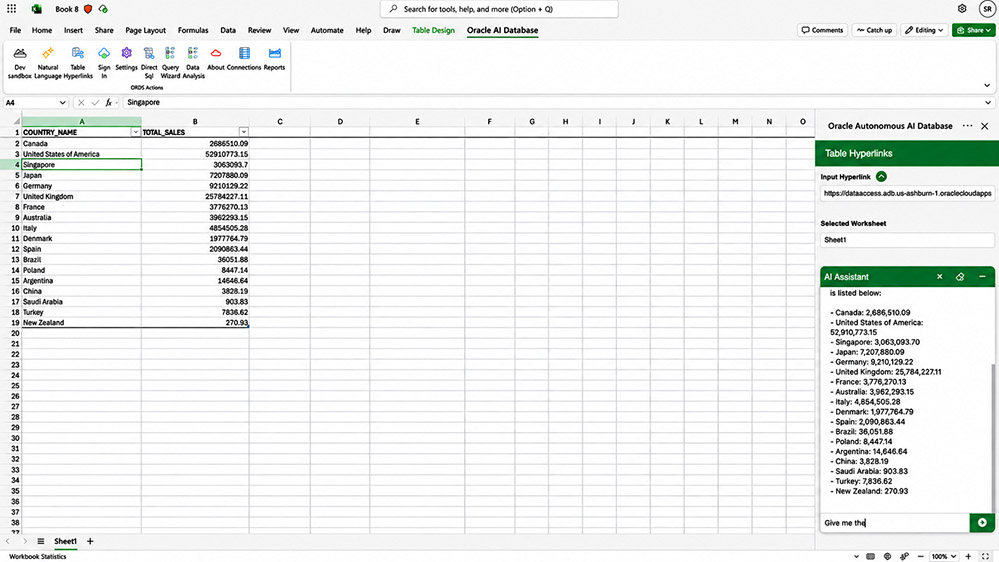
Analysts and controllers can track margin changes, demand shifts, and supply chain disruptions without leaving their workspace.
Rather than another dashboard, or disconnected chatbot, this is AI in the flow of work, grounded in systems of record maintained in Oracle AI Database - the announcement stated.
Building governed multi-agent systems
Developers can now use Microsoft Foundry with managed MCP servers and the A2A protocol to connect Azure agents to Oracle AI Database through approved SQL and PL/SQL operations.
Application roles strictly enforce what tools agents can access, ensuring data stays in place rather than being copied out. Using these tools, developers can build sales intelligence apps where specialized account, product, and finance agents collaborate to deliver concise briefs, or customer service agents grounded in Foundry IQ that recall historical interactions from Oracle-backed memory.
Tech rivals bury the hatchet. Copilotforce links CRM with AI
Microsoft and Salesforce announced a major partnership called Copilotforce on November 17, 2026, ending years of intense enterprise rivalry. Unveiled at Microsoft Ignite, the alliance embeds Salesforce CRM data and over 38 prebuilt sales skills directly into Microsoft 365 Copilot, Teams, and Fabric. The integration uses Zero Copy technology so businesses can query data across platforms without duplicating files.
A historic truce in enterprise software
Microsoft and Salesforce have navigated a turbulent relationship since forming their first strategic partnership in May 2014. Tensions flared in 2016 when both companies bid for LinkedIn, leading Salesforce to raise antitrust concerns after Microsoft won the deal.
Although they cooperated on Azure and Teams in 2019, friction returned when Slack filed a European antitrust complaint against Microsoft in 2020 and Salesforce acquired Slack in July 2021.
The rivalry extended into generative AI when Salesforce CEO Marc Benioff dismissed Microsoft Copilot as "Clippy 2.0" in October 2024 while promoting his own Agentforce platform. Unveiled at Microsoft Ignite on November 17, 2026, the new Copilotforce partnership shifts the dynamic from competition to deep product integration across core workplace tools.
Bringing CRM workflows into Copilot and Teams
The centerpiece of the alliance is the Salesforce in Copilot plugin, which brings more than 38 prebuilt sales skills into Microsoft 365. By pairing CRM records with Microsoft Work IQ, the system pulls context from Teams meetings, Outlook emails, and SharePoint files to help sellers draft proposals and automate follow-ups. Through authenticated Salesforce Model Context Protocol (MCP) access, users can update CRM records after explicit confirmation while maintaining existing enterprise security and governance rules.
AI is only as powerful as the data and context that grounds it. Bringing Salesforce customer data and sales skills together with the work context delivered by Work IQ in Microsoft Copilot allows our joint customers to unlock actionable insights across their core business applications - said Judson Althoff, CEO of Microsoft Commercial Business.
Collaboration also extends to the Sales Cloud in Teams pilot, which lets sellers track quotas and receive deal alerts inside chat threads. Meanwhile, a bidirectional Zero Copy integration between Salesforce Data 360 and Microsoft Fabric allows teams to query financial and customer records across both clouds without duplicating datasets.
Accenture leads early deployment
Consulting giant Accenture is acting as both the design partner and the first pilot customer for Copilotforce. Having rolled out Copilot to over 740,000 employees alongside 55,000 Salesforce seats, the firm is validating the tools inside its own global sales division.
The combined strengths of our three companies will reinvent sales with AI, giving sellers more time with customers while trusted intelligence and agents work alongside them in the tools they already use - said Julie Sweet, Chair and CEO of Accenture.
Salesforce in Copilot and Data 360 shortcuts into Microsoft OneLake are now available in public preview. Data federation from OneLake into Data 360 has reached general availability, while Sales Cloud in Teams remains in enterprise pilot ahead of an open beta scheduled for later in 2026.
Microsoft unveils seven new MAI models. Focus on low AI costs

During Ignite 2026, Microsoft expanded its in-house AI ecosystem with seven new MAI models designed to cut enterprise inference bills. The updated lineup covers daily software engineering, continuous cyber defense, image generation, live voice interactions, medical transcription, and traffic routing at a steep discount compared to rival offerings.
Microsoft introduces seven new MAI models
Microsoft used its Ignite 2026 conference to introduce a major refresh of its proprietary MAI model family, focusing heavily on enterprise price-performance.
At MAI, our mission is to build you the very best models in the world and keep every developer and every enterprise at the frontier of capability. But as token spend skyrockets, we know that you also want models at a price point that lets you run agents 24/7 doing real engineering work - Microsoft stated in its announcement.
The new lineup includes seven specialized models:
- MAI Cyber 2 Flash beats GPT-6 Astra's quality at less than 2% of the cost per task on the CyberGym-E2E benchmark.
- MAI Code 2 reaches 98% of the coding quality of GPT-6.1 Sol at about 40% of the price, and against Opus 5.5, it reaches 96% performance for just 5% of the price.
- MAI Code 2 Flash shows comparable performance to GPT-6 Luna at 65% of the price, and Haiku 5.5 at 20% of the price.
- MAI Image 2.7 is #1 on Artificial Analysis image editing, outperforming GPT Image 2.6 Sunburst (max) at just one-fifth of the price.
- MAI Realtime 1 outperforms GPT-Realtime 2.1 and starts at just $0.01 per audio minute.
- Dragon Copilot Transcribe is built on MAI Transcribe 2, powering 10 million patient encounters a month with multilingual error rates halved.
- Decision 1.1 is 50x faster and 79x cheaper than GPT-6.1 Sol.
On the hardware side, Microsoft confirmed that its second-generation Maia 200 AI accelerator is now in production, delivering 1.7x more tokens per watt when running its largest models.
Cost-effective automation for daily engineering
For defensive security operations, MAI Cyber 2 Flash is built to run continuous monitoring and patching agents around the clock. Trained on Microsoft's proprietary threat data, the model reduces output token prices by 86% compared to MAI Cyber 1.1 Flash, building on a product family that already powers nearly 40% of scans in MDASH.
In software development, MAI Code 2 targets routine engineering tasks across GitHub Copilot rather than long-horizon research. Evaluated across DeepSWE 1.1, Terminal Bench 2.1, SWE-Atlas, and FrontierCode v1.1, it delivers near-frontier accuracy while winning 64% of blind frontend evaluations against GPT-6 Sol. Its smaller sibling, MAI Code 2 Flash, handles high-volume edits and code explanations, launching in GitHub Copilot and limited preview on Microsoft Foundry.
Enterprise deployment across media workloads
Microsoft expanded its multimedia offerings with MAI Image 2.7, which leads Artificial Analysis in image editing and ranks fourth in text-to-image generation, paired with a Flash variant priced at $10 per 1,000 images.
For voice applications, MAI Realtime 1 offers low-latency speech-to-speech conversations outperforming GPT-Realtime 2.1 on Dynamics 365 benchmarks, while MAI Transcribe 2 now handles 100% of doctor-patient transcriptions in Dragon Copilot for a third of US physicians.
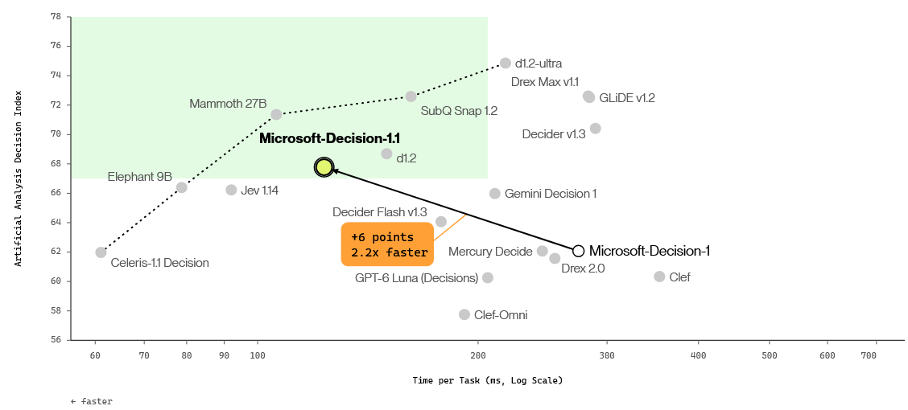
To optimize inference budgets, Decision 1.1 routes application traffic so larger models are invoked only when necessary, outperforming Jev, Google, and OpenAI on the Artificial Analysis Decision Index across 4,000 enterprise customers.
Finally, Microsoft introduced MAI Licensed Weights to give companies full ownership over their adaptations. We've heard again and again from leaders that no one wants to pour their IQ into someone else's model - the company noted, highlighting AT&T's custom MAI model for 5G network analytics that beat GPT-6.1 Sol at one-fiftieth of the cost.